Showing posts with label Farmers. Show all posts

Sunday, January 03, 2016

International Year of Pulses 2016

The 68th UN General Assembly declared 2016 the International Year of Pulses (IYP) (A/RES/68/231)
The Food and Agriculture Organization of the United Nations (FAO) has been nominated to facilitate the implementation of the Year in collaboration with Governments, relevant organizations, non-governmental organizations and all other relevant stakeholders.
The IYP 2016 aims to heighten public awareness of the nutritional benefits of pulses as part of sustainable food production aimed towards food security and nutrition. The Year will create a unique opportunity to encourage connections throughout the food chain that would better utilize pulse-based proteins, further global production of pulses, better utilize crop rotations and address the challenges in the trade of pulses.

What are pulses and why are they important?Pulses are annual leguminous crops yielding between one and 12 grains or seeds of variable size, shape and colour within a pod, used for both food and feed. The term “pulses” is limited to crops harvested solely for dry grain, thereby excluding crops harvested green for food, which are classified as vegetable crops, as well as those crops used mainly for oil extraction and leguminous crops that are used exclusively for sowing purposes (based on the definition of “pulses and derived products” of the Food and Agriculture Organization of the United Nations).
Pulse crops such as lentils, beans, peas and chickpeas are a critical part of the general food basket. Pulses are a vital source of plant-based proteins and amino acids for people around the globe and should be eaten as part of a healthy diet to address obesity, as well as to prevent and help manage chronic diseases such as diabetes, coronary conditions and cancer; they are also an important source of plant-based protein for animals.
In addition, pulses are leguminous plants that have nitrogen-fixing properties which can contribute to increasing soil fertility and have a positive impact on the environment.
The IYP website will be the main platform to share information and relevant resources with different partners. The current version will be updated soon, please come back for more information.

Source:

Friday, December 18, 2015

Aumenta la producción y el consumo de quinua en Asia

En los últimos años, uno de los cultivos más antiguos y representativos de la cultura andina, valorado por su alto valor nutritivo, comenzó a sembrarse de manera creciente del otro lado del planeta. Se trata de la quinua, que está siendo incluida con éxito en los sistemas productivos del China. Actualmente, sus agrónomos se capacitan en la Argentina para conocer más sobre su manejo y los factores que determinan su adaptación a distintos ambientes.
"Desde hace algunos años, en China están produciendo comercialmente quinua. Hay empresas que consiguieron semillas, las seleccionaron, las adaptaron a sus ambientes productivos y avanzaron en toda la cadena de valor, desde el procesamiento de las semillas para el consumo humano, hasta el desarrollo de distintos tipos de alimentos y su inserción en el mercado local", explicó Daniel Bertero, investigador de la cátedra de Producción Vegetal de la Facultad de Agronomía de la UBA (FAUBA), quien es especialista en quinua, y destacó que algunos de los productos más vendidos en ese país, generados a partir del cultivo, además de granos y harinas son los fideos, conocidos popularmente como noodles.
La expectativa de crecimiento es auspiciosa. Estas empresas ya están montando nuevas plantas con capacidad para procesar 7000 toneladas de quinua al año. "Eso da una idea de las expectativas de expansión, en un país con 1300 millones de habitantes y donde la quinua hoy se está vendiendo a unos 20 dólares el kilo", dijo Bertero al sitio de divulgación científica Sobre la Tierra.
El aumento de la demanda asiática por este alimento también podría significar una oportunidad para los países de Sudamérica, algunos de los cuales, como Bolivia y Perú, ya están exportando granos no sólo a China, sino también a Francia, Dinamarca, Estados Unidos, Canadá, India y Pakistán. Se calcula que existen unas 100.000 hectáreas cultivadas con quinua en el mundo.
¿Por qué el interés de los chinos por un cultivo milenario de Sudamérica? La principal razón es comercial, por las perspectivas de expansión y buenos precios. Otro aspecto destacado es la capacidad de la quinua para adaptarse a los ambientes más rigurosos, marginales para la agricultura por su altitud, variabilidad climática y tipos de suelo.
Desde el punto de vista del consumidor, otra de las razones tiene que ver con el valor nutricional de la quinua, fundamentalmente porque posee una alta calidad proteica y por ser una fuente importante de vitaminas y minerales. Además, no contiene gluten y puede ayudar a reducir el colesterol.

Adaptación local
Invitado por empresas productoras locales, durante 2014 y 2015 Bertero visitó diferentes regiones de China para interiorizarse sobre la siembra del cultivo de quinua en el gigante asiático y su adaptación a las condiciones ambientales de ese país.
"Una de las regiones productoras es Qinghai, al norte de Tíbet, de donde vino la delegación que visitó la Argentina en noviembre de 2015. En esta zona llueven 150 mm al año, así que la quinua se cultiva bajo riego a 3000 metros de altura, en un paisaje muy parecido a la Quebrada de Humahuaca".
La quinua también se siembra en otros ambientes como el de la provincia de Taiyuanuan, al norte del país, donde llueven unos 400 mm al año y se cultiva a 2000 metros de altura. Allí, la altitud no permite sembrar maíz, por ejemplo, y en cambio se implanta tradicionalmente papa, trigo, cebada, y ahora, como novedad, quinua. Aquí los ambientes son más favorables para la agricultura, pero las lluvias de fin de ciclo representan un riesgo para la calidad de la semilla cosechada.
"El material genético que están usando deriva de Chile, porque se adapta a una mayor variedad de ambientes. Las semillas habrían sido mejoradas en Estados Unidos y sembradas primero en el Tíbet. Luego fueron llevadas hasta las provincias de Taiyuan y Qinghai, para producirlas comercialmente. Hoy también están probando variedades de tipo boliviano, mientras aumentan la superficie sembrada",señaló el profesor de la FAUBA. Una de esas empresas visitadas por Bertero, por ejemplo, está produciendo más de 100 toneladas de quinua al año para el mercado local.

Encontrarle la vuelta al cultivo
Como parte de esfuerzos de cooperación entre los agrónomos chinos y argentinos, recientemente la FAUBA recibió la visita de una delegación de la Academia de Ciencias de la Agricultura de la provincia de Qinghai, localizada en la ciudad de Xining, quienes estaban interesados en conocer la Argentina y capacitarse en temas relacionados con la agricultura local.
La comitiva asistió a una serie de charlas en la Facultad de Agronomía de la UBA con diferentes docentes sobre temas generales de la agricultura argentina y recibió capacitación sobre cultivos particulares como cebada, trigo y nuevas alternativas productivas para zonas áridas. La quinua significó uno de los aspectos que concentraron el mayor interés de los investigadores chinos.
"Ellos todavía están en una fase de encontrarle la vuelta al cultivo y les preocupan algunos de los aspectos de manejo que siguen generándoles inconvenientes, como las malezas y el brotado de las semillas (que germinan antes de tiempo)", detalló el investigador de la FAUBA. Además, destacó: "También les sorprende cómo en China en pocos años aumentó el interés de los productores y el apoyo desde el Gobierno para producir quinua, y les llama la atención que esto no suceda en la Argentina, donde pese a ser un cultivo que se produce desde hace al menos 2000 años, no se logra aumentar el área de siembra".

Fuente:

Wednesday, October 28, 2015

Sergio Núñez De Arco: Creating a New Staple

In November 2013, Time magazine devoted a cover story to “thirteen gods of food... people who influence what (and how) you eat.” Among the top-flight chefs, food activists, and cookbook authors was Sergio Núñez de Arco, an energetic, 40-year-old Bolivian-born entrepreneur who makes his home in the Bay Area. Time grandly dubbed him the “king of quinoa,” but Núñez prefers a broader identification. Although he makes his living as a distributor of this ancient pseudo-grain (it is in the goosefoot plant family, which includes beetroot and spinach), he is also, and more proudly, a champion of the indigenous people of his homeland who have raised this ultranutritious, gluten-free, biodiverse crop for centuries. And now their traditional knowledge, boosted by modern technology and market forces, is providing 45,000 Bolivian farm families a better life.

Source:

Sunday, July 19, 2015

The impact of the Quinoa boom on Bolivian family farmers

New findings based on survey results from 100 households located in southern Bolivia. 81% of farmers interviewed between December 2012 and March 2013 say quinoa is their primary source of income. Benefits of the increase in Quinoa prices:
  • Guarantees improved incomes and access to credit 
  • Access to additional labour and machinery
  • Increased productivity 
Challenges:
  • Land degradation
  • Reduction of cultivated varieties


Source:

Sunday, July 12, 2015

Cómase a los feos ! El movimiento ‘ugly food’ lucha contra el derroche de alimentos

El movimiento ‘ugly food’ lucha contra el derroche de alimentos y gana adeptos en Europa
Calabacines gigantes, naranjas abultadas, berenjenas con doble punta. Algo difícil de encontrar en la mayoría de las estanterías de los supermercados, donde abundan productos geométricamente perfectos y de aspecto reluciente. En un mundo en el que una de cada nueve personas sufre hambre a diario y se desperdicia un tercio de los alimentos producidos cada año —1.300 millones de toneladas, de acuerdo con la FAO—, el movimiento bautizado ugly food (comida fea) o ugly veggies (vegetales feos) intenta propiciar el consumo de frutas y hortalizas que, de otra manera, acabarían desperdiciándose por no respetar los “cánones estéticos” exigidos por los establecimientos comerciales. La idea es cambiar la mentalidad del consumidor y ayudarle en la cesta de la compra con alimentos a precio rebajado.
“Si las frutas se han chocado en el árbol, tienen un puntito o un roce, ya no valen. La central hortofrutícola o las cooperativas hacen una selección y lo que no sirve suele destinarse a alimentación animal”, explica Lorenzo Ramos, secretario general de la Unión de Pequeños Agricultores y Ganaderos (UPA). Ramos explica que, en épocas de superproducción, los estándares de calidad exigidos para la comercialización se endurecen aún más. El año pasado, cuando una abundante cosecha se juntó con el veto de Rusia a las exportaciones, “fue difícil porque no había suficiente demanda”, recuerda el productor. “Normalmente hay convenios con la industria para convertir los productos en almíbares o conservas. Pero hay casos donde no es suficiente”, explica.
Aunque en España el movimiento de la comida fea no haya despegado todavía, sí que en Europa —en particular en Alemania, Francia y Reino Unido—, han nacido varias iniciativas relacionadas con esta corriente para sensibilizar al consumidor. Desde la cooperativa portuguesa Frutafeia, que opera desde finales de 2013 para salvar toneladas de frutas y hortalizas que no respetan la estética “común”, hasta la campaña Inglorious fruit and vegetables lanzada por los supermercados franceses Intermarché, que ofrecen productos “imperfectos” con un 30% de descuento. En Alemania, Culinary Misfits —cuyo eslogan es Come toda la cosecha— recupera y revende los productos que no serían aprovechados por presentar características “anómalas”, mientras Ugly Fruits persuade a los consumidores para que los vegetales con formas no convencionales entren a formar parte de su dieta. Hasta uno de los cocineros más mediáticos de Reino Unido, Jamie Oliver, se ha sumado a la campaña a favor de los “vegetales torcidos”, iniciativa que ha sido recogida por la segunda cadena de supermercados británicos.
En los países industrializados, una gruesa parte de la pérdida de alimentos —hasta un 40%— se produce en la venta minorista y en el consumo, según detalla la FAO. La agencia de la ONU calcula que el derroche de comida propiciado por los ciudadanos procedentes de estas áreas geográficas llega a rebosar los 220 millones de toneladas por año, casi la misma cantidad de alimentos producida por África subsahariana. La situación es tan alarmante que la Unión Europea decidió declarar 2014 como Año contra el desperdicio de alimentos y programar una hoja de ruta para poner un freno a esta sangría constante de comestibles y reducirla a la mitad para 2025.
“Es una cuestión de congruencia, ya que hay personas que pasan hambre”, mantiene Inma Cid de la asociación de vecinos Zoes de Salamanca. Junto a 300 niños de un colegio local organizó, el mes pasado, un mercadillo para regalar “frutas y verduras feas” a los consumidores y poner su granito de arena en la lucha contra el desperdicio de alimentos. “Las fruterías del barrio nos reservaron los productos con peor aspecto y los niños se encargaron de explicar que, pese a la apariencia, tenían las mismas características que los demás”, cuenta. “La acogida fue muy buena, tenemos pensado repetir la experiencia. Hay que cambiar la mentalidad”, añade.
“Si una persona no se adecua a los estándares de la moda no significa que no sea rica por dentro”, bromea el dietista-nutricionista Eduard Baladia, miembro del Colegio y de la Fundación Española de Dietistas-Nutricionistas: “Con las frutas y hortalizas es igual: los productos que no son homogéneos se eliminan del mercado sin razón, porque tienen el mismo poder nutricional”. Baladia cree que la única manera para revertir la tendencia es insistir en una educación alimentaria que haga hincapié en el desperdicio de comida desde un punto de vista medio ambiental y de seguridad alimentaria.
Para Lorenzo Ramos, hay que buscar más fórmulas para salir del bucle, ya que el hortofrutícola es “un sector muy perverso”, que perjudica tanto al productor, por los pocos márgenes de beneficio que tiene, como al consumidor, que paga precios elevados cuando la oferta no es abundante. "El movimiento ugly food es una buena iniciativa que habría que desarrollar en nuestro país”, comenta el productor. El objetivo no es solo reducir el derroche de comida, sino a la vez beneficiar a toda la cadena de suministro. Por un lado, el cliente final consigue ahorrar en sus compras gracias a los precios rebajados, por el otro los productores y vendedores aumentan su productividad y beneficios. Y, por último, el medio ambiente agradece el aprovechamiento de los recursos naturales y la reducción de la huella de carbono causada por el desperdicio de alimentos. "Hay que entender que los productos que estéticamente no se adecuan a los estándares son tan buenos como los demás", concluye Ramos.

Fuente:

Tuesday, July 07, 2015

Slow Food and FAO launch “Quinoa in the Kitchen”

Recipe book is the first fruit of a partnership that aims to make quinoa a staple of the world’s kitchens
The Slow Food movement and FAO officially launched the book, “Quinoa in the Kitchen,” today to continue to promote awareness about the super-food’s potential as the International Year of Quinoa draws to a close.
The book gives an overview of quinoa’s roots in the history and culture of the central Andean high plateau, geographically extending across the borders of Peru and Bolivia, which together account for the vast majority of quinoa production in the world.
Since quinoa is still new to many beyond the Andes, the book includes a selection of quinoa recipes created by some of the world’s top chefs. The aim is to bring quinoa to kitchens across the world, where it may someday be as commonplace as pasta or rice.
Quinoa is exceptionally versatile, which has drawn it attention as a potential alternative crop that could be an added tool to be able to produce sufficient food for the world’s growing population – expected to grow by 2 billion people by 2050 – as the climate shifts. Different varieties of quinoa can be grown from sea level to 4000 metres in altitude, it can withstand temperatures from below freezing to 38 degrees Celsius, in both humid and arid climates and in a variety of soil conditions.
"Quinoa is part of the effort to recover these lost foods and to promote traditional and forgotten crops. It is also part of the idea that food is not only a commodity. It is a lot more than that. It is also culture, it is also taste, it is also a lot of things that are closely related to our history,” said FAO Director-General José Graziano da Silva.
Slow Food President Carlo Petrini said that the book draws inspiration from the two organizations “shared vision of a sustainable world free from hunger and that safeguards biodiversity for future generations.”
“Central to the process is gastronomy itself and the idea that this holistic, multidisciplinary science, which encompasses everything from agriculture to history, from economics to anthropology, from botany to culinary art, can be a liberating force of the communities most hit by malnutrition,” he added.
Quinoa is higher in protein than grains such as wheat, corn or rice, and it packs in vitamins, minerals and essential amino acids that are important to human nutrition but which many foods lack in just one source.
FAO is currently overseeing a programme in Argentina, Bolivia, Chile, Ecuador and Peru for the sustainable intensification of quinoa farming and food production systems in the Andean region. FAO is assisting countries to respond to a rising demand for quinoa so farmers can benefit from high prices while preserving the environment and biodiversity. Helping farmers to access the organic and fair trade sectors on international markets is one important element of the programme.
FAO is planning a regional project in arid and semi-arid areas of the Near East, where quinoa could prove useful to provide sufficient nutritious food even under extreme climactic conditions. In Algeria, Egypt, Iraq, Iran, Lebanon, Mauritania, Sudan and Yemen, varieties will be selected and field tested to gauge which types of quinoa have the highest yields and nutritional values even under stress, such as drought.
Similar projects are being developed for Bhutan, Brunei and Sri Lanka , as well as for Kygryzstan and Tajikistan.
The United Nations has declared 2013 the “International Year of Quinoa.”

Sunday, December 28, 2014

New insights into origins of agriculture could help shape future of food

Agricultural decisions made by our ancestors more than 10,000 years ago could hold the key to food security in the future, according to new research by the University of Sheffield.

Scientists, looking at why the first arable farmers chose to domesticate some cereal crops and not others, studied those that originated in the Fertile Crescent, an arc of land in western Asia from the Mediterranean Sea to the Persian Gulf.
They grew wild versions of what are now staple foods like wheat and barley along with other grasses from the region to identify the traits that make some plants suitable for agriculture, including how much edible seed the grasses produced and their architecture.
Dr Catherine Preece, who worked on the study with colleagues from the University's Department of Animal and Plant Sciences and Department of Archaeology, said: "Our results surprised us because numerous other grasses that our ancestors ate, but we do not, can produce just as much seed as wild wheat and barley. It is only when these plants are grown at high densities, similar to what we would find in fields, that the advantage of wild wheat and barley is revealed."
The study identified two key characteristics shared by the wild relatives of current crop plants. Firstly they have bigger seeds, which means they grow into bigger seedlings and are able to get more than their fair share of light and nutrients, and secondly, as adult plants they are less bushy than other grasses and package their big seeds onto fewer stems. This means crop wild relatives perform better than the other wild grasses that they are competing with and are better at growing close together in fields, making them ideal for using in agriculture.
"The results are important because our expanding human population is putting increasing demands on food production," said Dr Preece.
"Before humans learnt how to farm, our ancestors ate a much wider variety of grasses. If we can understand what traits have made some grasses into good crops then we can look for those characteristics in other plants and perhaps identify good candidates for future domestication."
She added: "To shape the future we must understand the past, so the more we can discover about the origins of agriculture, the more information we will have to help us tackle the challenges that face modern day food production."
So far the researchers have been conducting their experiments in greenhouses and their results indicate that the traits affecting how plants compete with each other are crucial factors to determining the success of a crop.
The team now plan to observe how the plants interact in their natural environment by growing them in experimental fields in Turkey, the heart of the Fertile Crescent. They hope that their experiments will yield another crop of important results.
"Cereal breeders are taking an increasing interest in modern crops' wild relatives as a source of useful traits that may help to increase yields or increase resilience to climate change, and our work should help in this process," said Dr Preece.
Dr Preece presented the results of this study to the joint British Ecological Society and the French Ecological Society 11 December 2014 in the Grand Palais, Lille.

Source:

Friday, December 26, 2014

More holistic approach needed when studying diets of our ancestors

Researchers have long debated how and what our ancestors ate. Charles Darwin hypothesized that the hunting of game animals was a defining feature of early hominids, one that was linked with both upright walking and advanced tool use and that isolated these species from their closest relatives (such as ancestors of chimpanzees); modified versions of this hypothesis exist to this day. Other scholars insist that while our ancestors' diets did include meat, it was predominantly scavenged and not hunted. Still others argue that particular plant foods such as roots and tubers were of greater importance than meat in the diets of these species.

Research technology has come a long way since Darwin's time, making possible the kind of analysis early scholars could only have imagined. Recent work has presented reconstructions of early hominid diets on the basis of chemical makeups of fossil tooth enamel, evidence of microscopic wear on teeth, and advanced studies of craniodental anatomy, to name a few.
However, according to Ken Sayers (Georgia State University) and C. Owen Lovejoy (Kent State University) in an article published in the December 2014 issue of The Quarterly Review of Biology, although modern-day technology provides valuable insight, such tools alone cannot provide a complete picture of the diet of early hominids. Instead, they should be included -- alongside other methodologies -- in holistic studies grounded in the fundamentals of modern evolutionary ecology.
Sayers and Lovejoy suggest that researchers should examine a species' particular habitat and "whole-body" anatomy, including digestion, locomotion, and possible cognitive abilities. In particular, foraging theory -- a branch of evolutionary ecology that investigates animal feeding decisions through the lens of efficiency principles -- is especially important to consider, as it demonstrates that diet is regulated by the potential value and costs of exploiting individual food items (whether plant, animal, or other) and by the relative abundance of the most profitable foods. In the case of the earliest-known hominids, evidence about their morphology and likely cognitive abilities -- in addition to data obtained from modern technologies -- provide little support for a reliance on any one particular food type. Rather, these species likely had a broadly omnivorous diet that became increasingly generalized over time.
According to Sayers and Lovejoy, the early hominid diet can best be elucidated by considering the entire habitat-specific resource base and by quantifying the potential profitability and abundance of likely available foods. Furthermore, they warn that hypotheses focusing too narrowly on any one food type or foraging strategy -- such as hunting or scavenging or any one particular plant category -- are too restrictive and should be viewed with caution. Modeling these species' diets instead "requires a holistic, interdisciplinary approach that goes beyond merely what we can observe chemically or through a microscope, and draws from ecology, anatomy and physiology, cognitive science, and behavior."

Source:
http://www.sciencedaily.com/
Ken Sayers, C. Owen Lovejoy. Blood, Bulbs, and Bunodonts: On Evolutionary Ecology and the Diets ofArdipithecus,Australopithecus, and EarlyHomo. The Quarterly Review of Biology, 2014; 89 (4): 319 DOI: 10.1086/678568

Wednesday, December 24, 2014

Can organic crops compete with industrial agriculture?

A systematic overview of more than 100 studies comparing organic and conventional farming finds that the crop yields of organic agriculture are higher than previously thought. The study, conducted by researchers at the University of California, Berkeley, also found that certain practices could further shrink the productivity gap between organic crops and conventional farming.

The study, to be published online in the Proceedings of the Royal Society B, tackles the lingering perception that organic farming, while offering an environmentally sustainable alternative to chemically intensive agriculture, cannot produce enough food to satisfy the world's appetite.
"In terms of comparing productivity among the two techniques, this paper sets the record straight on the comparison between organic and conventional agriculture," said the study's senior author, Claire Kremen, professor of environmental science, policy and management and co-director of the Berkeley Food Institute. "With global food needs predicted to greatly increase in the next 50 years, it's critical to look more closely at organic farming because, aside from the environmental impacts of industrial agriculture, the ability of synthetic fertilizers to increase crop yields has been declining."
The researchers conducted a meta-analysis of 115 studies -- a dataset three times greater than previously published work -- comparing organic and conventional agriculture. They found that organic yields are about 19.2 percent lower than conventional ones, a smaller difference than in previous estimates.
The researchers pointed out that the available studies comparing farming methods were often biased in favor of conventional agriculture, so this estimate of the yield gap is likely overestimated. They also found that taking into account methods that optimize the productivity of organic agriculture could minimize the yield gap. They specifically highlighted two agricultural practices -- multi-cropping (growing several crops together on the same field) and crop rotation -- that would substantially reduce the organic-to-conventional yield gap to 9 percent and 8 percent, respectively.
The yields also depended upon the type of crop grown, the researchers found. There were no significant differences in organic and conventional yields for leguminous crops, such as beans, peas and lentils.
"Our study suggests that through appropriate investment in agroecological research to improve organic management and in breeding cultivars for organic farming systems, the yield gap could be reduced or even eliminated for some crops or regions," said the study's lead author, Lauren Ponisio, a graduate student in environmental science, policy and management. "This is especially true if we mimic nature by creating ecologically diverse farms that harness important ecological interactions like the nitrogen-fixing benefits of intercropping or cover-cropping with legumes."
The researchers suggest that organic farming can be a very competitive alternative to industrial agriculture when it comes to food production.
"It's important to remember that our current agricultural system produces far more food than is needed to provide for everyone on the planet," said Kremen. "Eradicating world hunger requires increasing the access to food, not simply the production. Also, increasing the proportion of agriculture that uses sustainable, organic methods of farming is not a choice, it's a necessity. We simply can't continue to produce food far into the future without taking care of our soils, water and biodiversity."

Source:
http://www.sciencedaily.com/
Lauren C. Ponisio, Leithen K. M'Gonigle, Kevi C. Mace, Jenny Palomino, Perry de Valpine, Claire Kremen. Diversification practices reduce organic to conventional yield gap. Proceedings of the Royal Society B, December 2014 DOI: 10.1098/rspb.2014.1396

Monday, December 22, 2014

Symphony of the Soil

WATCH Symphony of the Soil on streaming VOD, here or click the “Purchase” button above to rent the video, or buy a DVD.

Drawing from ancient knowledge and cutting edge science, Symphony of the Soil is an artistic exploration of the miraculous substance soil. By understanding the elaborate relationships and mutuality between soil, water, the atmosphere, plants and animals, we come to appreciate the complex and dynamic nature of this precious resource. The film also examines our human relationship with soil, the use and misuse of soil in agriculture, deforestation and development, and the latest scientific research on soil’s key role in ameliorating the most challenging environmental issues of our time. Filmed on four continents, featuring esteemed scientists and working farmers and ranchers, Symphony of the Soil is an intriguing presentation that highlights possibilities of healthy soil creating healthy plants creating healthy humans living on a healthy planet.


Source:
http://www.symphonyofthesoil.com/

Tuesday, December 16, 2014

Farmers go Digital to Confront Changing Growing Conditions

American farmers have a long history of overcoming obstacles. In 1938, they helped the country emerge from the Dust Bowl by switching to contour plowing and eradicated the boll weevil forty years later by employing integrated pest management techniques. In both cases – and many others – USDA was there to help farmers achieve success.
Many of the obstacles they face today are on a much larger scale, associated with climate change and seasonal weather variability. USDA’s National Institute of Food and Agriculture (NIFA) is helping farmers get the tools they need to meet those challenges.
NIFA provided a $5 million Agriculture and Food Research Initiative grant in 2011 to Purdue University to lead a multi-institutional effort to provide farmers with online tools that could make their crop-related decisions easier. Today, the resulting “Useful to Usable” (U2U) project is helping Corn Belt farmers improve their resilience and profitability amid the irregular weather conditions of a changing climate. The U2U project takes existing weather data and then provides the information in formats that farmers can use to manage their crops – what, when, and where to plant; fertilizing; irrigating; and more.
The U2U team consisted of Purdue, Iowa State University, Michigan State University, South Dakota State University, University of Illinois, University of Michigan, University of Missouri, University of Nebraska-Lincoln, and University of Wisconsin.
“Developing solutions to the complex problems associated with agricultural production and climate change requires many skill sets and also localized knowledge,” said Melissa Widhalm, U2U project manager at Purdue. “While the entire Midwest is growing corn, specific regions have unique climate characteristics, farm management strategies, and social factors that must be considered. By bringing together a diversity of experts from across the region we can accomplish work that no single university could do alone.“
“The goal of U2U is to develop a dashboard of tools that people can use for decision-making, not only within the season but also when looking ahead at multiple seasons,” explained Dennis Todey, South Dakota State University’s U2U program director.
According to Todey, U2U contains various web-based tools, including the Corn Growing Degree Days (GDD). Most plants, including corn, develop at rates that are dependent upon how much warmth they receive each day. GDD is a mathematical formula (based on daily temperatures) that determines how many units of heat the corn accumulates over the course of the growing season. Farmers can then use that data to compare how their crops are actually performing and when they may reach maturity compared to potential freeze conditions. U2U’s GDD method has proven to be helpful in both food safety and economic growth for farmers.
Farmers select the location and time when corn is planted and determine the amount of days it will take to reach maturity. According to Todey, the program then assesses the development compared to a 30-year average to project tasseling and maturity dates.
“The GDD tool has been particularly useful this year because of delayed planting and overall cool summer conditions. Producers have been able to review where they are in development and how likely corn is to reach maturity. Producers can then make decision on chopping corn for silage, changing marketing decisions, or propane purchases for corn drying needs,” said Todey.
Another U2U decision support tool is the Climate Patterns Viewer (CPV). CPV gives a historic view of how El Nino weather patterns and Arctic Oscillations have influenced corn yield across the Corn Belt. The CPV map shows how these weather events have affected temperature, precipitation, and deviations in yield from 1981-2010.
“This is very timely, since we’re looking at a pending El Nino,” Todey said. “Farmers are now able to track the potential weather month by month and better understand how oscillations effect temperature changes, precipitation and crop yielding.”
Through federal funding and leadership for research, education, and extension programs, NIFA focuses on investing in science and solving critical issues impacting people’s daily lives and the nation’s future.

Source:


Tuesday, October 21, 2014

Estado del arte de la quinua en el mundo en 2013

Editado por
Bazile, D., Bertero, D. y Nieto, C.

Organización de las Naciones Unidas para la Alimentación y la Agricultura (FAO) Santiago, Chile
Centre de Coopération Internationale en Recherche Agronomique pour le Développement (CIRAD) Montpellier, France

Resumen
En el 2013 las Naciones Unidas declararon el Año Internacional de la Quinua, situándola en un espacio privilegiado a nivel global, generando expectativas y desafíos.
El "Estado del arte de la quinua en el mundo en 2013" es una publicación conjunta entre el CIRAD y la FAO que reúne en un solo libro toda la información relevante sobre la quinua generada por los más destacados investigadores del mundo, organizaciones de productores, tomadores de decisión, y todos aquéllos que se preocupan por este alimento. El libro tiene como objetivo principal favorecer la difusión de estos conocimientos, promover el dialogo y el debate entre actores del desarrollo de la quinua a nivel mundial y generar nuevas expectativas del cultivo en el mundo, considerando sus aportes a la seguridad alimentaria y a la economía de la agricultura familiar, pero también considerando los riesgos inherentes de una expansión descontrolada, en particular poniendo énfasis: en la necesidad de regulación de la circulación de los recursos fitogenéticos y la redistribución justa y equitativa de los beneficios de su utilización fuera de la zona andina y la sostenibilidad de los sistemas agrícolas. Esperamos que este libro se constituya en una herramienta que impulse el desarrollo de programas y proyectos respetuosos, responsables y éticos de quinua en el mundo manteniendo y preservando la biodiversidad de la quinua.


Monday, October 20, 2014

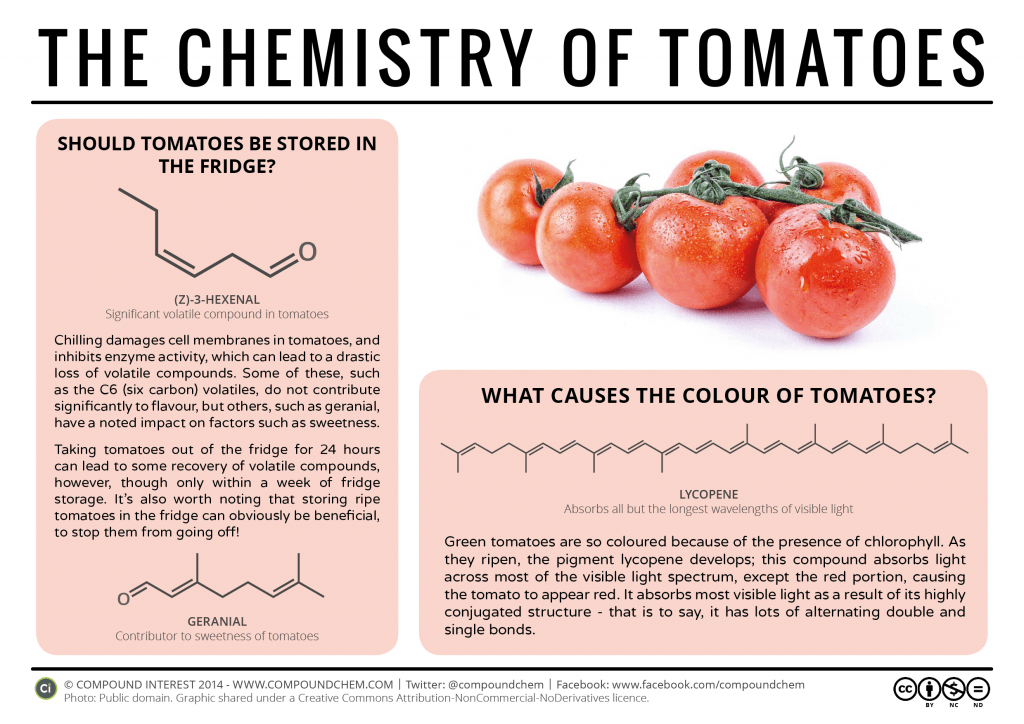
To Refrigerate, Or Not To Refrigerate? – The Chemistry of Tomatoes

You may have previously come across the advice that tomatoes shouldn’t be refrigerated, but should be stored at room temperature, in order to maximise their flavour. To understand the reasoning behind this, we need to take a look at the chemical compounds that give tomatoes their flavour, and the effect that refrigeration has on the production of these.
Let’s first consider the compounds we’re talking about in the first place. Volatile compounds are those that easily evaporate at room temperature, and are responsible for the aromas, and to an extent flavours, of foods. For most foods, a complex mixture of compounds goes into producing the aroma and flavour, and tomatoes are no different. Over 400 volatile compounds have been detected in tomatoes, but of these, researchers have narrowed it down to around 16 key compounds that are associated with flavour and sweetness.
The C6 volatiles (chemical compounds based on six carbons) are known to be the most abundant class of volatiles in tomatoes, but researchers have found that they are not likely to have a significant impact on the flavour of the tomato. With that said, it’s interesting to note that one of the most abundant tomato compounds in this class, (Z)-3-hexenal, is also the chemical compound largely responsible for the aroma of fresh-cut grass. The flavours in tomatoes owe a lot to the presence of sugars such as glucose & fructose, as well as fruit acids, but it’s the effect that chilling has on the volatile compounds that gives weight to the argument for not storing them in the fridge.
A 2013 study found that tomatoes stored at 4˚C showed a drastic decrease in the concentrations of volatile compounds; after 30 days of storage at this temperature, they found that the overall concentration had decreased by 66%. They discovered that the low temperature storage was in particular detrimental to the aroma of the tomatoes, whilst, by contrast, storage at 20˚C resulted in an increase in volatile compound production. The lower volatile compound production at refrigeration temperatures is due to the inhibition of enzymatic activity in the tomato. In theory then, it seems an open and shut case – tomatoes & refrigeration just don’t get along.
However, the study also points out that, for up to a week of storage in the fridge, removing the tomatoes from refrigeration for 24 hours could ‘recondition’ them and increase volatile compound production once again. This was still possible for periods of time longer than a week, but in these cases there remained a discrepancy in the levels of volatile compounds compared to tomatoes at room temperature. Obviously, the refrigeration of tomatoes is often for practical purposes, and it’s doubtless much more conducive to your tomatoes not beginning to rot away if they’re stored in the fridge. It is, however, particularly important not to store tomatoes that are yet to fully ripen in the fridge, as this can slow the ripening process.
In short, the verdict seems to be that you can get away with storing fully ripe tomatoes in the fridge for up to a week to prevent them going off, before then leaving them out for a short time to recover their volatile compound producing ability. Leave them in for longer than a week, and you’re going to be enjoying a less flavoursome tomato!

Source:

Thursday, October 16, 2014

Plant variants point the way to improved biofuel production

Manufacturing biofuels from food crop by-products such as straw could be made quicker and cheaper thanks to a new study led by scientists at the University of York.

The research funded by the Biotechnology and Biological Sciences Research Council (BBSRC) discovered variant straw plants whose cell walls are more easily broken down to make biofuels, but which are not significantly smaller or weaker than regular plants.
The discovery by researchers in the Centre for Novel Agricultural Products at York could help ease pressure on global food security as biofuels from non-food crops become easier and cheaper to make.
The impact of carbon emissions on global warming is driving the need for carbon neutral biofuels. Many existing biofuels are produced from crops which can be used for food, and therefore have a negative impact on global food security.
One answer is to make fuels from woody, non-food parts of plants such as straw. These are rich in polysaccharides (sugar chains) which can be broken down into simple sugars and then fermented into ethanol for fuel. However, such biofuels are currently too expensive because of the cost of digesting the woody tissues into simple sugars.
The CNAP researchers led by Professor Simon McQueen-Mason, working with colleagues in France, screened a large collection of variants of the model grass species Brachypodium for digestibility. Screening mutants in this way allows rapid assessment of the range of natural diversity that can be found in a species.
Using this approach, PhD student Poppy Marriott identified 12 independent plant lines with highly digestible straw, but which grew normally and showed no decrease in straw strength. Analysing these plants showed that increased digestibility can be achieved through a range of changes in the cell wall, where the majority of sugar is contained in woody biomass.
In addition the team at York also showed they can identify the gene alterations that give rise to the high digestibility. The new results are published in the latest edition of the Proceedings of the National Academy of Sciences USA.
By identifying these plant variants with straw that is easier to digest, but which retain their size and strength, the cost and complexity of biofuel production could be reduced.
Professor McQueen-Mason said: “This work sets the stage for identifying similar high-digestibility lines in commercial crop species that will pave the way to more cost-effective and sustainable biofuels.
“Using plant by-products such as straw provides a double benefit as we can harvest the food from the plant, then use the straw to produce a carbon neutral fuel.”
Professor Melanie Welham, BBSRC Executive Director for Science, said: “This research is another important step towards making carbon-neutral biofuels both easier and cheaper to produce. Using crop by-products such as straw for biofuels reduces pressure on food supplies and also adds value to the crop, boosting food security and helping farmers.
“It is just one example of how BBSRC investment in world class bioscience is working towards addressing some of the existing and emerging global challenges that we all face.”

Further information:A range of cell wall alterations enhance saccharification in Brachypodium distachyon mutants is published in Proceedings of the National Academy of Sciences USA.
The Biotechnology and Biological Sciences Research Council (BBSRC) invests in world-class bioscience research and training on behalf of the UK public. Its aim is to further scientific knowledge, to promote economic growth, wealth and job creation and to improve quality of life in the UK and beyond. Funded by Government, BBSRC invested over £484M in world-class bioscience in 2013-14. It supports research and training in universities and strategically funded institutes. BBSRC research and the people it funds are helping society to meet major challenges, including food security, green energy and healthier, longer lives. BBSRC investments underpin important UK economic sectors, such as farming, food, industrial biotechnology and pharmaceuticals.For more information about BBSRC, its science and impact see:http://www.bbsrc.ac.uk For more information about BBSRC strategically funded institutes see: http://www.bbsrc.ac.uk/institutes
The Centre for Novel Agricultural Products (CNAP) is an award winning strategic research centre based in the Department of Biology at the University of York. CNAP is dedicated to realising the potential of plants as renewable, low-cost factories that produce high-value chemicals and biofuels. Laboratory based discoveries are translated into practice in partnership with industry.www.york.ac.uk/org/cnap/

Source:

Tuesday, October 14, 2014

Natural gene selection can produce orange corn rich in provitamin A for Africa, U.S.

Purdue researchers have identified a set of genes that can be used to naturally boost the provitamin A content of corn kernels, a finding that could help combat vitamin A deficiency in developing countries and macular degeneration in the elderly.
Professor of agronomy Torbert Rocheford and fellow researchers found gene variations that can be selected to change nutritionally poor white corn into biofortified orange corn with high levels of provitamin A carotenoids - substances that the human body can convert into vitamin A. Vitamin A plays key roles in eye health and the immune system, as well as in the synthesis of certain hormones.
"This study gives us the genetic blueprint to quickly and cost-effectively convert white or yellow corn to orange corn that is rich in carotenoids - and we can do so using natural plant breeding methods, not transgenics," said Rocheford, the Patterson Endowed Chair of Translational Genomics for Crop Improvement.
Vitamin A deficiency causes blindness in 250,000 to 500,000 children every year, half of whom die within a year of losing their eyesight, according to the World Health Organization. The problem most severely affects children in Sub-Saharan Africa, an area in which white corn, which has minimal amounts of provitamin A carotenoids, is a dietary mainstay.
Insufficient carotenoids may also contribute to macular degeneration in the elderly, a leading cause of blindness in older populations in Europe and the U.S.
Identifying the genes that determine carotenoid levels in corn kernels will help plant breeders develop novel biofortifed corn varieties for Africa and the U.S. The dark orange color of these corn varieties also makes them more culturally acceptable to consumers in African countries where yellow corn is generally fed only to animals, Rocheford said.
Previous research by Rocheford and his colleagues identified two genes that contribute to provitamin A carotenoid levels in corn kernels, but "we wanted more cookies in the jar for breeders to pick from," he said.
The researchers used a combination of statistical analysis and prediction models to identify and assess the potential usefulness of genes associated with carotenoid levels in corn. They evaluated data sets from about 200 genetically diverse lines of corn at varying scopes of investigation - from the entire corn genome to stretches of DNA surrounding small sets of genes. They uncovered four genes that had not previously been linked to carotenoid levels in corn kernels.
Though many genes likely contribute to carotenoid levels in corn, "we're pretty confident that our previous and current research has now identified several genes that are the major players," Rocheford said.
Their study found that a combination of visually selecting corn with darker orange kernels and using a number of these favorable genes could be an effective way to rapidly convert white and yellow corn varieties to orange corn with higher levels of provitamin A and total carotenoids.
"We now have the genetic information needed to begin developing a major public-private sector collaboration with the goal of providing orange corn with high levels of provitamin A to farmers throughout Sub-Saharan Africa," he said.
The study also showed that using a more targeted approach to predicting the usefulness of a small set of genes was as effective as evaluating the whole corn genome, said Brenda Owens, doctoral candidate and first author of the study.
"Having this smaller list of genes to select for means that we can make the improvement of carotenoid levels in corn a simpler, faster process for plant breeders," she said.
Their research - in collaboration with HarvestPlus and the International Maize and Wheat Improvement Center, also known as CIMMYT - has yielded varieties of orange corn with markedly higher amounts of provitamin A carotenoids. But further efforts to produce even higher levels will be necessary to offset degradation of nutrients after harvest and reduce the amount of corn African consumers would need to eat to attain enough provitamin A, Rocheford said.
Varieties of orange corn are currently being grown in Zambia, Zimbabwe, Nigeria and Ghana. An open-pollinated variety of orange corn could be available for organic and local grower operations in the U.S. by 2016, he said.
The paper was published online in Genetics and is available at http://www.genetics.org/content/early/2014/09/25/genetics.114.169979.full.pdf+html
A video presentation of Rocheford discussing the research behind biofortified orange corn and its implications is available athttp://docs.lib.purdue.edu/dawnordoom/2014/presentations/11/
Funding for the research was provided by the National Science Foundation; HarvestPlus; Purdue University startup and Patterson Chair funds; the U.S. Department of Agriculture-Agricultural Research Service; Cornell University startup funds; a U.S. Department of Agriculture National Needs Fellowship; and a Borlaug Fellowship.

ABSTRACT
A foundation for provitamin A biofortification of maize: genome-wide association and genomic prediction models of carotenoid levels
Brenda F. Owens 1; Alexander E. Lipka 2; Maria Magallanes-Lundback 3; Tyler Tiede 1; Christine H. Diepenbrock 4; Catherine B. Kandianis 3, 4; Eunha Kim 3; Jason Cepela 5; Maria Mateos-Hernandez 1; C. Robin Buell 1; Edward S. Buckler 2, 4, 6; Dean DellaPenna 3; Michael A. Gore 4; Torbert Rocheford 1

1 Purdue University, Department of Agronomy, West Lafayette, IN 47907
2 Cornell University, Institute for Genomic Diversity, Ithaca, NY 14853
3 Michigan State University, Department of Biochemistry and Molecular Biology, East Lansing, MI 48824
4 Cornell University, Department of Plant Breeding and Genetics, Ithaca, NY 14853
5 Michigan State University, Department of Plant Biology, East Lansing, MI 48824
6 United States Department of Agriculture-Agricultural Research Service (ARS), Robert W. Holley Center for Agriculture and Health, Ithaca, NY 14853

Efforts are underway for development of crops with improved levels of provitamin A carotenoids to help combat dietary vitamin A deficiency. As a global staple crop with considerable variation in kernel carotenoid composition, maize (Zea mays L.) could have widespread impact. We performed a genome-wide association study (GWAS) of quantified seed carotenoids across a panel of maize inbreds ranging from light yellow to dark orange in grain color to identify some of the key genes controlling maize grain carotenoid composition. Significant associations at the genome-wide level were detected within the coding regions of zep1 and lut1, carotenoid biosynthetic genes not previously shown to impact grain carotenoid composition in association studies, as well as within previously associated lcyE and crtRB1 genes. We leveraged existing biochemical and genomic information to identify 58 a priori candidate genes relevant to the biosynthesis and retention of carotenoids in maize to test in a pathway-level analysis. This revealed dxs2 and lut5, genes not previously associated with kernel carotenoids. In genomic prediction models, use of markers that targeted a small set of quantitative trait loci (QTL) associated with carotenoid levels in prior linkage studies were as effective as genome-wide markers for predicting carotenoid traits. Based on our GWAS, pathway-level analysis, and genomic prediction studies, we outline a flexible strategy involving use of a small number of genes that can be selected for rapid conversion of elite white grain germplasm, with minimal amounts of carotenoids, to orange grain versions containing high levels of provitamin A.

Source:

Friday, October 10, 2014

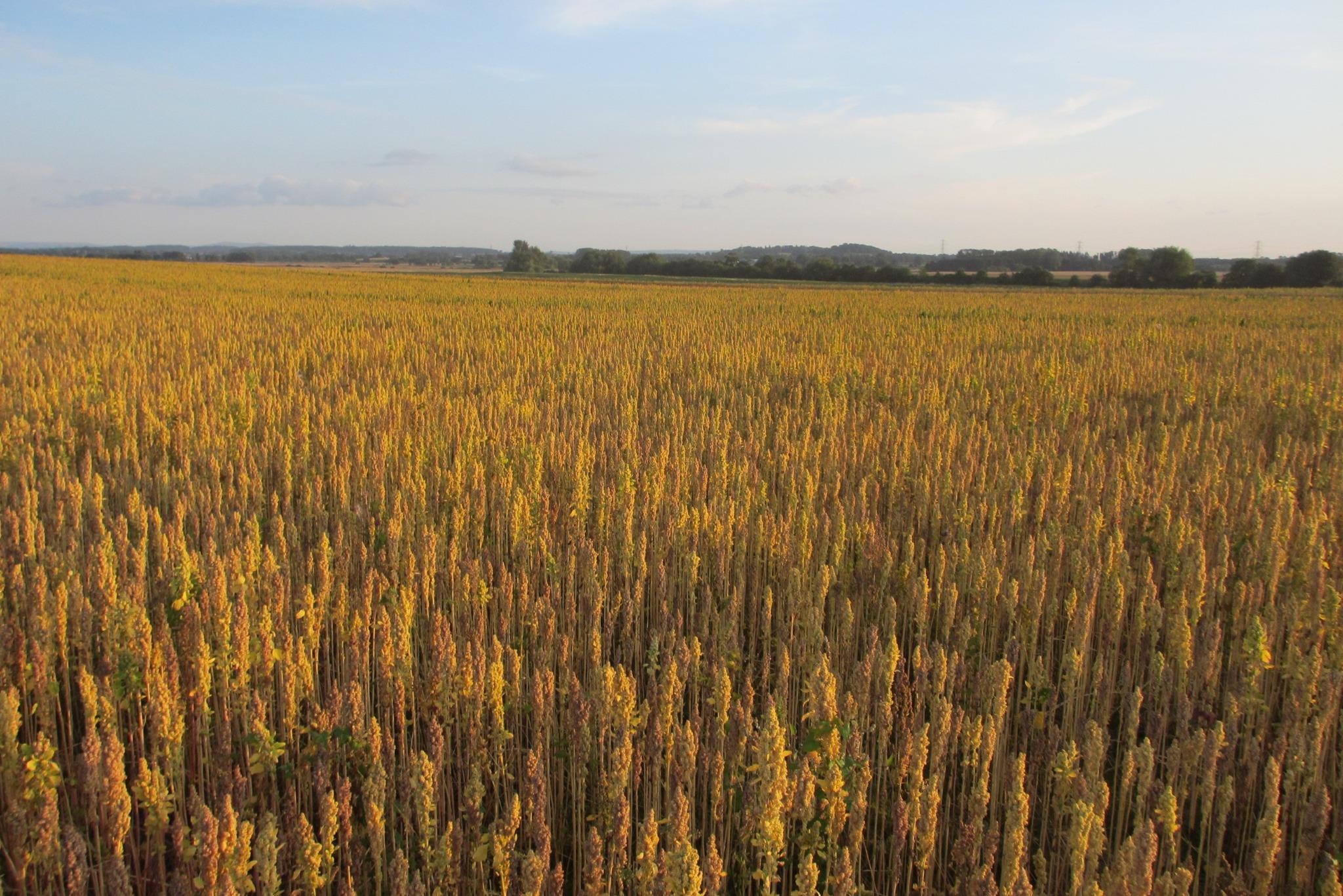
Getting keen about quinoa

Stephen Jones is the producer of 100% British grown quinoa grains. He does that on his farm in Shropshire, and runs the British Quinoa Company. Hear from him about how he started up the firm and where production of the super-grain is headed. Plus we’ll hear much more about the grain: how it’s grown and harvested, the problems posed by the great British weather, about its different strains, how Stephen has to have a licence to grow it. And … how you pronounce the name of the grain. A fascinating chat in store!
And Claire from Juvela tells us about the British prescription-based glutenfree brand. Yep in the UK we can get coeliac-friendly food through the National Health Service. Hear how that works, what you are entitled to and why that’s different in various parts of the country. Juvela only make GF food for prescriptions and provide to pharmacies across the country, so hear about their range and why they’re not allowed to call their flour, ‘flour’!


Source:

Wednesday, October 08, 2014

ICN2 Photo Contest - 15 September to 16 October 2014


The problems of malnutrition—undernutrition, micronutrient deficiencies and obesity—exist in all countries, developed and developing, and across all socio-economic classes. By launching this photo contest, the Food and Agriculture Organization of the United Nations (FAO) aims to raise awareness about the importance of nutrition, emphasizing that it starts with what we eat: the products of the food and agriculture sector. FAO also wishes to engage the general public in an international effort to improve nutrition.

As the United Nations premier agency working on food and agriculture, FAO leads the effort to eliminate hunger and to ensure that people have regular access to enough high-quality food to lead active, healthy lives. The images on the topic of nutrition, sent by participants from around the world, will help illustrate the importance of this key thematic area of FAO’s work.
Jury and prizes

The jury of the contest will be formed by FAO staff with the support of National Geographic.

The best three images will be awarded with prizes consisting of assignments with FAO for a photographic mission to an FAO project or office close to the residence of the awardee.

The best images will be featured in FAO communication materials and social media channels.

Source:

Sunday, October 05, 2014

The future of global agriculture may include new land, fewer harvests

Climate change may expand suitable cropland, particularly in the Northern high latitudes, but tropical regions may becoming decreasingly suitable.

Most of the Earth's accessible agricultural land are already under cultivation. Ecological factors such as climate, soil quality, water supply and topography determine the suitability of land for agriculture. Climate change may impact global agriculture, but some regions may benefit from it. In a new study, researchers focused on the probable impact of climate change on the supply of land suitable for the cultivation of the 16 major food and energy crops worldwide, including staples such as maize, rice, soybeans and wheat. They simulated the impact of climate change on agricultural production over the course of the 21st century and found that two-thirds of all land potentially suitable for agricultural use is already under cultivation.
The results indicate that climate change may expand the supply of cropland in the high latitudes of the Northern hemisphere, including Canada, Russia, China, over the next 100 years. However, in the absence of adaptation measures such as increased irrigation, the simulation projects a significant loss of suitable agricultural land in Mediterranean regions and in parts of Sub-Saharan Africa. The land suitable for agricultural would be about 54 million km2 -- and of this, 91% is already under cultivation. "Much of the additional area is, however, at best only moderately suited to agricultural use, so the proportion of highly fertile land used for crop production will decrease," says Zabel. Moreover, in the tropical regions of Brazil, Asia and Central Africa, climate change will significantly reduce the chance of obtaining multiple harvests per year.
"In the context of current projections, which predict that the demand for food will double by the year 2050 as the result of population increase, our results are quite alarming. In addition, one must consider the prospect of increased pressure on land resources for the cultivation of forage crops and animal feed owing to rising demand for meat, and the expansion of land use for the production of bioenergy," says Zabel.

Source:http://www.sciencedaily.com/

Florian Zabel, Birgitta Putzenlechner, Wolfram Mauser. Global Agricultural Land Resources – A High Resolution Suitability Evaluation and Its Perspectives until 2100 under Climate Change Conditions. PLoS ONE, 2014; 9 (9): e107522 DOI: 10.1371/journal.pone.0107522

Wednesday, October 01, 2014

Future of our crops is at risk in conflict zones, say scientists

Wild species related to our crops, which are crucial as potential future food resources, have been identified by scientists, however, a significant proportion are found in conflict zones in the Middle East, where their conservation is increasingly comprised.

Wild species related to our crops which are crucial as potential future food resources have been identified by University of Birmingham scientists, however, a significant proportion are found in conflict zones in the Middle East, where their conservation is increasingly comprised.
The scientists have identified 'hotspots' around the globe where crop wild relatives (CWR) -- species closely related to our crops which are needed for future crop variety development -- could be conserved in the wild in order to secure future global food resources.
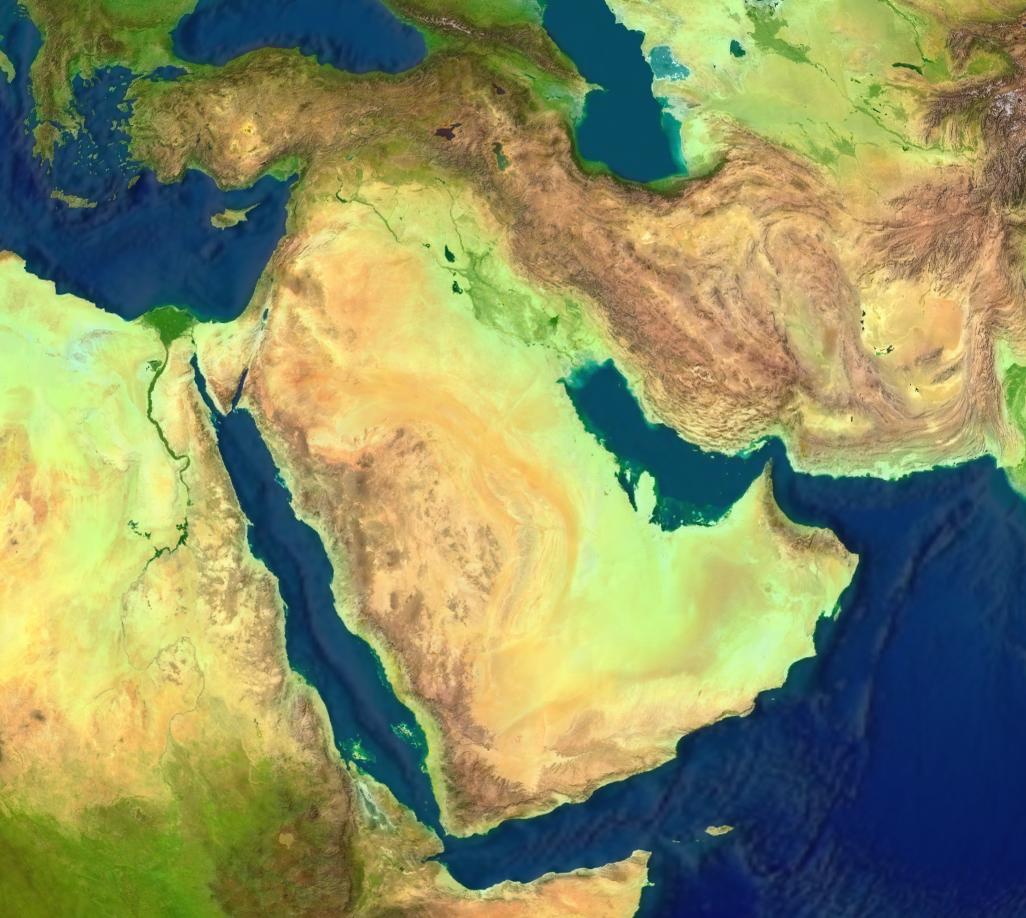
The hotspot where CWR are most concentrated is in the so-called 'Fertile Crescent', which is situated in the Middle East, arcing around the Arabian desert from Jordan, Palestine, Israel, Syria, Lebanon, Turkey and ending in Iraq and Iran.
Climate change, along with a steady rise in the human population is forecast to have a detrimental impact on crops that are grown for food. The wild relatives of crops, however, contain many useful traits such as drought tolerance, yield improvement, and resilience to pests and diseases. These wild species can be used by plant breeders to create stronger, more resilient crop varieties which will help to underpin future food security.
Now a comprehensive database of globally important CWR exists, thanks to this study. The inventory lists 173 crops and their 1667 priority wild relatives, along with their particular traits. For example, the crop wild relative of the wheat crop, Aegilops tauschii, is resistant to Hessian Fly which is pest of cereal crops; Saccharum arundinaceum is a relative of sugar cane and can survive very low temperatures, andPrunus ferganensis, the crop wild relative of peach, is tolerant to drought conditions. Globally, the highest concentration of CWR per unit area is found in Syria and Lebanon.
Research at Birmingham has shown that 12 per cent of CWRs are threatened with extinction and all are likely to be already suffering a loss of genetic diversity due to habitat loss and alteration, conflict, intensive agriculture, urbanisation, and mismanagement of the environment. However, until now, there has been no attempt to systematically conserve the diversity of this important global resource.
A new initiative led by the Food and Agriculture Organisation of the UN, with help from scientists at the University of Birmingham, will, for the first time, plan and implement effective conservation of these priority plant species in the countries where they are found. The Birmingham scientists are now working on a strategy to conserve CWRs by identifying and promoting the establishment of managed conservation sites in the wild, while taking samples and placing them in gene banks as a safety back up, where the genetic material can be kept for up to 300 years.
The team is currently negotiating with governments in the Fertile Crescent to highlight the plight of these species and to try to implement 'in situ' conservation in the hotspot areas.
Dr Nigel Maxted, lead investigator from the University of Birmingham's School of Biosciences, said: 'There has previously been no opportunity to systematically conserve and use CWR as there was a lack of clarity over their identities and distribution. By creating an inventory of globally important CWR we can discover which countries and regions are the richest in terms of priority CWR, and more efficiently plan and coordinate conservation efforts to ensure their survival.
'It is very important that we conserve these species in secure gene banks, but it is critical to conserve them in their natural habitat as they will continue to adapt to changes in the climate as well as threats from pests and diseases.'
'The global population is now 7 billion and by 2050 it will be 9 billion so it is now even more crucial that we conserve crop wild relatives as part of the wider need to address global food security issues.'
As well as the abundance of CWR in the Fertile Crescent, many CWR can be found in the UK including the wild relatives of sugarbeet, asparagus, raddish and wild garlic. The Birmingham team is now working with Natural England to identify an area where CWR can be conserved in their natural habitat in the UK.

Source:

http://www.sciencedaily.com/

Monday, September 29, 2014

'Most famous wheat gene' discovered, clears way for non-GMO breeding

Researchers have found 'the most famous wheat gene,' a reproductive traffic cop of sorts that can be used to transfer valuable genes from other plants to wheat. The discovery clears the way for breeders to develop wheat varieties with the disease- and pest-resistance traits of other grasses, using a legion of genetic tools that can reduce crop losses and pesticide use while foregoing the cost, regulatory hurdles and controversy of genetically modified organisms.
The discovery clears the way for breeders to develop wheat varieties with the disease- and pest-resistance traits of other grasses, using a legion of genetic tools that can reduce crop losses and pesticide use while foregoing the cost, regulatory hurdles and controversy of Genetically Modified Organisms, or GMOs.
"The real exciting part of this gene is that it has tremendous potential for application," said Kulvinder Gill, a WSU professor, who reports his findings in the journalProceedings of the National Academy of Sciences.
For some 35 million years, the wild ancestors of wheat routinely traded genes as they accidentally cross-bred with each other. But with the rise of agriculture and cultivated wheat 10,000 years ago, the plant's genetic structure changed. Instead of being diploid, with two sets of chromosomes like humans and most other living things, it became polyploid, with, in the case of bread wheat, seven sets of six related chromosomes.
Starting in 1958, just five years after the discovery of DNA's double-helix structure, researchers suspected that a specific gene controls the orderly pairing of wheat chromosomes during reproduction.
"If this gene was not present, there would be chaos in the nucleus," said Gill. "Six chromosomes would pair with each other, and sometimes five chromosomes would go to one cell and one to the other, resulting in a sterile plant. Because of this gene, wheat can be fertile. Without this gene, it would be more like sugar cane, where it is a mess in the nucleus and it can only be vegetatively propagated."
But the gene also prevents wheat from breeding with related ancestors that can contain a vast array of traits preferred by growers.
"This gene would not allow rye chromosomes to pair with wheat," said Gill. "We cannot get a single gene transfer into wheat as long as this gene is present."
Interest in the gene, called Ph1, has spawned scores of research papers, making it what Gill called, "the most famous wheat gene."
In 2006, British researchers writing in the journal Nature said they identified the gene.
"In this paper," said Gill, "we show that their gene is not the Ph1." Knowing their findings would be controversial, Gill and his colleagues spent a year repeating the experiments that led to their conclusion. They are now moving on.
"Now that we have the gene, we can actually use that gene sequence to temporarily silence the gene and make rye and other chromosomes pair with wheat and transfer genes by a natural method into wheat without calling it GMO," Gill said.
Their first effort involves transferring a gene from jointed goatgrass, a wild relative of wheat, to confer resistance to stripe rust. The fungus is considered the world's most economically damaging wheat pathogen, costing U.S. farmers alone some $500 million in lost productivity in 2012.
While facilitated by technology, the actual exchange of genetic material is similar to what has long taken place in nature, only faster. Incorporating the gene transfer into the overall breeding process, researchers can develop a new variety in five years, said Gill.
"If we let wheat evolve for another few millions years in the wild, maybe it will develop enough variation, but we don't have that kind of time," said Gill. "We need to solve this problem today."

Source:
http://www.sciencedaily.com/

Ramanjot Bhullar, Ragupathi Nagarajan, Harvinder Bennypaul, Gaganpreet K. Sidhu, Gaganjot Sidhu, Sachin Rustgi, Diter Von Wettstein, and Kulvinder S. Gill.Silencing of a metaphase I-specific gene results in a phenotype similar to that of the Pairing homeologous 1 (Ph1) gene mutations. PNAS, September 2014 DOI: 10.1073/pnas.1416241111