Showing posts with label Drought. Show all posts

Wednesday, August 19, 2015

Journal of Agronomy - Current Issue

Journal of Agronomy - Current Issue
  • Quantitative Analysis of Induced Phenotypic Diversity in Chickpea Using Physical and Chemical Mutagenesis
  • Effect of Nitrogen and Phosphorus Fertilizers on Growth, Yield and Yield Components of Black Cumin (Nigella sativa L.) at Konta District, South West Ethiopia
  • Relationship Between some Growth Parameters, Dry Matter Content and Yield of Some Sweet Potato Genotypes Grown under Rainfed Weathered Ultisols in the Humid Tropics
  • Aerial Ramet Dynamics and General Clonal Growth Patterns of Scirpus grossus in Grown at Different Water Depths and Fertilizer Regimes in Paddy Soils
  • Seeder Performance under Different Speeds and its Relation to Soybean Cultivars Yield
  • Study on the Potential of Land Utilization for Energy Plantation as Biodiesel Feedstock: Case Study of Andalas University Campus at Limau Manis
  • Yield Response of Maize to Integrated Soil Fertility Management on Acidic Nitosol of Southwestern Ethiopia
  • Character Association and Path Coefficient Analysis of Maize (Zea mays L.) Grown under Incorporated Legumes and Nitrogen
  • Orange Fleshed Sweet Potato (Ipomoea batatas L.) Varieties Evaluated with Respect to Growth Parameters at Jimma in Southwestern Ethiopia
  • Effects of Water Ozonated and Salinity on Some Properties of Cucumber
  • Agronomic Performance and Genetic Variability among Common Bean Genotypes in Savanna/Pantanal Ecotone

Sunday, July 19, 2015

The impact of the Quinoa boom on Bolivian family farmers

New findings based on survey results from 100 households located in southern Bolivia. 81% of farmers interviewed between December 2012 and March 2013 say quinoa is their primary source of income. Benefits of the increase in Quinoa prices:
  • Guarantees improved incomes and access to credit 
  • Access to additional labour and machinery
  • Increased productivity 
Challenges:
  • Land degradation
  • Reduction of cultivated varieties


Source:

Tuesday, July 07, 2015

Slow Food and FAO launch “Quinoa in the Kitchen”

Recipe book is the first fruit of a partnership that aims to make quinoa a staple of the world’s kitchens
The Slow Food movement and FAO officially launched the book, “Quinoa in the Kitchen,” today to continue to promote awareness about the super-food’s potential as the International Year of Quinoa draws to a close.
The book gives an overview of quinoa’s roots in the history and culture of the central Andean high plateau, geographically extending across the borders of Peru and Bolivia, which together account for the vast majority of quinoa production in the world.
Since quinoa is still new to many beyond the Andes, the book includes a selection of quinoa recipes created by some of the world’s top chefs. The aim is to bring quinoa to kitchens across the world, where it may someday be as commonplace as pasta or rice.
Quinoa is exceptionally versatile, which has drawn it attention as a potential alternative crop that could be an added tool to be able to produce sufficient food for the world’s growing population – expected to grow by 2 billion people by 2050 – as the climate shifts. Different varieties of quinoa can be grown from sea level to 4000 metres in altitude, it can withstand temperatures from below freezing to 38 degrees Celsius, in both humid and arid climates and in a variety of soil conditions.
"Quinoa is part of the effort to recover these lost foods and to promote traditional and forgotten crops. It is also part of the idea that food is not only a commodity. It is a lot more than that. It is also culture, it is also taste, it is also a lot of things that are closely related to our history,” said FAO Director-General José Graziano da Silva.
Slow Food President Carlo Petrini said that the book draws inspiration from the two organizations “shared vision of a sustainable world free from hunger and that safeguards biodiversity for future generations.”
“Central to the process is gastronomy itself and the idea that this holistic, multidisciplinary science, which encompasses everything from agriculture to history, from economics to anthropology, from botany to culinary art, can be a liberating force of the communities most hit by malnutrition,” he added.
Quinoa is higher in protein than grains such as wheat, corn or rice, and it packs in vitamins, minerals and essential amino acids that are important to human nutrition but which many foods lack in just one source.
FAO is currently overseeing a programme in Argentina, Bolivia, Chile, Ecuador and Peru for the sustainable intensification of quinoa farming and food production systems in the Andean region. FAO is assisting countries to respond to a rising demand for quinoa so farmers can benefit from high prices while preserving the environment and biodiversity. Helping farmers to access the organic and fair trade sectors on international markets is one important element of the programme.
FAO is planning a regional project in arid and semi-arid areas of the Near East, where quinoa could prove useful to provide sufficient nutritious food even under extreme climactic conditions. In Algeria, Egypt, Iraq, Iran, Lebanon, Mauritania, Sudan and Yemen, varieties will be selected and field tested to gauge which types of quinoa have the highest yields and nutritional values even under stress, such as drought.
Similar projects are being developed for Bhutan, Brunei and Sri Lanka , as well as for Kygryzstan and Tajikistan.
The United Nations has declared 2013 the “International Year of Quinoa.”

Tuesday, October 21, 2014

Estado del arte de la quinua en el mundo en 2013

Editado por
Bazile, D., Bertero, D. y Nieto, C.

Organización de las Naciones Unidas para la Alimentación y la Agricultura (FAO) Santiago, Chile
Centre de Coopération Internationale en Recherche Agronomique pour le Développement (CIRAD) Montpellier, France

Resumen
En el 2013 las Naciones Unidas declararon el Año Internacional de la Quinua, situándola en un espacio privilegiado a nivel global, generando expectativas y desafíos.
El "Estado del arte de la quinua en el mundo en 2013" es una publicación conjunta entre el CIRAD y la FAO que reúne en un solo libro toda la información relevante sobre la quinua generada por los más destacados investigadores del mundo, organizaciones de productores, tomadores de decisión, y todos aquéllos que se preocupan por este alimento. El libro tiene como objetivo principal favorecer la difusión de estos conocimientos, promover el dialogo y el debate entre actores del desarrollo de la quinua a nivel mundial y generar nuevas expectativas del cultivo en el mundo, considerando sus aportes a la seguridad alimentaria y a la economía de la agricultura familiar, pero también considerando los riesgos inherentes de una expansión descontrolada, en particular poniendo énfasis: en la necesidad de regulación de la circulación de los recursos fitogenéticos y la redistribución justa y equitativa de los beneficios de su utilización fuera de la zona andina y la sostenibilidad de los sistemas agrícolas. Esperamos que este libro se constituya en una herramienta que impulse el desarrollo de programas y proyectos respetuosos, responsables y éticos de quinua en el mundo manteniendo y preservando la biodiversidad de la quinua.


Sunday, October 05, 2014

The future of global agriculture may include new land, fewer harvests

Climate change may expand suitable cropland, particularly in the Northern high latitudes, but tropical regions may becoming decreasingly suitable.

Most of the Earth's accessible agricultural land are already under cultivation. Ecological factors such as climate, soil quality, water supply and topography determine the suitability of land for agriculture. Climate change may impact global agriculture, but some regions may benefit from it. In a new study, researchers focused on the probable impact of climate change on the supply of land suitable for the cultivation of the 16 major food and energy crops worldwide, including staples such as maize, rice, soybeans and wheat. They simulated the impact of climate change on agricultural production over the course of the 21st century and found that two-thirds of all land potentially suitable for agricultural use is already under cultivation.
The results indicate that climate change may expand the supply of cropland in the high latitudes of the Northern hemisphere, including Canada, Russia, China, over the next 100 years. However, in the absence of adaptation measures such as increased irrigation, the simulation projects a significant loss of suitable agricultural land in Mediterranean regions and in parts of Sub-Saharan Africa. The land suitable for agricultural would be about 54 million km2 -- and of this, 91% is already under cultivation. "Much of the additional area is, however, at best only moderately suited to agricultural use, so the proportion of highly fertile land used for crop production will decrease," says Zabel. Moreover, in the tropical regions of Brazil, Asia and Central Africa, climate change will significantly reduce the chance of obtaining multiple harvests per year.
"In the context of current projections, which predict that the demand for food will double by the year 2050 as the result of population increase, our results are quite alarming. In addition, one must consider the prospect of increased pressure on land resources for the cultivation of forage crops and animal feed owing to rising demand for meat, and the expansion of land use for the production of bioenergy," says Zabel.

Source:http://www.sciencedaily.com/

Florian Zabel, Birgitta Putzenlechner, Wolfram Mauser. Global Agricultural Land Resources – A High Resolution Suitability Evaluation and Its Perspectives until 2100 under Climate Change Conditions. PLoS ONE, 2014; 9 (9): e107522 DOI: 10.1371/journal.pone.0107522

Wednesday, October 01, 2014

Future of our crops is at risk in conflict zones, say scientists

Wild species related to our crops, which are crucial as potential future food resources, have been identified by scientists, however, a significant proportion are found in conflict zones in the Middle East, where their conservation is increasingly comprised.

Wild species related to our crops which are crucial as potential future food resources have been identified by University of Birmingham scientists, however, a significant proportion are found in conflict zones in the Middle East, where their conservation is increasingly comprised.
The scientists have identified 'hotspots' around the globe where crop wild relatives (CWR) -- species closely related to our crops which are needed for future crop variety development -- could be conserved in the wild in order to secure future global food resources.
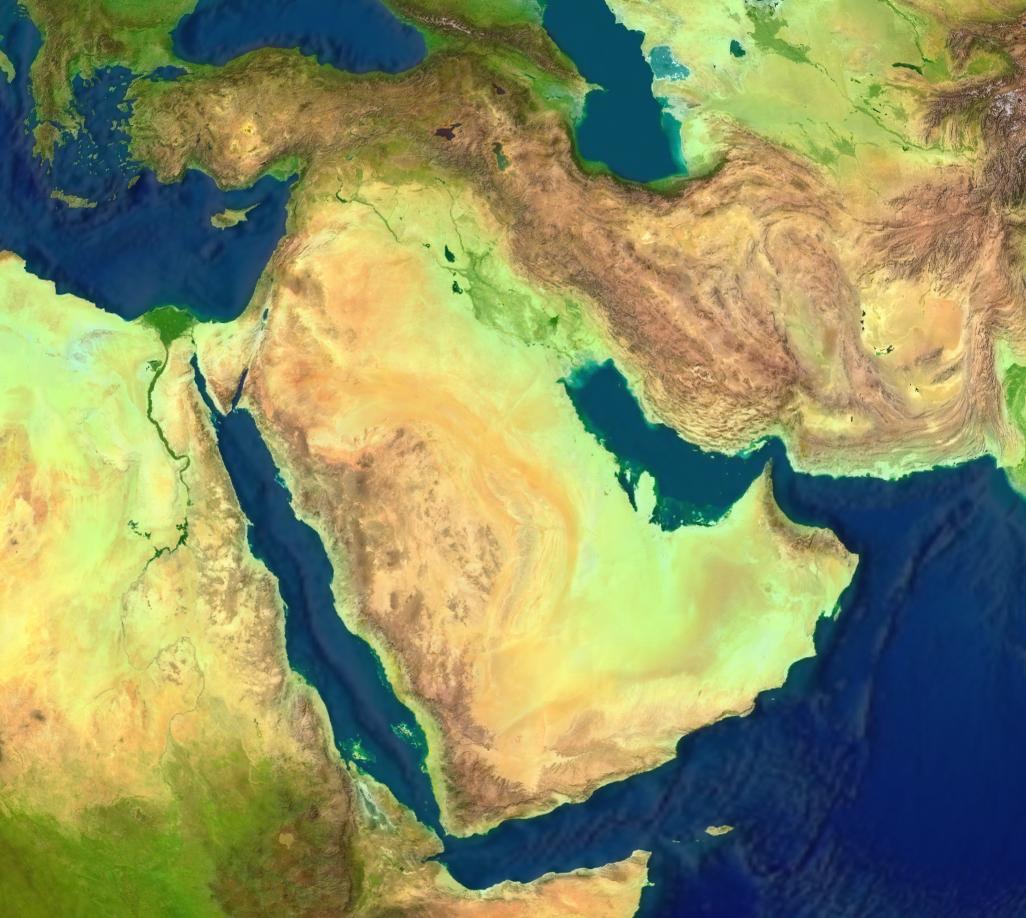
The hotspot where CWR are most concentrated is in the so-called 'Fertile Crescent', which is situated in the Middle East, arcing around the Arabian desert from Jordan, Palestine, Israel, Syria, Lebanon, Turkey and ending in Iraq and Iran.
Climate change, along with a steady rise in the human population is forecast to have a detrimental impact on crops that are grown for food. The wild relatives of crops, however, contain many useful traits such as drought tolerance, yield improvement, and resilience to pests and diseases. These wild species can be used by plant breeders to create stronger, more resilient crop varieties which will help to underpin future food security.
Now a comprehensive database of globally important CWR exists, thanks to this study. The inventory lists 173 crops and their 1667 priority wild relatives, along with their particular traits. For example, the crop wild relative of the wheat crop, Aegilops tauschii, is resistant to Hessian Fly which is pest of cereal crops; Saccharum arundinaceum is a relative of sugar cane and can survive very low temperatures, andPrunus ferganensis, the crop wild relative of peach, is tolerant to drought conditions. Globally, the highest concentration of CWR per unit area is found in Syria and Lebanon.
Research at Birmingham has shown that 12 per cent of CWRs are threatened with extinction and all are likely to be already suffering a loss of genetic diversity due to habitat loss and alteration, conflict, intensive agriculture, urbanisation, and mismanagement of the environment. However, until now, there has been no attempt to systematically conserve the diversity of this important global resource.
A new initiative led by the Food and Agriculture Organisation of the UN, with help from scientists at the University of Birmingham, will, for the first time, plan and implement effective conservation of these priority plant species in the countries where they are found. The Birmingham scientists are now working on a strategy to conserve CWRs by identifying and promoting the establishment of managed conservation sites in the wild, while taking samples and placing them in gene banks as a safety back up, where the genetic material can be kept for up to 300 years.
The team is currently negotiating with governments in the Fertile Crescent to highlight the plight of these species and to try to implement 'in situ' conservation in the hotspot areas.
Dr Nigel Maxted, lead investigator from the University of Birmingham's School of Biosciences, said: 'There has previously been no opportunity to systematically conserve and use CWR as there was a lack of clarity over their identities and distribution. By creating an inventory of globally important CWR we can discover which countries and regions are the richest in terms of priority CWR, and more efficiently plan and coordinate conservation efforts to ensure their survival.
'It is very important that we conserve these species in secure gene banks, but it is critical to conserve them in their natural habitat as they will continue to adapt to changes in the climate as well as threats from pests and diseases.'
'The global population is now 7 billion and by 2050 it will be 9 billion so it is now even more crucial that we conserve crop wild relatives as part of the wider need to address global food security issues.'
As well as the abundance of CWR in the Fertile Crescent, many CWR can be found in the UK including the wild relatives of sugarbeet, asparagus, raddish and wild garlic. The Birmingham team is now working with Natural England to identify an area where CWR can be conserved in their natural habitat in the UK.

Source:

http://www.sciencedaily.com/

Saturday, July 26, 2014

"Quinoa" magazine on Flipboard

Quinoa
By Francisco Fuentes | Francisco Fuentes created a magazine on Flipboard. “Quinoa” is available with thousands of other magazines and all the news you care about. Download Flipboard for free and search for “Francisco Fuentes”.
Source: https://flipboard.com/section/quinoa-bOjVX9

Tuesday, July 15, 2014

"Tailored" water: Recipe for a greener lawn?

In Santa Fe, Albuquerque, and other big New Mexico cities, nearly every public golf course is watered today with treated city wastewater rather than precious potable water. And across the U.S. Southwest as a whole, more than 40% of golf courses receive treated wastewater.
Irrigating turf with recycled water is a key step on the path toward sustainability. But a giant leap is what New Mexico State University turfgrass expert, Bernd Leinauer, now has in mind. In a paper published July 9 in Crop Science, he and co-author Elena Sevostianova detail their recipe for a “greener” lawn: fertigation, drip irrigation, and decentralized water treatment.
Fertigation supplies fertilizers to plants in irrigation water. Drip irrigation delivers water directly to plant roots, instead of sprinkling plants from above. Scientists have studied the effectiveness of both techniques extensively, Leinauer says, especially in agricultural systems. What’s making them relevant now to urban areas are new decentralized, water treatment technologies. Once installed in a housing development or other location, these small-scale systems can “tailor” the nutrient levels in recycled water for different purposes or times of year.
In Leinauer’s and Sevostianova’s vision, a decentralized treatment system at a subdivision would be set to generate recycled water during summer containing 15 parts per million (ppm) of the nutrient, nitrate. Residents would then use this tailored water to fertigate their lawns—or, irrigate and fertilize them at the same time. Then, when the summer growing season was over, nitrate levels in the effluent water could then be dialed back down.
Drip irrigation, meanwhile, would be used to overcome people’s squeamishness about sprinkling their yards with treated wastewater from their own homes. Because drip systems put water directly into the soil, Leinauer says, homeowners wouldn’t come in contact with it.
Combining the three approaches could solve a lot of issues, he adds. Right now, many New Mexico cities remove nearly all the nitrate from wastewater—an expensive and energy-intensive step designed to prevent pollution of surface- and ground- waters when the effluent is used for irrigation or discharged downstream.
“But from a turf perspective that doesn’t make a whole lot of sense,” Leinauer says, because golf course managers then have to apply nitrate fertilizers anyway to keep turf thriving. “So, why not leave the nitrate in the water?” he asks, “Then, the water already contains a fertilizer that the golf course operator doesn’t have to buy or manage."
One critical question, however, is whether drip-irrigating with water containing relatively high levels of nitrate will cause significant losses of the nutrient to the subsoil and eventually to groundwater. As part of a larger National Science Foundation-funded project called “Re-Inventing the Nation's Urban Water Infrastructure” (ReNUWIt) Leinauer is now studying this question at a New Mexico State test facility.
Three times each week for the past two years, a small-scale treatment system at the site has produced recycled water at 15 ppm nitrate. The water is then pumped through a drip system to plots of both cool season (tall fescue) and warm season (Bermuda grass and buffalo grass) turf grasses.
So far, the turf plots being drip-irrigated with tailored water are just as green and healthy—or even more so—than those receiving potable water and mineral fertilizers, Leinauer says. He and his collaborators also see little evidence of greater nitrate loss from the fertigated, drip-irrigated plots.
Still, he cautions, the results are preliminary and there are other challenges to address, as well. Besides nitrate, for example, wastewater tends to be high in salts, meaning that soil salinity needs to be carefully managed when irrigating with it. The turfgrass industry is also pretty resistant to drip irrigation, Leinauer says, despite many studies showing its superior efficiency compared to watering with sprinklers.
These problems must be solved, though, as water supplies continue to decline. In New Mexico, in fact, demands on potable water from agriculture and a growing populace are so great that “basically the only water left for the landscape is treated effluent,” Leinauer says. But the issue is hardly unique to his region, which is why he’s hoping that researchers around the country will embark on similar studies.
“We’re doing our part here in the Southwest, but our part is completely different from, let’s say, Boston, Massachusetts, or the Midwest,” he says. “So, these questions need to be investigated more thoroughly on a regional basis.”

Source: 

Tuesday, June 24, 2014

Enter halophytes: We are running out of land for traditional agriculture. Time to figure out what saltwater plants can do for us

Ever since ancient times, the sowing of salt has been synonymous with severe and deadly retribution. The Roman general Scipio Africanus the Younger was said to have ended the Third Punic War in 146BC by razing Carthage, enslaving its population and spreading salt on its fields. In the biblical book of Judges (9:45), the brutal and unprincipled King Abimelech laid siege to the Canaanite city of Shechem. ‘He took the city,’ the biblical story says, ‘and slew the people that was therein, and beat down the city, and sowed it with salt.’
Salt kills most plants. In fact, it attacks them in much the same way that carbon monoxide kills humans. In cases of carbon monoxide poisoning, CO molecules exhaust the carrying capacity of your red blood cells, depriving your body of the oxygen it needs. Likewise, most terrestrial plants soak up the sodium ions and sodium chloride from salt much faster than they can absorb essential nutrients such as potassium, calcium and magnesium. Without those nutrients, they perish. Spread salt on the fields of your enemies and their crops will fail.
More than 97 per cent of the water on Earth is saline. Wouldn’t it be cruel if nature had locked up the vast bulk of the planet’s vital fluids in a form that no plant could drink? Well, as it happens nature is not quite that cruel. Of the 400,000 flowering plant species around the world, 2,600 do drink seawater. They are halophytes, meaning ‘salt-plant’, and they might just be the answer to a question surprisingly few governments have yet asked: namely, how can we put our planet’s practically infinite volumes of saltwater to good use?
It might not be immediately obvious why such a question is worth our time. But consider: between sea-level rise and the increase in droughts and floods, the acreage available for conventional, freshwater agriculture is shrinking rapidly. Freshwater aquifers are becoming increasingly salty: among them, the Ogallala Aquifer, which covers a quarter of the irrigated land in the US. And so one of the world’s most important breadbaskets is under threat. Elsewhere, one-sixth of the world’s population relies on Eurasian rivers that trace back to Himalayan glaciers, which are themselves disappearing because of climate change.
While the global supply of arable land is shrinking, demand keeps rising. The United Nations has calculated that, if we are to feed the 9 billion people on Earth by the middle of this century, we will have to increase agricultural productivity by as much as 70 per cent. How on earth are we going to do that? Perhaps we’ll discover some ultra-productive new crops or farming techniques; we’ve been lucky before. But even if we manage that, our crops will still have to withstand the projected spike in extreme weather caused by climate change.
Meanwhile, we are trying to replace our fossil fuels with bio alternatives. The trouble with fossil fuels, you might or might not be aware, is the ‘fossil’ part: burning them returns a lot of carbon into the atmosphere that had been locked away underground for millions of years. Biofuels, by contrast, are made from plants whose carbon was for the most part only recently pulled out of the air, so they don’t increase the atmospheric carbon count by very much. That is to say, we need them. The only catch is, they come from plants that also have to be grown and cultivated. With limited arable land and increasingly limited freshwater supplies, conventional biofuel crops have to fight for space with our own food and water. Whichever way you cut it, we are running out of land.
Enter halophytes. Edward Glenn, an environmental scientist at the University of Arizona, has been promoting the plants for the best part of two decades. Above all, he sees them as an effective way to tackle climate change itself. Deforestation generates an astonishing 20 per cent of greenhouse gas emissions today – exceeding the total carbon emissions from all cars, trucks, ships and planes around the world – and most felling takes place in order to clear ground for freshwater agriculture. ‘If you can develop new cropland using seawater and saline water and coastal deserts,’ Glenn explains, ‘and preserve all those forested lands, that’d really make a contribution to the carbon balance and climate change.’
Dennis Bushnell, chief scientist at NASA’s Langley Research Center, has been working on his own high-level analysis, and he shares Glenn’s enthusiasm for the plants, though he emphasises another aspect of the overall picture. Bushnell is one of the agency’s ‘big thinkers’, concerned not only with rocket launches but also with global-scale problems. He predicts that by developing saline agriculture on waste ground, we could get our water issues under control within ‘15 to 20 years’, freeing up as much as 70 per cent of the water that we’re using now for conventional farming. ‘The beauty of halophytes,’ says Bushnell, ‘is you can do it wherever you have wastelands and some saline water. We have a surfeit of that.’
Encouraging as these global estimates might be, what the halophyte campaign really needs are concrete business proposals. So how about this one: according to researchers at the University of Delaware, a perennial species called seashore mallow (Kosteletzkya pentacarpos) could work in desert and salty-soil regions of North America, the Middle East, southeast Asia and western Australia. Seashore mallow can grow in salty soil, using saltwater irrigation. It is non-invasive and tolerant of both droughts and waterlogging. And its seeds are 18-20 per cent oil, making it a plausible biofuel candidate.
Those researchers are John Gallagher and Denise Seliskar – respectively, professor and research scientist at Delaware’s College of Earth, Ocean and Environment. They have been championing seashore mallow for many years. Last year they published a paper in the journal Renewable Energy, co-written with a group from the US Department of Agriculture, that analysed the plant’s potential as a biodiesel and ethanol source. By their calculations, it comes out roughly on par with soybeans, one of the commonest sources of biofuel now in use. A second paper, in Biomass and Bioenergy,examined the perennial’s stems’ absorbency, revealing commercial potential as mulch, erosion control and even kitty litter and animal bedding.
That variety of applications is important. ‘The thing that became apparent to us is it wasn’t going to run economically just on the oil you squeezed out of it,’ Gallagher says. ‘It’s taken 8,000 years to evolve corn from the teosinte [wild grass] found in the Mexican highlands to the Iowa cornfields. I just don’t have that long. So we thought we’d try to come up with an array of things we can get from the plant.’ Gallagher and Seliskar estimate that the entire crop can be harvested for products that could compete with existing markets of conventionally farmed commodities. The absorbency of its inner stem makes it attractive for animal bedding, while the outer bark has been developed into a thread for cloth. The seed, as noted, is a promising stock for ethanol and biodiesel. And the seedmeal offers a spread of amino acids that make it attractive as animal feed. Roots, spent flowers and the biopolymers in the plant are also being investigated for everything from gums to industrial chemicals.
It’s pretty straightforward to cultivate, too. According to the sales pitch that the duo sends out to interested farmers, this wild cousin of cotton is at home in brackish marshes and has adapted to both soggy and salty soils. That means it might be worth considering for farmers near estuaries, for instance, or near ocean dunes or deltas that are becoming too saline for traditional crops. Planting, they say, requires only the same row planter used for soybeans or corn. Harvesting can be done with traditional tools such as a combine harvester. It sounds almost too good to be true, doesn’t it? Farmers should be beating down their door.
And yet, somehow they aren’t.
In fact, despite the halophyte family’s dazzling promise, its champions have had to be remarkably patient. The catch, says Jeannette Hoek, president of the company OceanDesertFood in the Netherlands, is creating a demand in the marketplace for halophyte food, fodder and products. Hoek’s company contracts with halophyte farmers in Mexico who grow a vegetable called salicornia, also known as glasswort or pickleweed. It looks something like a green bean crossed with a stalk of asparagus, and has become a favourite of food bloggers and locavore enthusiasts. It is, of course, rather salty. OceanDesertFood makes salicornia crackers, as well as seaweed chips. ‘These things build a market,’ she says. ‘And as soon as the farmers see they can sell something, they will do it. But as long as they don’t see that, they will be very hesitant.’
Edward Glenn was beating the halophyte drum fully 16 years ago, notably talking up the advantages of saltwater agriculture in a landmark 1998 article for Scientific American. Today, he says he’s not surprised that the ambitious changes he and his co-authors proposed – greening the world’s deserts, transforming lands with brackish water tables into sites of commercial agriculture – have not yet come to pass. ‘These kinds of changes take much longer than people think they’ll take,’ he says. ‘But if you develop the technology and the resources – and there’s a place for them – eventually they’ll be utilised.’ Agriculture, after all, is as old as human civilisation. Perhaps it has earned the right to be a slow-moving industry.
Even so, there are some peculiarly modern reasons why uptake should be slow. The greatest opportunity for halophytes, both commercially and environmentally, is fuel. But bringing halophyte biofuel up to commercial scale would require the support of big energy – and perhaps big agribusiness – corporations. ‘The oil companies would have to become agriculturalists instead of hole drillers,’ says NASA’s Bushnell. This, of course, would take them a long way out of their comfort zones. ‘We have had contacts with several big corporations,’ says Bushnell. ‘And my impression of the big energy companies is they’re trying to squeeze the last dollops of profit out of their sunk costs and investments. However, in the back room they’re like the duck, paddling like hell underwater, trying to make sure they’re on to the next thing. So they are looking at this.’
J Alan Weber is the vice president of MARC-IV, a Missouri-based biofuel consulting firm. Though seashore mallow hasn’t yet secured much in the way of attention and research funding, it remains, in his opinion, a promising biodiesel and ethanol feedstock. But how to help it break through? ‘You probably wouldn’t anticipate seeing mallow grown on acres in Indiana,’ he says. On the other hand, ‘change the story, and start talking about a piece of ground that is high in salinity, where other crops wouldn’t perform very well, then the economics change.’ In the meantime, pilot programmes on non-traditional farmlands might draw in the research dollars. Weber recommends trials on federal lands, military bases, highway right-of-ways, or municipal county lands such as airports.
Air travel, in fact, might just be the factor that forces the issue. In 2015, the world’s airplanes are projected to consume 75 billion gallons of jet fuel, and consumption is expected to keep growing some 3-4 per cent per year through the next two decades. At NASA’s Glenn Research Center in Cleveland, Ohio, Bilal Bomani runs the Green Lab, a research and teaching lab that investigates both halophyte- and algae-based biofuels in aviation. He guesses that actual shortages will drive the industry to look to new resources. ‘We do not have fuel that will sustain us for the next 50 years,’ Bomani says. ‘You’re either going to do it now, or you’re going to be forced to do it later. And it’s a longer-term process. You’re not going to get running on halophytes in two to three years. But in five to 10 years? Absolutely positively.’
As far as Edward Glenn is concerned, the situation reminds him of another saltwater venture that no one paid attention to, until suddenly it took over its industry. In the late 1970s, he was working at a pilot shrimp farm in Mexico. ‘Us postdocs would get together in the evenings and say: ugh, this is hopeless – this aquaculture is never going to replace wild fisheries,’ he recalls. ‘But now aquaculture is a multi-multi-multi billion dollar industry around the world. And it’s where most of the world’s shrimp comes from. So change is slow, but it’s possible.’
Indeed, Glenn points to a possible synergy between aquaculture and halophyte agriculture. Shrimp farms produce copious amounts of ‘effluent’ – waste-laden water from the shrimp. This water can be a toxic hazard if it’s just dumped back into the ocean or back into the shrimp ponds. ‘You pump the water out of the ocean – or out of wells near the ocean – and you grow your shrimp,’ he says. ‘They require quite a bit of turnover of water to keep them healthy and growing. And you have to do something with the effluent water.’ The problem is that the effluent is also saltwater, which makes it useless for nearly any conventional agricultural use: crops choke on it as we would on carbon monoxide. But for halophyte-based agriculture, it is perfect: free irrigation plus free fertiliser. This opens the door for a symbiotic relationship that, Glenn says, shrimp farms in southeast Asia in particular have now begun to look into.
Even if halophytes do take off, we should temper our optimism. If there’s any single lesson to draw from the many problems that climate change poses, it’s that any single lesson is deceiving. There is no magic switch to make it all go away, and halophytes won’t save the planet any sooner than solar power, fuel cells or genetic engineering.
All the same, as a key that unlocks agriculture across four-tenth’s of the world’s land mass, they clearly deserve our close attention. Salted fields were synonymous with severe and deadly retribution, and it’s common today to think of climate change in similar terms: a harsh punishment for human hubris. Well, we might not be able to escape what’s coming to us altogether, but we should learn to roll with the punches.

Source:

Friday, June 13, 2014

How much fertilizer is too much for the climate?

Helping farmers around the globe apply more-precise amounts of nitrogen-based fertilizer can help combat climate change. In a new study, researchers provide an improved prediction of nitrogen fertilizer's contribution to greenhouse gas emissions from agricultural fields. The study uses data from around the world to show that emissions of nitrous oxide, a greenhouse gas produced in the soil following nitrogen addition, rise faster than previously expected when fertilizer rates exceed crop needs.

Helping farmers around the globe apply more-precise amounts of nitrogen-based fertilizer can help combat climate change.
In a new study published in this week's Proceedings of the National Academy of Sciences, Michigan State University researchers provide an improved prediction of nitrogen fertilizer's contribution to greenhouse gas emissions from agricultural fields.
The study uses data from around the world to show that emissions of nitrous oxide, a greenhouse gas produced in the soil following nitrogen addition, rise faster than previously expected when fertilizer rates exceed crop needs.
Nitrogen-based fertilizers spur greenhouse gas emissions by stimulating microbes in the soil to produce more nitrous oxide. Nitrous oxide is the third most important greenhouse gas, behind only carbon dioxide and methane, and also destroys stratospheric ozone. Agriculture accounts for around 80 percent of human-caused nitrous oxide emissions worldwide, which have increased substantially in recent years, primarily due to increased nitrogen fertilizer use.
"Our specific motivation is to learn where to best target agricultural efforts to slow global warming," said Phil Robertson, director of MSU's Kellogg Biological Station Long-term Ecological Research Program and senior author of the paper. "Agriculture accounts for 8 to 14 percent of all greenhouse gas production globally. We're showing how farmers can help to reduce this number by applying nitrogen fertilizer more precisely."
The production of nitrous oxide can be greatly reduced if the amount of fertilizer crops need is exactly the amount that's applied to farmers' fields. Simply put, when plant nitrogen needs are matched with the nitrogen that's supplied, fertilizer has substantially less effect on greenhouse gas emission, Robertson said.
Iurii Shcherbak, lead author and MSU researcher, noted that the research also informs fertilizer practices in underfertilized areas such as sub-Saharan Africa.
"Because nitrous oxide emissions won't be accelerated by fertilizers until crop nitrogen needs are met, more nitrogen fertilizer can be added to underfertilized crops with little impact on emissions," he said.
Adding less nitrogen to overfertilized crops elsewhere, however, would deliver major reductions to greenhouse gas emissions in those regions.
This study provides support for expanding the use of carbon credits to pay farmers for better fertilizer management. Carbon credits for fertilizer management are now available to U.S. corn farmers. This paper provides a framework for using this system around the world.

Source:
http://www.sciencedaily.com/

Iurii Shcherbak, Neville Millar, and G. Philip Robertson. Global metaanalysis of the nonlinear response of soil nitrous oxide (N2O) emissions to fertilizer nitrogen. PNAS, June 2014 DOI: 10.1073/pnas.1322434111

Monday, June 09, 2014

Vol 42, No 1 (2014): Notulae Botanicae Horti Agrobotanici Cluj-Napoca


Notulae Botanicae Horti Agrobotanici Cluj-Napoca

OPEN JOURNAL SYSTEMS
Vol 42, No 1 (2014)

Introduction pages PDF

Review Articles
Pharmacological Benefits of Herbal Formulations in the Management of Psoriasis vulgaris PDF
Andreea Nicoleta BOCA, Alexandru TATARU, Anca Dana BUZOIANU, Carlo PINCELLI, Carmen SOCACIU 1-8

Research Articles
Comparative HPLC-DAD-ESI(+)MS Fingerprint and Quantification of Phenolic and Flavonoid Composition of Aqueous Leaf Extracts of Cornus mas and Crataegus monogyna, in Relation to Their Cardiotonic Potential PDF
Marius BADALICA-PETRESCU, Simona DRAGAN, Floricuţa RANGA, Florinela FETEA, Carmen SOCACIU 9-18

Pumpkin Fruit Flour as a Source for Food Enrichment in Dietary Fiber PDF
Judita ČERNIAUSKIENĖ, Jurgita KULAITIENĖ, Honorata DANILČENKO, Elvyra JARIENĖ, Edita Juknevičienė, Edita JUKNEVIČIENĖ 19-23

Phenolic Profile of the Kernel of Selected Persian Walnut (Juglans regia L.) Cultivars PDF
Géza BUJDOSÓ, György VÉGVÁRI, Veronika HAJNAL, Gitta FICZEK, Magdolna TÓTH 24-29

Sensory Quality of ‘Cherry’ Tomatoes in Relation to 1-MCP Treatment and Storage Duration PDF
Marek GAJEWSKI, Katarzyna MAZUR, Jadwiga RADZANOWSKA, Katarzyna KOWALCZYK, Monika MARCINKOWSKA, Klaudyna RYL, Karolina KALOTA 30-35

Comparative Analysis of Mineral Elements and Essential Amino Acids Compositions in Juglans sigillata and J. regia Walnuts Kernels PDF
Meizhi ZHAI, Zhenyuan WANG, Dan WANG, Jing XU, Guanzhao SHI 36-42

Seasonal Variations in Total Antioxidant Capacity and Total Phenolics Content of Leaves ofPhyllostachys Taxa Using Different Extraction Methods PDF
András NEMÉNYI, Éva STEFANOVITSNÉ-BÁNYAI, Szonja Szimóna BURJÁN, Zoltán PÉK, Attila HEGEDŰS, Csaba GYURICZA, Lajos HELYES 43-50

Morphological and Molecular Characterization of Turkish Landraces of Cucumis melo L. PDF
Mehtap YILDIZ, Nursel AKGUL, Suat SENSOY 51-58

Genetic Diversity and Relationships in Local Varieties of Eggplant from Different Cultivar Groups as Assessed by Genomic SSR Markers PDF
Santiago VILANOVA, Maria HURTADO, Adriana CARDONA, Mariola PLAZAS, Francisco J. HERRAIZ, Pietro GRAMAZIO, Isabel ANDÚJAR, Jaime PROHENS 59-65

Genetic Similarity Assessment among Selected Naked Oat Cultivars and Breeding Lines Using ISSR Markers PDF
Edyta PACZOS-GRZEDA, Piotr Tomasz BEDNAREK, Aneta KOROLUK, Zygmunt NITA, Zofia BANASZAK, Andrzej BICHONSKI, Marek CHMIEL, Agnieszka GRADZIELEWSKA, Katarzyna NOWACZYK, Aleksandra SZOLKOWSKA, Krystyna WERWINSKA, Patrycja WIECZOREK 66-72

Exogenous Proline and Betaine-induced Upregulation of Glutathione Transferase and Glyoxalase I in Lentil (Lens culinaris) under Drought Stress PDF
Md. Rezwan MOLLA, M. Rawshan ALI, Mirza HASANUZZAMAN, Mahamud Hossain AL-MAMUN, Asgar AHMED, M.A.N NAZIM-UD-DOWLA, Md. Motiar ROHMAN 73-80

Development of SCAR Marker Related to Summer Stress Tolerance in Tall Fescue (Festuca arundinacea) PDF
Xiaojun YUAN, Zhenjing BAO, Yali HE, Qun CHEN, Gang WANG 81-87

Production of Flavonoids and Terpene Lactones from Optimized Ginkgo biloba Tissue Culture PDF PDF
Shuiyuan CHENG, Weiwei ZHANG, Nannan SUN, Feng XU, Linling LI, Yongling LIAO, Hua Cheng 88-93

Regulation of Root Length and Lateral Root Number in Trifoliate Orange Applied by Peroxide Hydrogen and Arbuscular Mycorrhizal Fungi PDF
Chun-Yan LIU, Yong-Ming HUANG, Ying-Ning ZOU, Qiang-Sheng WU 94-98

Phenotypic and Molecular Screening of Apple Genotypes to Woolly Apple Aphid Resistance PDF
Saeid ABU-ROMMAN, Mazen ATEYYAT 99-103

Effect of BA and GA3 on the Morphological Features of Stomata in the Leaf Epidermis of theZantedeschia albomaculata cv. ‘Albomaculata’ PDF
Beata JANOWSKA, Natalia MANSFELD, Roman ANDRZEJAK 104-108

In Vitro and in Planta Activity of Some Essential Oils against Venturia inaequalis (Cooke) G. Winter PDF
Géza NAGY, Tamás HOCHBAUM, Szilvia SÁROSI, Márta LADÁNYI 109-114

Elimination of Grapevine fleck virus by in vitro Chemotherapy PDF
Ionela Cătălina GUŢĂ, Elena-Cocuţa BUCIUMEANU, Emilia VIŞOIU 115-118

Photosynthesis-Involvement in Modulation of Ascorbate and Glutathione in Euterpe oleraceaPlants Exposed to Drought PDF
Maria Antonia Machado BARBOSA, Allan Klynger da Silva LOBATO, Thaís Soares PEREIRA, Gélia Dinah Monteiro VIANA, José Ricardo Santos BARBOSA, Kelly Nayara Nascimento COELHO, Leila Sobral SAMPAIO, Benedito Gomes dos SANTOS FILHO, Joaquim Albenísio Gomes SILVEIRA 119-127

Determination of Cyclotrichium niveum Essential Oil and Its Components at Different Altitudes PDF
Memet INAN 128-131

Effects of Arbuscular Mycorrhiza Fungi on Growth Characteristics of Dactylis glomerata L. under Drought Stress Conditions PDF
Apostolos P. KYRIAZOPOULOS, Michail ORFANOUDAKIS, Eleni M. ABRAHAM, Zoi M. M. PARISSI, Nikoleta SERAFIDOU 132-137

Effect of Zinc and Glomus intraradices on Control of Pythium deliense, Plant Growth Parameters and Nutrient Concentrations of Cucumber PDF
Zeliha KÜÇÜKYUMUK, Hülya ÖZGÖNEN, İbrahim ERDAL, Figen ERASLAN 138-142

The Simultaneous Effect of Water Supply and Genotype on Yield Quantity, Antioxidants Content and Composition of Processing Tomatoes PDF
Lajos HELYES, Andrea LUGASI, Hussein G. DAOOD, Zoltán PÉK 143-149

Effect of Preharvest Calcium Treatments on Sweet Cherry Fruit Quality PDF
Deniz EROGUL 150-153

Effects of Various Mixed Salt-Alkaline Stress Conditions on Seed Germination and Early Seedling Growth of Leymus chinensis from Songnen Grassland of China PDF
Jixiang LIN, Zhuolin LI, Yingnan WANG, Chunsheng MU 154-159

Physical Parameters and Chemical Composition of Fourteen Blackcurrant Cultivars (Ribes nigrum L.) PDF
Ireneusz Dariusz OCHMIAN, Agnieszka DOBROWOLSKA, Piotr CHEŁPIŃSKI 160-167

Effect of Low Frequency Magnetic Field (LFMF) on the Germination of Seeds and Selected Useful Characters of Onion (Allium cepa L.) PDF
Roman HOŁUBOWICZ, Leszek KUBISZ, Marlena GAUZA, Yilin TONG, Dorota HOJAN-JEZIERSKA 168-172

Comparative Studies of the Phytoextraction Capacity of Five Aquatic Plants in Heavy Metal Contaminated Water PDF
Erzsébet BUTA, Anamária TÖRÖK, Bilassé ZONGO, Maria CANTOR, Mihai BUTA, Cornelia MAJDIK 173-179

Growth and Reproductive Success under Saline Conditions of Three Plantago Species with Different Levels of Stress Tolerance PDF
Mohamad AL HASSAN, Andrea PACURAR, Alexandra GASPAR, Oscar VICENTE, Monica BOSCAIU 180-186

Evaluation of Drought Tolerance Indices for Selection of Confectionery Sunflower (Helianthus anuus L.) Landraces under Various Environmental Conditions PDF
Esmaeil GHOLINEZHAD, Reza DARVISHZADEH, Iraj BERNOUSI 187-201

The Effect of Zinc on Yield, Yield Components and Micronutrient Concentrations in the Seeds of Safflower Genotypes (Carthamus tinctorius L.) PDF
Zehra AYTAC, Nurdilek GULMEZOGLU, Zeynep SIREL, Inci TOLAY, Ayfer ALKAN TORUN 202-208

Dormancy-Breaking Requirements and Germination for Seeds of Ostrya carpinifolia Scop. PDF
Elias PIPINIS, Elias MILIOS, Olga MAVROKORDOPOULOU, Panagiotis LOZOS, Pavlos SMIRIS 209-213

Evaluation of Drought Tolerance in Safflower Genotypes Based on Drought Tolerance indices PDF
Marouf KHALILI, Alireza POUR-ABOUGHADAREH, Mohammad Reza NAGHAVI, Esmail MOHAMMAD-AMINI 214-218

Differential Response of Bean (Phaseolus vulgaris L.) Roots and Leaves to Salinity in Soil and Hydroponic Culture PDF
Duygu BAYRAM, Burcu SECKIN DINLER, Eda TASCI 219-226

Investigation of Correlation between Traits and Path Analysis of Confectionary Sunflower Genotypes PDF
Mehmet SINCIK, Abdurrahim Tanju GOKSOY 227-231

Influence of Ecological Conditions on Seeds Traits and Essential Oil Contents in Anise (Pimpinella anisum L.) PDF
Milica G ACIMOVIC, Jasna KORAC, Goran JACIMOVIC, Snezana OLJACA, Lana DJUKANOVIC, Vesna VUGA-JANJATOV 232-238

Alien Species of Lepidium in the Flora of Romania: Invasion History and Habitat Preference PDF
Culiţă SÎRBU, Adrian OPREA, Cristian Valeriu PATRICHE, Costel SAMUIL, Vasile VÎNTU 239-247

Combined Use of Green Manure and Farmyard Manure Allows Better Nutrition of Organic Lettuce PDF
Sevgi CALISKAN, Halit YETISIR, Sema KARANLIK 248-254

Multicriteria Analysis of the Effects of Field Burning Crop Residues PDF
Vasilica STAN, Gina FÎNTÎNERU, Mircea MIHALACHE 255-262

The Modelling Study for Potassium Fertilizer Requirements in Hazelnut (Corylus avellana L.) PDF
Nedim ÖZENÇ 263-269

Parasitoids and Parasitoids and Predators of Ips typographus (L.) in Unmanaged and Managed Spruce Forests in Natural Park Apuseni, Romaniapredators of Ips typographus (L.) in unmanaged and managed spruce forests in Natural Park Apuseni, Romania PDF
Ciprian George FORA, Constantin M. BANU, Ion CHISĂLIŢĂ, Mihaela M. MOATĂR, Ion OLTEAN 270-274

Xylem Phenology of Fagus sylvatica in Rarău Mountains (Eastern Carpathians, Romania) PDF
Anca SEMENIUC, Ionel POPA, Adrian I. TIMOFTE, Dan Marian GUREAN 275-279

Public Perception of Forestry Practices in Malaysia PDF
Jegatheswaran RATNASINGAM, Cristina VACALIE, Adriana F. SESTRAS, Florin IORAS 280-285

Potential of Second Crops of Oil Radish and White Mustard as Fall Grazing Pasture for German Mutton Merino Sheep PDF
Péter PÓTI, Ferenc PAJOR, Ákos BODNÁR, Károly PENKSZA, János TŐZSÉR, Csaba GYURICZA 286-288

Source:

Sunday, June 01, 2014

New Springer Books


Crop Breeding
Methods and Protocols
Series: Methods in Molecular Biology, Vol. 1145
Fleury, Delphine, Whitford, Ryan (Eds.)
2014, X, 255 p. 67 illus., 58 illus. in color.
A product of Humana Press

- Includes cutting-edge methods and protocols
- Provides step-by-step detail essential for reproducible results
- Contains key notes and implementation advice from the experts

The recent advent of molecular technologies has changed the way plant breeders identify and select their germplasm as genetic variation can now be assessed at the DNA level. Crop Breeding: Methods and Protocols presents detailed guidelines and tutorials that suit different needs and capacity from small laboratories analyzing molecular markers on a one-by-one basis to the increasingly popular high-throughput protocols for high capacity laboratories. Topics covered include breeding strategy for the selection of an ideal variety or genetic ideotype, protocols for breeders using molecular markers in selection programs and for laboratories providing molecular services to breeding programs, statistical programs and software to aid implementation of molecular data into breeding programs, and methodologies that facilitate the generation of genetic diversity and its characterization. Written in the successful Methods in Molecular Biology series format, chapters include introductions to their respective topics, lists of the necessary materials and reagents, step-by-step, readily reproducible protocols, and notes on troubleshooting and avoiding known pitfalls.

Plant Circadian Networks
Methods and Protocols
Series: Methods in Molecular Biology, Vol. 1158
Staiger, Dorothee (Ed.)
2014, XI, 361 p. 77 illus., 47 illus. in color.

A product of Humana Press
- Includes cutting-edge methods and protocols
- Provides step-by-step detail essential for reproducible results
- Contains key notes and implementation advice from the experts

Plant Circadian Networks: Methods and Protocols provides a collection of protocols to investigate clock-controlled parameters including transcript and small RNA levels, promoter activity using luciferase reporters, protein levels and posttranslational modification, protein-protein interaction, in vivo DNA-protein interaction and RNA-protein interaction, cellular redox state, Ca2+ levels, and innate immune responses. Furthermore, the use of bioinformatics resources is described to evaluate high throughput data sets and to integrate the data into an overarching picture of circadian networks in the cell.
Additional chapters focus on seasonal processes like flowering time control, and techniques on trees, moss and algae. Written in the highly successful Methods in Molecular Biology series format, chapters include introductions to their respective topics, lists of the necessary materials and reagents, step-by-step, readily reproducible laboratory protocols, and key tips on troubleshooting and avoiding known pitfalls.

Plant Cold Acclimation
Methods and Protocols

Series: Methods in Molecular Biology, Vol. 1166
Hincha, Dirk K., Zuther, Ellen (Eds.)
2014, XI, 282 p. 75 illus., 49 illus. in color.
A product of Humana Press

- Includes cuttign-edge methods and protocols
- Provides step-by-step detail essential for reproducible results
- Contains key notes and implementation advice from the experts.

Plant Cold Acclimation: Methods and Protocols details many of the methods and protocols commonly used to study plant cold acclimation and freezing tolerance, breeding, genetics, physiology or molecular biology, or any combination of these specialties. Chapters focus on interdisciplinary approaches, experimental methods, and concepts from different areas of science. Written in the highly successful Methods in Molecular Biology series format, chapters include introductions to their respective topics, lists of the necessary materials and reagents, step-by-step, readily reproducible laboratory protocols, and key tips on troubleshooting and avoiding known pitfalls.

Source:

Saturday, May 31, 2014

Agronomic conditions in ancient Near East 12,000 years ago

Researchers describe the characteristics of agriculture at its beginnings by comparing kernel and wood samples from ancient Near East sites —- the birthplace of Western agriculture -- with present day samples. It is the first time that direct evidences enable to know humidity and fertility conditions of crops, as well as the process of cereal domestication developed by humans from the Neolithic (12,000 years ago) to early Roman times (around 2,000 years ago).

A study co-headed by Josep Lluís Araus, professor from the University of Barcelona (UB), Juan Pedro Ferrio, Ramón y Cajal researcher at Agrotecnio of the University of Lleida (UdL), and Jordi Voltas, professor from Agrotecnio, describes the characteristics of agriculture at its beginnings by comparing kernel and wood samples from ancient Near East sites -- the birthplace of Western agriculture -- with present samples. It is the first time that direct evidences enable to know humidity and fertility conditions of crops, as well as the process of cereal domestication developed by humans from the Neolithic (12,000 years ago) to early Roman times (around 2,000 years ago).
The study has been published in the journal Nature Communications. Researchers Ramon Buxó, archaeologist and director of the Archaeological Museum of Catalonia-Girona, and Mònica Aguilera, UdL researcher who is now working at the Paris Natural History Museum, participated in the study too.
Researchers used crop physiology techniques to analyse archaeobotanical remains. In total, they analysed 367 kernels -- for instance, barley and wheat -- , and 362 wood samples obtained in eleven archaeological sites from Upper Mesopotamia, which includes present south-eastern Turkey and northern Siria, to the Near East. Studied kernels belong to present crops of wheat and barley species that are similar to the archaeological remains found in the region.

Progressive domestication
Researchers compared the size of kernel remains with present samples to determine the evolution of crop domestication. "The methodology used to date does not reproduce real size; it measures width and long of charred kernels," explains Josep Lluís Araus, professor from the Department of Plan Biology of UB. "We have reconstructed cereal kernel weight -- adds the expert -- and seen that it increased for a longer period of time than it was thought, probably during several millenniums." According to the researcher, the initial selection of kernel was "unconscious," in other words, first farmers selected the biggest kernels, so size increased progressively.

Wetter and more fertile soils

Sample analysis of carbon and nitrogen isotope compositions -- a technique used in crop physiology and improvement -- was a key factor to describe the conditions of the area. On one hand, "Carbon isotope composition enables to evaluate water availability for crops. It reached its maximum level 9,000 years ago, and then it decreased progressively until the beginning of our times," points out Araus. In any case, researchers have not found conclusive evidences about the use of irrigation as a common practice. "This information together with cereal kernel weight allows assessing the productivity of ancient crops," highlights Josep Lluís Araus.
On the other hand, nitrogen isotope composition provides information about soil's organic matter and fertility. Juan Pedro Ferrio (Agrotecnio-UdL) affirms that "although they were dryland crops, it can be affirmed that nitrogen was much more available than today: undoubtedly, soils were much more fertile than nowadays." Moreover, it can be observed a progressive decrease of soil fertility, probably due to over-exploitation or the use of less fertile soils, but also to more extreme climate conditions.
These data enable to describe more precisely agronomic conditions and the evolution of human populations linked to agricultural practices. "The study relates conditions like water availability or soil fertility to crops yield," states Josep Lluís Araus. Past yields, compared with average calorie needs of one person, enable, for example, to have a rough idea of the crop area needed to feed the population. "This information -- adds Araus -- can be used to know more precisely the borders of past settlements and the evolution of human communities. The aim is to include all this information in models in order to better understand the past," concludes the researcher.

Source:
http://www.sciencedaily.com/

José L. Araus, Juan P. Ferrio, Jordi Voltas, Mònica Aguilera, Ramón Buxó.Agronomic conditions and crop evolution in ancient Near East agriculture.Nature Communications, 2014; 5 DOI: 10.1038/ncomms4953

Wednesday, February 26, 2014

Climate change: will quinoa weather the storm?: Research shows quinoa grows well in diverse conditions, so should more be done to promote it to farmers?

Mention quinoa, and most people think of South America. The grain has been a staple food in the Andes for thousands of years, with Bolivia and Peru accounting for the vast majority of the 82,510 tonnes produced globally in 2012. But there's no reason why other countries can't grow it too. Highly adaptable, the crop could contribute to food and nutritionsecurity in parts of the world where it has never previously been grown.
Speaking at the launch of the 'International Year of Quinoa' last year, UN secretary general Ban Ki-moon described quinoa as being "poised for global recognition", and FAO has used the year to highlight the role that quinoa could play in addressing global malnutrition.
Its nutritional profile is comparable to teff, a grass crop, which is currently grown mainly in its native Ethiopa but also has wider potential. And like teff, quinoa is interesting in development terms because of its resilience to different climates.
"It has the ability to grow under very difficult conditions," says Sven-Erik Jacobsen, associate professor at the department of plant and environmental sciences at the University of Copenhagen.
"If you go to the south of Bolivia, you're 3,600 metres above sea level, with 200mm of rain, and there are 200 nights with frosts. There's only one crop you can grow and that's quinoa, and this is why it has potential for many parts of the world."
One research project is currently underway in Malawi, in a partnership between Washington State University and the Lilongwe University of Agriculture and Natural Resources (Luanar), which in turn is working with a small Malawi-based NGO, Total LandCare. The research is evaluating how a number of quinoa varieties perform under both irrigated and rain-fed conditions, and assessing any problems such as pests and diseases.
"So far we have seen promising results," says Moses Maliro, associate professor of plant breeding and genetics at Luanar.
"Under rain-fed conditions, which are associated with problems and diseases, we managed to get at least two tonnes per hectare of grain for six varieties. When we grew under irrigated conditions, some went as far as three tonnes, so to us those are encouraging results."
From April, Luanar will be working with Total LandCare to grow quinoa on three demonstration sites, which will be used to gather data and share learning with 300 households in the area. As well as assessing the best varieties and soil and weather conditions for growing quinoa in Malawi, the demonstration plots will look at how receptive people are to including quinoa in their diets.
This is an important part of the work. For FAO too, promoting quinoa is primarily about its role as a subsistence crop and how it can address malnutrition, but to do so successfully it has to be something that people are willing to eat. With quinoa fetching high prices on the world market, consumption has dropped in its native Andean communities as farmers export their crops and local populations can no longer afford it.
Boosting production in other parts of the world should mitigate this. Fortunately for potential quinoa growers, it is not a difficult crop to grow. Hassan Munir, assistant professor in the department of crop physiology at the University of Agriculture in Faisalabad, Pakistan, was the first to introduce quinoa to Pakistan in 2008 as part of his PhD research, and has found farmers receptive to it in his trials.
"It's a new crop but farmers are interested, especially the more progressive farmers," he says.
"Quinoa is rather an easy crop to grow, and doesn't require specialised skills. It compares favourably to rice and sugarcane. We're in the Indus valley, the world's oldest centre of cultivation, so we already have a variety of cultivation practices. But we face both severe cold and drought, so there's a need to introduce a new climate-resilient crop which can feed our own population as well as potentially serving as a cash crop."
Pakistan and Malawi both have high rates of malnutrition, with stunting affecting around half of all children there, according to FAO. Quinoa's high nutritional value could help address that problem in those countries and many others, but it may take time to establish itself.
"It's really not yet familiar, so I think first we need to build up knowledge among governments, researchers, and policymakers, so that they can add quinoa to the list of crops for research, and for the extension systems to take it on," says Maliro.
"It will take a lot of awareness raising. But policymakers and NGOs really need to become more aware of this crop, and what it could potentially do."

Source:

Friday, February 21, 2014

FAO/IAEA Joint Collaboration Enhances Quinoa - The All-in-One Super Food

Hunger continues to be a reality for mankind; in global terms, it is estimated that over 842 million people or around one in eight people in the world face starvation due to extreme poverty while up to 2 billion people, due to varying levels of poverty, lack food security. The eradication of hunger is of paramount international concern. Linked to this is agricultural production, especially in developing countries, which faces a challenge in keeping pace with rising food requirements. In the battle to help agro-economies of developing countries to overcome threats from declining or stagnant food production, one species of a grain-like crop, grown primarily for its edible seeds, is quinoa, which has caught international attention.
Quinoa is a pseudo-cereal rather than a true cereal, or grain. It has been grown since ancient times in the Andean civilization in Latin America, becoming the staple food of the Andean peoples. Quinoa is now considered by nutritional experts to have the ability to play a critical role in overcoming the complex and inter-related issues of hunger, malnutrition and poverty. Due to its high nutritional value and with its increased production, quinoa is set to be a major food for future generations.
Quinoa, also known botanically as Chenopodium quinoa, is one of the basic dietary foods of the Andean peoples, roasted and ground into flour to make a range of foods. Quinoa products are also found mixed with cereals, and are used to prepare bread and pasta as well as gourmet foods. Its nutritional composition is extraordinary, considering it's a source of complete protein in-take, having more protein content than brown rice, barley and millet. Besides being gluten free, quinoa is an excellent source of dietary fibre and has elevated levels of phosphorus, magnesium, iron and calcium. The crop is also vitamin rich.
In the early 1970s, quinoa faced the threat of being destroyed due to the spread of plant diseases. Adverse climate conditions also affected the income of farmers resulting in a decline in its traditional cultivation methods. The low yield of quinoa has also led to an increased world wide price hike due to rising demands. Increasing its production, to fulfil the global demand is vital for all levels of society especially the poor sections of society and those vulnerable to malnutrition.
These concerns have led to a concerted and now successful international effort to protect this valuable crop from disappearing. In this global effort, the IAEA in its joint collaboration with the FAO has used highly advanced nuclear techniques to support technology transfer and adaptation, and to build capacity through coordination research projects and regional technical cooperation programmes aimed at increasing quinoa production in developing countries.
To improve agricultural production, the IAEA is promoting the application of nuclear techniques for plant breeding. Often, it is not easy for breeders to find useful variation needed for their purpose. Mutagenic agents, such as radiation and certain chemicals, can be used to induce mutations and generate genetic variations from which desired mutants may be selected. Mutation induction is a clean, tested and robust technique to create variation and produce new crop varieties.
In particular, the IAEA through its Joint FAO/IAEA Programme has been successful to assist the Member States to develop new mutant varieties that can grow in challenging environments. Mutation induction based on irradiation is a tool to broaden the adaptability of food crops to dynamic agro-ecologies and to improve resource use efficiency by fostering the application of mutant varieties for local crop production in developing Member States, thus contributing to sustainable food security and biodiversity of nature world.
For instance, in Peru, "There are 64 mutant lines of quinoa selected by their yield potential and quality for the market. From these lines, 3 will be further developed and released to farmers as new varieties in 2014," said L. Gomez-Pando, from the National Agrarian University of La Molina.
Quinoa is cultivated locally in the Andean region, from Colombia to Argentina in the north, to Chile in the south. It is planted mainly at elevations of 3 000 meters (up to 4 000 meters), where hostile climatic conditions thwart the growth of other crops. The key producing nations are Bolivia, Peru and the United States. Other countries in the developed world involved in quinoa cultivation are France, England, Sweden, Denmark, Holland and Italy. In Africa, Kenya has been involved in quinoa farming, showing high yields while further up towards India, the Himalayan regions have also witnessed success in its production.
The recognition of the value of quinoa has led to a greater global demand to protect this rare grain and has transformed this crop from being neglected as a food crop to one of high international demand for its nutritional value. Quinoa is also tolerant to salt, drought and frost and these attributes have enabled a wider global interest in its continued cultivation. The unique nutritive balance of protein, oil, fat and starch is also found in quinoa.
The FAO/IAEA collaboration to facilitate and promote the development of new and high yielding quinoa varieties will allow farmers to improve their income levels as well as have adequate quantities of protein as part of their daily diet and provide grains with affordable prices to persons with malnutrition problems, especially children below five years of age.
In recognition of ancestral practices of the Andean people, who have through centuries preserved quinoa in its natural state as food for today and for the generations to come, the United Nations General Assembly has declared 2013 as the International Year of Quinoa. The IAEA has played an important role in helping the international efforts to collect and preserve the genetic resource at National Agrarian University of La Molina - Peru and to start the genetic improvement of one of the rarest of rare agricultural crops which has survived because of the traditional practices of living in harmony with nature.

Source:

Tuesday, January 21, 2014

Breeding quinoa (Chenopodium quinoa Willd.): potential and perspectives

Quinoa (Chenopodium quinoa Willd.) originated in the Andean region of South America; this species is associated with exceptional grain nutritional quality and is highly valued for its ability to tolerate abiotic stresses. However, its introduction outside the Andes has yet to take off on a large scale. In the Andes, quinoa has until recently been marginally grown by small-scale Andean farmers, leading to minor interest in the crop from urban consumers and the industry. Quinoa breeding programs were not initiated until the 1960s in the Andes, and elsewhere from the 1970s onwards. New molecular tools available for the existing quinoa breeding programs, which are critically examined in this review, will enable us to tackle the limitations of allotetraploidy and genetic specificities. The recent progress, together with the declaration of “The International Year of the Quinoa” by the Food and Agriculture Organization of the United Nations, anticipates a bright future for this ancient species.

Source:
Zurita-Silva A., Fuentes F., Zamora P., Jacobsen S. E., Schwember A. R. (2014) Breeding quinoa (Chenopodium quinoa Willd.): perspectives and potential. Molecular Breeding. DOI: 10.1007/s11032-014-0023-5

Monday, December 30, 2013

Domesticated or wild?: Results of the investigation of Chenopodium seeds

In this paper, the author presents the results of a morphological study of carbonized Chenopodium seeds found in excavations at Chiripa – Bolivia, conducted by the Taraco Archaeological Project (TAP). Previous studies show – through the use of scanning electron microscopy – that it is possible to distinguish domesticated Chenodopium seeds from wild Chenopodium by characteristics of the seed coat or testa, particularly its thickness. Through the application of this methodology on Chenopodium seeds from Chiripa, it is found that the people of Chiripa began to cultivate domesticated Chenopodium (Chenopodium quinoa) around 1500 B.C.


Monday, November 25, 2013

Quinoa: a promising future for a versatile crop


Grown in the Andes for over 6,000 years and highly adapted to the harsh conditions of the mountains and altiplano, quinoa boasts more than 3,000 ecotypes (genetically adapted to a particular climate). In recent years, Bolivia - the world's biggest quinoa exporter - has found well-paying international markets for ecotypes characterised by large white seeds, which are in high demand from health food shops and restaurants across Brazil, Canada, Europe, Israel and the US. However, strong international demand for quinoa during the last few years has led to a diversification of consumption patterns and to emerging unique and profitable market opportunities for previously neglected quinoa ecotypes. Black, red and yellow quinoa are increasingly exported to international markets and receive much better prices than white quinoa.
In order to harness the full potential of quinoa to improve income generation, food security and nutrition, a holistic and innovative value chain framework has been developed and tested involving input from local businesses, policymakers, exporters, farmers and researchers. One key activity has been a national campaign, supported by the International Fund for Agricultural Development (IFAD) and Bioversity International in collaboration with Bolivian NGO PROINPA, to promote quinoa to restaurants, bakeries and other commercial outlets in Bolivia. While the colourful grain has traditionally been a key protein source for Andean families, it's also had a reputation as 'poor person's food'. However, that situation appears to be changing.

Changing perceptions
"In the beginning it was hard to change the mentality but more people are opening up to the idea and we're doing well with quinoa," says Pamy Quezada Velez, CEO of Alexander Coffee, a chain of Bolivian coffee houses, which now serve quinoa in salads, wraps and desserts to the middle classes of La Paz. The company bakery produces more than 1,000 quinoa chocolate chip cookies a day and sources its grain from small farmers such as Elias Vargas and Viviana Herrera, whose fields line the edges of Lake Titicaca at 3,800 metres above sea level. "Now people everywhere are buying quinoa. In La Paz they sell it in the markets. For that reason we are also able to sell small quantities and with that money we sustain our families," states Vargas.

International demand for quinoa has led to emerging market opportunities for previously neglected quinoa ecotypes
© Bioversity International/Alfredo Camacho

With more and better protein and less carbohydrate than maize, rice or wheat, Andean farmers have also been made more aware of the nutritional benefits of quinoa, as well as different methods of preparation. "Now we know quinoa is so good, we appreciate and use it in different food preparations. We clean quinoa and make soup, juice, cakes, everything out of quinoa," enthuses Vargas.
In future, adding value to different varieties of quinoa by producing flour, cakes, quinoa pasta and other products for pharmaceutical and cosmetic ingredients (such as natural colorants or quinoa fatty oil as a carrier oil used in aromatherapy) for international high-value niche markets will also help to stimulate the market and therefore conserve a wider variety of quinoa varieties. "Companies that deal with quinoa in Bolivia are beginning to transform it into different products and export them," says Wilfredo Rojas of the PROINPA Foundation. "We're also starting to better understand and study the potential of this food and identify which varieties are good for what."

New directions
But in promoting greater use of quinoa, a key challenge is how to expand quinoa production reliably and sustainably. New research to select varieties resistant to changing climate conditions, to pests and diseases and with higher grain yields is now seen as a priority. Addressing inefficient and unsustainable cultivation practices is another. Due to the lack of sustainable cultivation practices for additional alternative cultivation areas, many farmers no longer allow time between seasons for the soil to recover but plant the crop continuously on slopes and in valley areas. Over time, the soil becomes eroded, pest and diseases spread and yields decrease.

A national campaign has promoted quinoa to restaurants, bakeries and other commercial outlets in Bolivia
© IFAD

"While Peru and Bolivia are working on solutions for sustainable intensification, opportunities for other Andean countries such as Colombia, Ecuador, Argentina and Chile to engage or increase their production are also promising," says Matthias Jager of Bioversity International. "Our task should be facilitating mechanisms, such as multi-stakeholder collaboration and innovation platforms, to help Andean countries establish pro-poor, national quinoa promotion programmes for sustainably promoting quinoa expansion." By sharing best practices, innovations and lessons learned from past experiences and projects, Bioversity International is currently assisting Colombia in establishing its National Quinoa Promotion Plan and a proposal for an Andean Quinoa Platform is under development.

"To raise further awareness of the wide-ranging benefits of quinoa, 2013 has been designated as the UN International Year of Quinoa. A travelling exhibition about the crop, from its origins to current status has been developed by Gesellschaft für Internationale Zusammenarbeit (GIZ) and Bioversity International".

Sunday, November 24, 2013

New paper: Chenopod salt bladders deter insect herbivores

Trichomes on leaves and stems of certain chenopods (Chenopodiaceae) are modified with a greatly enlarged apical cell (a salt bladder), containing a huge central vacuole. These structures may aid in the extreme salt tolerance of many species by concentrating salts in the vacuole. Bladders eventually burst, covering the leaf in residue of bladder membranes and solid precipitates. The presence of this system in non-halophytic species suggests additional functions. I tested the novel hypothesis that these bladders have a defensive function against insect herbivores using choice, no choice, and field tests. Generalist insect herbivores preferred to feed on leaves without salt bladders in choice tests. In no choice tests, herbivores consumed less leaf matter with bladders. In a field test, leaves from which I had removed bladders suffered greater herbivory than adjacent leaves with bladders. Solutions containing bladders added to otherwise preferred leaves deterred herbivores, suggesting a water-soluble chemical component to the defense. This bladder system has a defensive function in at least four genera of chenopods. Salt bladders may be a structural defense, like spines or domatia, but also have a chemical defense component.

Source:
Lopresti EF.Chenopod salt bladders deter insect herbivores. Oecologia. 2013. DOI 10.1007/s00442-013-2827-0