Showing posts with label Varieties. Show all posts

Sunday, May 21, 2017

Phenological growth stages of quinoa (Chenopodium quinoa) based on the BBCH scale

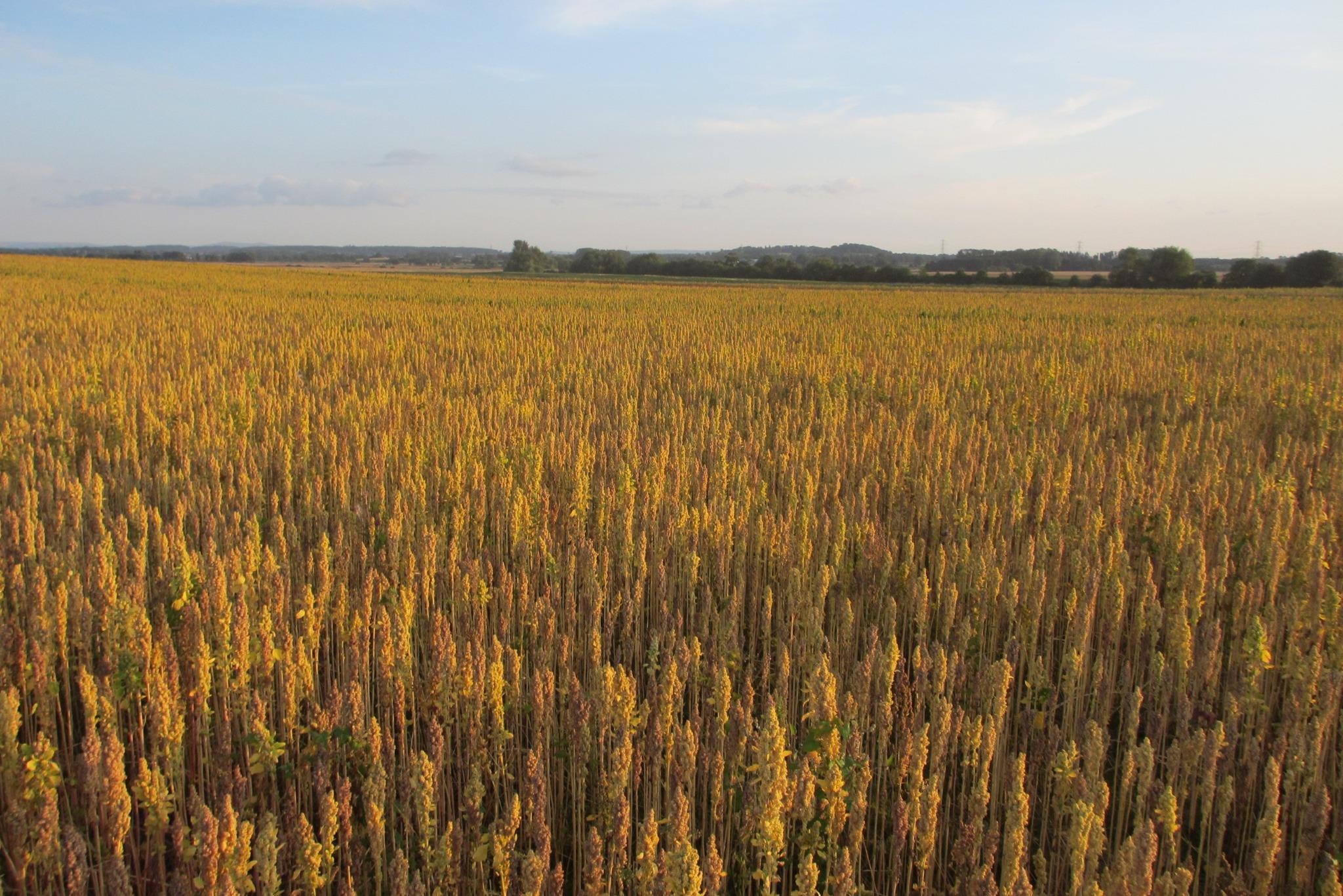
Quinoa (Chenopodium quinoa) is a pseudocereal native from the Andean region of South America that has increased in importance worldwide. Quinoa is now considered an alternative to traditional crops in a climate change scenario, considering its ability to adapt to marginal soils, droughts and frosts. Despite the interesting agronomic and nutritional features of this crop, research into quinoa is characterised by individual attempts to define its phenological stages without an international consensus. A unique criterion to quantify the phenology of quinoa could become a useful tool for researchers and plant breeders in future work by standardising this information for international cooperation. In this article, a proposed scale of the phenological growth stages of quinoa based on the BBCH coding system (Biologische Bundesanstalt Bundessortenamt und CHemische Industrie) was developed. Growth stages were described utilising the decimal code of the BBCH system, and figures were included for the most representative stages.

Sunday, January 31, 2016

Enzymes with potential to increase wheat yields

Wheat yields could be significantly increased thanks to varieties with a superior form of a common enzyme, according to new research. Models suggest that incorporating the new enzymes into wheat could increase photosynthesis by up 20% under some field conditions.

Plant scientists at Lancaster University, Rothamsted Research, and The International Maize and Wheat Improvement Center (CIMMYT) have been investigating a naturally occurring plant enzyme known as Rubisco to explore its ability to boost photosynthesis and increase crop yields.
In a new paper published this month, the team measured photosynthesis in 25 genotypes of wheat--including wild relatives of bread wheat (Triticum aestivum)--and found variation exists even amongst closely related genotypes.
Each type was surveyed to identify superior Rubisco enzymes for improving photosynthesis.
Two of the most efficient were Rubisco from plants known as Aegilops cylindrica (jointed goatgrass) and Hordeum vulgare (barley), which both showed promising Rubisco catalytic properties that should be explored in the context of improving photosynthesis, and ultimately grain yield, in wheat.
Models suggest that incorporating the new enzymes into wheat could increase photosynthesis by up 20% under some field conditions.
Wheat is a crucial source of food, providing more than 20 per cent of the calories consumed worldwide. And with projections that the world population will rise to over nine billion by the year 2050, the pressure is on to meet global demand for food.
Professor Martin A. J. Parry of the Lancaster Environment Centre (LEC) said: "Improving the efficiency of photosynthesis--the way crops turn carbon dioxide in our atmosphere into everything we can eat--may seem ambitious but for us it offers the best opportunity for producing the scale of change in crop yield that we need to feed a growing global population in a changing world climate."
Elizabete Carmo-Silva, LEC lecturer in plant sciences for food security, said: "Both jointed grass and barley are regarded as valuable genetic resources for improving wheat disease resistance, our research suggests that they can also be used to improve biomass production."
Research associates Anneke Prins and Doug Orr conducted the experimental work which was jointly funded by CIMMYT (W4031.11 Global Wheat Program) and by Realizing Increased Photosynthetic Efficiency, a project funded by the Bill & Melinda Gates Foundation and led by the University of Illinois at the Carl R. Woese Institute for Genomic Biology.
"This is an exciting piece of work showing that Rubisco catalytic properties vary in close relatives of wheat," Orr said. "As part of the RIPE project, we are screening a wide range of species from across the globe, and aim to identify variation that will enable improving photosynthesis and biomass production in rice, cassava and soybean."

Source:

Friday, December 18, 2015

Aumenta la producción y el consumo de quinua en Asia

En los últimos años, uno de los cultivos más antiguos y representativos de la cultura andina, valorado por su alto valor nutritivo, comenzó a sembrarse de manera creciente del otro lado del planeta. Se trata de la quinua, que está siendo incluida con éxito en los sistemas productivos del China. Actualmente, sus agrónomos se capacitan en la Argentina para conocer más sobre su manejo y los factores que determinan su adaptación a distintos ambientes.
"Desde hace algunos años, en China están produciendo comercialmente quinua. Hay empresas que consiguieron semillas, las seleccionaron, las adaptaron a sus ambientes productivos y avanzaron en toda la cadena de valor, desde el procesamiento de las semillas para el consumo humano, hasta el desarrollo de distintos tipos de alimentos y su inserción en el mercado local", explicó Daniel Bertero, investigador de la cátedra de Producción Vegetal de la Facultad de Agronomía de la UBA (FAUBA), quien es especialista en quinua, y destacó que algunos de los productos más vendidos en ese país, generados a partir del cultivo, además de granos y harinas son los fideos, conocidos popularmente como noodles.
La expectativa de crecimiento es auspiciosa. Estas empresas ya están montando nuevas plantas con capacidad para procesar 7000 toneladas de quinua al año. "Eso da una idea de las expectativas de expansión, en un país con 1300 millones de habitantes y donde la quinua hoy se está vendiendo a unos 20 dólares el kilo", dijo Bertero al sitio de divulgación científica Sobre la Tierra.
El aumento de la demanda asiática por este alimento también podría significar una oportunidad para los países de Sudamérica, algunos de los cuales, como Bolivia y Perú, ya están exportando granos no sólo a China, sino también a Francia, Dinamarca, Estados Unidos, Canadá, India y Pakistán. Se calcula que existen unas 100.000 hectáreas cultivadas con quinua en el mundo.
¿Por qué el interés de los chinos por un cultivo milenario de Sudamérica? La principal razón es comercial, por las perspectivas de expansión y buenos precios. Otro aspecto destacado es la capacidad de la quinua para adaptarse a los ambientes más rigurosos, marginales para la agricultura por su altitud, variabilidad climática y tipos de suelo.
Desde el punto de vista del consumidor, otra de las razones tiene que ver con el valor nutricional de la quinua, fundamentalmente porque posee una alta calidad proteica y por ser una fuente importante de vitaminas y minerales. Además, no contiene gluten y puede ayudar a reducir el colesterol.

Adaptación local
Invitado por empresas productoras locales, durante 2014 y 2015 Bertero visitó diferentes regiones de China para interiorizarse sobre la siembra del cultivo de quinua en el gigante asiático y su adaptación a las condiciones ambientales de ese país.
"Una de las regiones productoras es Qinghai, al norte de Tíbet, de donde vino la delegación que visitó la Argentina en noviembre de 2015. En esta zona llueven 150 mm al año, así que la quinua se cultiva bajo riego a 3000 metros de altura, en un paisaje muy parecido a la Quebrada de Humahuaca".
La quinua también se siembra en otros ambientes como el de la provincia de Taiyuanuan, al norte del país, donde llueven unos 400 mm al año y se cultiva a 2000 metros de altura. Allí, la altitud no permite sembrar maíz, por ejemplo, y en cambio se implanta tradicionalmente papa, trigo, cebada, y ahora, como novedad, quinua. Aquí los ambientes son más favorables para la agricultura, pero las lluvias de fin de ciclo representan un riesgo para la calidad de la semilla cosechada.
"El material genético que están usando deriva de Chile, porque se adapta a una mayor variedad de ambientes. Las semillas habrían sido mejoradas en Estados Unidos y sembradas primero en el Tíbet. Luego fueron llevadas hasta las provincias de Taiyuan y Qinghai, para producirlas comercialmente. Hoy también están probando variedades de tipo boliviano, mientras aumentan la superficie sembrada",señaló el profesor de la FAUBA. Una de esas empresas visitadas por Bertero, por ejemplo, está produciendo más de 100 toneladas de quinua al año para el mercado local.

Encontrarle la vuelta al cultivo
Como parte de esfuerzos de cooperación entre los agrónomos chinos y argentinos, recientemente la FAUBA recibió la visita de una delegación de la Academia de Ciencias de la Agricultura de la provincia de Qinghai, localizada en la ciudad de Xining, quienes estaban interesados en conocer la Argentina y capacitarse en temas relacionados con la agricultura local.
La comitiva asistió a una serie de charlas en la Facultad de Agronomía de la UBA con diferentes docentes sobre temas generales de la agricultura argentina y recibió capacitación sobre cultivos particulares como cebada, trigo y nuevas alternativas productivas para zonas áridas. La quinua significó uno de los aspectos que concentraron el mayor interés de los investigadores chinos.
"Ellos todavía están en una fase de encontrarle la vuelta al cultivo y les preocupan algunos de los aspectos de manejo que siguen generándoles inconvenientes, como las malezas y el brotado de las semillas (que germinan antes de tiempo)", detalló el investigador de la FAUBA. Además, destacó: "También les sorprende cómo en China en pocos años aumentó el interés de los productores y el apoyo desde el Gobierno para producir quinua, y les llama la atención que esto no suceda en la Argentina, donde pese a ser un cultivo que se produce desde hace al menos 2000 años, no se logra aumentar el área de siembra".

Fuente:

Wednesday, August 19, 2015

Journal of Agronomy - Current Issue

Journal of Agronomy - Current Issue
  • Quantitative Analysis of Induced Phenotypic Diversity in Chickpea Using Physical and Chemical Mutagenesis
  • Effect of Nitrogen and Phosphorus Fertilizers on Growth, Yield and Yield Components of Black Cumin (Nigella sativa L.) at Konta District, South West Ethiopia
  • Relationship Between some Growth Parameters, Dry Matter Content and Yield of Some Sweet Potato Genotypes Grown under Rainfed Weathered Ultisols in the Humid Tropics
  • Aerial Ramet Dynamics and General Clonal Growth Patterns of Scirpus grossus in Grown at Different Water Depths and Fertilizer Regimes in Paddy Soils
  • Seeder Performance under Different Speeds and its Relation to Soybean Cultivars Yield
  • Study on the Potential of Land Utilization for Energy Plantation as Biodiesel Feedstock: Case Study of Andalas University Campus at Limau Manis
  • Yield Response of Maize to Integrated Soil Fertility Management on Acidic Nitosol of Southwestern Ethiopia
  • Character Association and Path Coefficient Analysis of Maize (Zea mays L.) Grown under Incorporated Legumes and Nitrogen
  • Orange Fleshed Sweet Potato (Ipomoea batatas L.) Varieties Evaluated with Respect to Growth Parameters at Jimma in Southwestern Ethiopia
  • Effects of Water Ozonated and Salinity on Some Properties of Cucumber
  • Agronomic Performance and Genetic Variability among Common Bean Genotypes in Savanna/Pantanal Ecotone

Tuesday, July 07, 2015

Slow Food and FAO launch “Quinoa in the Kitchen”

Recipe book is the first fruit of a partnership that aims to make quinoa a staple of the world’s kitchens
The Slow Food movement and FAO officially launched the book, “Quinoa in the Kitchen,” today to continue to promote awareness about the super-food’s potential as the International Year of Quinoa draws to a close.
The book gives an overview of quinoa’s roots in the history and culture of the central Andean high plateau, geographically extending across the borders of Peru and Bolivia, which together account for the vast majority of quinoa production in the world.
Since quinoa is still new to many beyond the Andes, the book includes a selection of quinoa recipes created by some of the world’s top chefs. The aim is to bring quinoa to kitchens across the world, where it may someday be as commonplace as pasta or rice.
Quinoa is exceptionally versatile, which has drawn it attention as a potential alternative crop that could be an added tool to be able to produce sufficient food for the world’s growing population – expected to grow by 2 billion people by 2050 – as the climate shifts. Different varieties of quinoa can be grown from sea level to 4000 metres in altitude, it can withstand temperatures from below freezing to 38 degrees Celsius, in both humid and arid climates and in a variety of soil conditions.
"Quinoa is part of the effort to recover these lost foods and to promote traditional and forgotten crops. It is also part of the idea that food is not only a commodity. It is a lot more than that. It is also culture, it is also taste, it is also a lot of things that are closely related to our history,” said FAO Director-General José Graziano da Silva.
Slow Food President Carlo Petrini said that the book draws inspiration from the two organizations “shared vision of a sustainable world free from hunger and that safeguards biodiversity for future generations.”
“Central to the process is gastronomy itself and the idea that this holistic, multidisciplinary science, which encompasses everything from agriculture to history, from economics to anthropology, from botany to culinary art, can be a liberating force of the communities most hit by malnutrition,” he added.
Quinoa is higher in protein than grains such as wheat, corn or rice, and it packs in vitamins, minerals and essential amino acids that are important to human nutrition but which many foods lack in just one source.
FAO is currently overseeing a programme in Argentina, Bolivia, Chile, Ecuador and Peru for the sustainable intensification of quinoa farming and food production systems in the Andean region. FAO is assisting countries to respond to a rising demand for quinoa so farmers can benefit from high prices while preserving the environment and biodiversity. Helping farmers to access the organic and fair trade sectors on international markets is one important element of the programme.
FAO is planning a regional project in arid and semi-arid areas of the Near East, where quinoa could prove useful to provide sufficient nutritious food even under extreme climactic conditions. In Algeria, Egypt, Iraq, Iran, Lebanon, Mauritania, Sudan and Yemen, varieties will be selected and field tested to gauge which types of quinoa have the highest yields and nutritional values even under stress, such as drought.
Similar projects are being developed for Bhutan, Brunei and Sri Lanka , as well as for Kygryzstan and Tajikistan.
The United Nations has declared 2013 the “International Year of Quinoa.”

Sunday, December 28, 2014

New insights into origins of agriculture could help shape future of food

Agricultural decisions made by our ancestors more than 10,000 years ago could hold the key to food security in the future, according to new research by the University of Sheffield.

Scientists, looking at why the first arable farmers chose to domesticate some cereal crops and not others, studied those that originated in the Fertile Crescent, an arc of land in western Asia from the Mediterranean Sea to the Persian Gulf.
They grew wild versions of what are now staple foods like wheat and barley along with other grasses from the region to identify the traits that make some plants suitable for agriculture, including how much edible seed the grasses produced and their architecture.
Dr Catherine Preece, who worked on the study with colleagues from the University's Department of Animal and Plant Sciences and Department of Archaeology, said: "Our results surprised us because numerous other grasses that our ancestors ate, but we do not, can produce just as much seed as wild wheat and barley. It is only when these plants are grown at high densities, similar to what we would find in fields, that the advantage of wild wheat and barley is revealed."
The study identified two key characteristics shared by the wild relatives of current crop plants. Firstly they have bigger seeds, which means they grow into bigger seedlings and are able to get more than their fair share of light and nutrients, and secondly, as adult plants they are less bushy than other grasses and package their big seeds onto fewer stems. This means crop wild relatives perform better than the other wild grasses that they are competing with and are better at growing close together in fields, making them ideal for using in agriculture.
"The results are important because our expanding human population is putting increasing demands on food production," said Dr Preece.
"Before humans learnt how to farm, our ancestors ate a much wider variety of grasses. If we can understand what traits have made some grasses into good crops then we can look for those characteristics in other plants and perhaps identify good candidates for future domestication."
She added: "To shape the future we must understand the past, so the more we can discover about the origins of agriculture, the more information we will have to help us tackle the challenges that face modern day food production."
So far the researchers have been conducting their experiments in greenhouses and their results indicate that the traits affecting how plants compete with each other are crucial factors to determining the success of a crop.
The team now plan to observe how the plants interact in their natural environment by growing them in experimental fields in Turkey, the heart of the Fertile Crescent. They hope that their experiments will yield another crop of important results.
"Cereal breeders are taking an increasing interest in modern crops' wild relatives as a source of useful traits that may help to increase yields or increase resilience to climate change, and our work should help in this process," said Dr Preece.
Dr Preece presented the results of this study to the joint British Ecological Society and the French Ecological Society 11 December 2014 in the Grand Palais, Lille.

Source:

Friday, December 26, 2014

More holistic approach needed when studying diets of our ancestors

Researchers have long debated how and what our ancestors ate. Charles Darwin hypothesized that the hunting of game animals was a defining feature of early hominids, one that was linked with both upright walking and advanced tool use and that isolated these species from their closest relatives (such as ancestors of chimpanzees); modified versions of this hypothesis exist to this day. Other scholars insist that while our ancestors' diets did include meat, it was predominantly scavenged and not hunted. Still others argue that particular plant foods such as roots and tubers were of greater importance than meat in the diets of these species.

Research technology has come a long way since Darwin's time, making possible the kind of analysis early scholars could only have imagined. Recent work has presented reconstructions of early hominid diets on the basis of chemical makeups of fossil tooth enamel, evidence of microscopic wear on teeth, and advanced studies of craniodental anatomy, to name a few.
However, according to Ken Sayers (Georgia State University) and C. Owen Lovejoy (Kent State University) in an article published in the December 2014 issue of The Quarterly Review of Biology, although modern-day technology provides valuable insight, such tools alone cannot provide a complete picture of the diet of early hominids. Instead, they should be included -- alongside other methodologies -- in holistic studies grounded in the fundamentals of modern evolutionary ecology.
Sayers and Lovejoy suggest that researchers should examine a species' particular habitat and "whole-body" anatomy, including digestion, locomotion, and possible cognitive abilities. In particular, foraging theory -- a branch of evolutionary ecology that investigates animal feeding decisions through the lens of efficiency principles -- is especially important to consider, as it demonstrates that diet is regulated by the potential value and costs of exploiting individual food items (whether plant, animal, or other) and by the relative abundance of the most profitable foods. In the case of the earliest-known hominids, evidence about their morphology and likely cognitive abilities -- in addition to data obtained from modern technologies -- provide little support for a reliance on any one particular food type. Rather, these species likely had a broadly omnivorous diet that became increasingly generalized over time.
According to Sayers and Lovejoy, the early hominid diet can best be elucidated by considering the entire habitat-specific resource base and by quantifying the potential profitability and abundance of likely available foods. Furthermore, they warn that hypotheses focusing too narrowly on any one food type or foraging strategy -- such as hunting or scavenging or any one particular plant category -- are too restrictive and should be viewed with caution. Modeling these species' diets instead "requires a holistic, interdisciplinary approach that goes beyond merely what we can observe chemically or through a microscope, and draws from ecology, anatomy and physiology, cognitive science, and behavior."

Source:
http://www.sciencedaily.com/
Ken Sayers, C. Owen Lovejoy. Blood, Bulbs, and Bunodonts: On Evolutionary Ecology and the Diets ofArdipithecus,Australopithecus, and EarlyHomo. The Quarterly Review of Biology, 2014; 89 (4): 319 DOI: 10.1086/678568

Wednesday, December 10, 2014

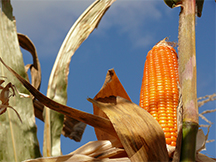
Natural gene selection can produce orange corn rich in provitamin A for Africa, U.S.

Purdue researchers have identified a set of genes that can be used to naturally boost the provitamin A content of corn kernels, a finding that could help combat vitamin A deficiency in developing countries and macular degeneration in the elderly.
Professor of agronomy Torbert Rocheford and collaborators at Cornell University and Michigan State University found gene variations that can be selected to change nutritionally poor white corn into biofortified orange corn with high levels of provitamin A carotenoids - substances that the human body can convert into vitamin A. Vitamin A plays key roles in eye health and the immune system, as well as in the synthesis of certain hormones.
"This study gives us the genetic blueprint to quickly and cost-effectively convert white or yellow corn to orange corn that is rich in carotenoids - and we can do so using natural plant breeding methods, not transgenics," said Rocheford, the Patterson Endowed Chair of Translational Genomics for Crop Improvement.
Vitamin A deficiency causes blindness in 250,000 to 500,000 children every year, half of whom die within a year of losing their eyesight, according to the World Health Organization. The problem most severely affects children in Sub-Saharan Africa, an area in which white corn, which has minimal amounts of provitamin A carotenoids, is a dietary mainstay.
Insufficient carotenoids may also contribute to macular degeneration in the elderly, a leading cause of blindness in older populations in Europe and the U.S.
Identifying the genes that determine carotenoid levels in corn kernels will help plant breeders develop novel biofortifed corn varieties for Africa and the U.S. The dark orange color of these corn varieties also makes them more culturally acceptable to consumers in African countries where yellow corn is generally fed only to animals, Rocheford said.
Previous research by Rocheford and his colleagues identified two genes that contribute to provitamin A carotenoid levels in corn kernels, but "we wanted more cookies in the jar for breeders to pick from," he said.
The researchers used a combination of statistical analysis and prediction models to identify and assess the potential usefulness of genes associated with carotenoid levels in corn. They evaluated data sets from about 200 genetically diverse lines of corn at varying scopes of investigation - from the entire corn genome to stretches of DNA surrounding small sets of genes. They uncovered four genes that had not previously been linked to carotenoid levels in corn kernels.
Though many genes likely contribute to carotenoid levels in corn, "we're pretty confident that our previous and current research has now identified several genes that are the major players," Rocheford said.
Their study found that a combination of visually selecting corn with darker orange kernels and using a number of these favorable genes could be an effective way to rapidly convert white and yellow corn varieties to orange corn with higher levels of provitamin A and total carotenoids.
"We now have the genetic information needed to begin developing a major public-private sector collaboration with the goal of providing orange corn with high levels of provitamin A to farmers throughout Sub-Saharan Africa," he said.
The study also showed that using a more targeted approach to predicting the usefulness of a small set of genes was as effective as evaluating the whole corn genome, said Brenda Owens, doctoral candidate and first author of the study.
"Having this smaller list of genes to select for means that we can make the improvement of carotenoid levels in corn a simpler, faster process for plant breeders," she said.
Their research - with support from the National Science Foundation, HarvestPlus and the International Maize and Wheat Improvement Center, also known as CIMMYT - has yielded varieties of orange corn with markedly higher amounts of provitamin A carotenoids. But further efforts to produce even higher levels will be necessary to offset degradation of nutrients after harvest and reduce the amount of corn African consumers would need to eat to attain enough provitamin A, Rocheford said.
Varieties of orange corn are currently being grown in Zambia, Zimbabwe, Nigeria and Ghana. An open-pollinated variety of orange corn could be available for organic and local grower operations in the U.S. by 2016, he said.

The paper was published online in Genetics and is available at http://www.genetics.org/content/early/2014/09/25/genetics.114.169979.full.pdf+html
A video presentation of Rocheford discussing the research behind biofortified orange corn and its implications is available at http://docs.lib.purdue.edu/dawnordoom/2014/presentations/11/

Source:

Tuesday, October 21, 2014

Estado del arte de la quinua en el mundo en 2013

Editado por
Bazile, D., Bertero, D. y Nieto, C.

Organización de las Naciones Unidas para la Alimentación y la Agricultura (FAO) Santiago, Chile
Centre de Coopération Internationale en Recherche Agronomique pour le Développement (CIRAD) Montpellier, France

Resumen
En el 2013 las Naciones Unidas declararon el Año Internacional de la Quinua, situándola en un espacio privilegiado a nivel global, generando expectativas y desafíos.
El "Estado del arte de la quinua en el mundo en 2013" es una publicación conjunta entre el CIRAD y la FAO que reúne en un solo libro toda la información relevante sobre la quinua generada por los más destacados investigadores del mundo, organizaciones de productores, tomadores de decisión, y todos aquéllos que se preocupan por este alimento. El libro tiene como objetivo principal favorecer la difusión de estos conocimientos, promover el dialogo y el debate entre actores del desarrollo de la quinua a nivel mundial y generar nuevas expectativas del cultivo en el mundo, considerando sus aportes a la seguridad alimentaria y a la economía de la agricultura familiar, pero también considerando los riesgos inherentes de una expansión descontrolada, en particular poniendo énfasis: en la necesidad de regulación de la circulación de los recursos fitogenéticos y la redistribución justa y equitativa de los beneficios de su utilización fuera de la zona andina y la sostenibilidad de los sistemas agrícolas. Esperamos que este libro se constituya en una herramienta que impulse el desarrollo de programas y proyectos respetuosos, responsables y éticos de quinua en el mundo manteniendo y preservando la biodiversidad de la quinua.


Monday, October 20, 2014

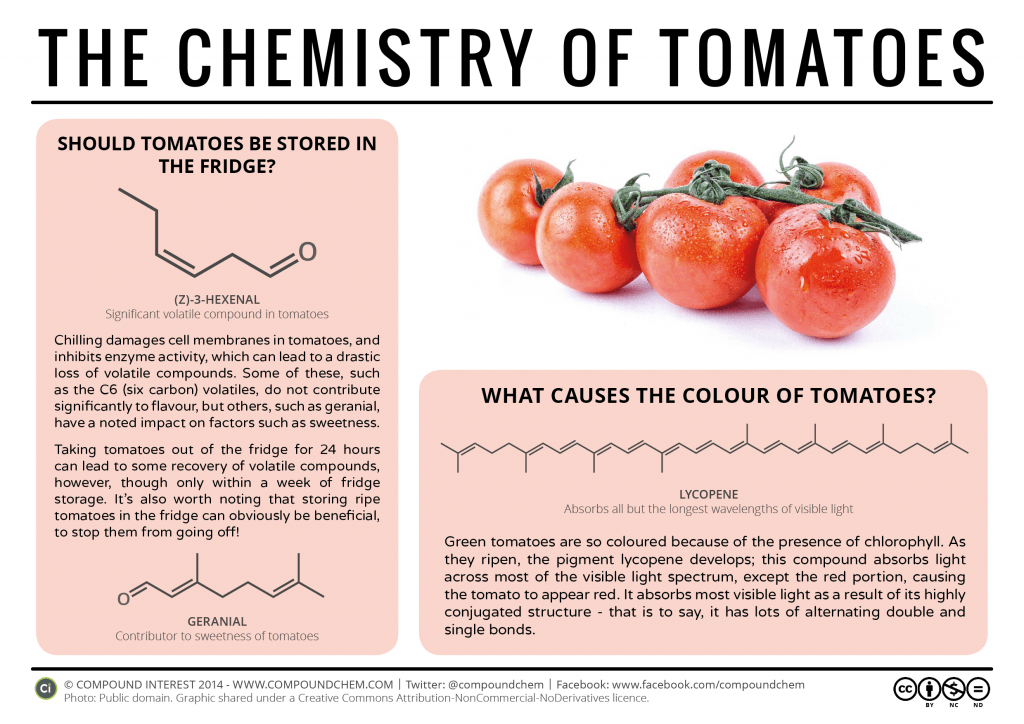
To Refrigerate, Or Not To Refrigerate? – The Chemistry of Tomatoes

You may have previously come across the advice that tomatoes shouldn’t be refrigerated, but should be stored at room temperature, in order to maximise their flavour. To understand the reasoning behind this, we need to take a look at the chemical compounds that give tomatoes their flavour, and the effect that refrigeration has on the production of these.
Let’s first consider the compounds we’re talking about in the first place. Volatile compounds are those that easily evaporate at room temperature, and are responsible for the aromas, and to an extent flavours, of foods. For most foods, a complex mixture of compounds goes into producing the aroma and flavour, and tomatoes are no different. Over 400 volatile compounds have been detected in tomatoes, but of these, researchers have narrowed it down to around 16 key compounds that are associated with flavour and sweetness.
The C6 volatiles (chemical compounds based on six carbons) are known to be the most abundant class of volatiles in tomatoes, but researchers have found that they are not likely to have a significant impact on the flavour of the tomato. With that said, it’s interesting to note that one of the most abundant tomato compounds in this class, (Z)-3-hexenal, is also the chemical compound largely responsible for the aroma of fresh-cut grass. The flavours in tomatoes owe a lot to the presence of sugars such as glucose & fructose, as well as fruit acids, but it’s the effect that chilling has on the volatile compounds that gives weight to the argument for not storing them in the fridge.
A 2013 study found that tomatoes stored at 4˚C showed a drastic decrease in the concentrations of volatile compounds; after 30 days of storage at this temperature, they found that the overall concentration had decreased by 66%. They discovered that the low temperature storage was in particular detrimental to the aroma of the tomatoes, whilst, by contrast, storage at 20˚C resulted in an increase in volatile compound production. The lower volatile compound production at refrigeration temperatures is due to the inhibition of enzymatic activity in the tomato. In theory then, it seems an open and shut case – tomatoes & refrigeration just don’t get along.
However, the study also points out that, for up to a week of storage in the fridge, removing the tomatoes from refrigeration for 24 hours could ‘recondition’ them and increase volatile compound production once again. This was still possible for periods of time longer than a week, but in these cases there remained a discrepancy in the levels of volatile compounds compared to tomatoes at room temperature. Obviously, the refrigeration of tomatoes is often for practical purposes, and it’s doubtless much more conducive to your tomatoes not beginning to rot away if they’re stored in the fridge. It is, however, particularly important not to store tomatoes that are yet to fully ripen in the fridge, as this can slow the ripening process.
In short, the verdict seems to be that you can get away with storing fully ripe tomatoes in the fridge for up to a week to prevent them going off, before then leaving them out for a short time to recover their volatile compound producing ability. Leave them in for longer than a week, and you’re going to be enjoying a less flavoursome tomato!

Source:

Thursday, October 16, 2014

Plant variants point the way to improved biofuel production

Manufacturing biofuels from food crop by-products such as straw could be made quicker and cheaper thanks to a new study led by scientists at the University of York.

The research funded by the Biotechnology and Biological Sciences Research Council (BBSRC) discovered variant straw plants whose cell walls are more easily broken down to make biofuels, but which are not significantly smaller or weaker than regular plants.
The discovery by researchers in the Centre for Novel Agricultural Products at York could help ease pressure on global food security as biofuels from non-food crops become easier and cheaper to make.
The impact of carbon emissions on global warming is driving the need for carbon neutral biofuels. Many existing biofuels are produced from crops which can be used for food, and therefore have a negative impact on global food security.
One answer is to make fuels from woody, non-food parts of plants such as straw. These are rich in polysaccharides (sugar chains) which can be broken down into simple sugars and then fermented into ethanol for fuel. However, such biofuels are currently too expensive because of the cost of digesting the woody tissues into simple sugars.
The CNAP researchers led by Professor Simon McQueen-Mason, working with colleagues in France, screened a large collection of variants of the model grass species Brachypodium for digestibility. Screening mutants in this way allows rapid assessment of the range of natural diversity that can be found in a species.
Using this approach, PhD student Poppy Marriott identified 12 independent plant lines with highly digestible straw, but which grew normally and showed no decrease in straw strength. Analysing these plants showed that increased digestibility can be achieved through a range of changes in the cell wall, where the majority of sugar is contained in woody biomass.
In addition the team at York also showed they can identify the gene alterations that give rise to the high digestibility. The new results are published in the latest edition of the Proceedings of the National Academy of Sciences USA.
By identifying these plant variants with straw that is easier to digest, but which retain their size and strength, the cost and complexity of biofuel production could be reduced.
Professor McQueen-Mason said: “This work sets the stage for identifying similar high-digestibility lines in commercial crop species that will pave the way to more cost-effective and sustainable biofuels.
“Using plant by-products such as straw provides a double benefit as we can harvest the food from the plant, then use the straw to produce a carbon neutral fuel.”
Professor Melanie Welham, BBSRC Executive Director for Science, said: “This research is another important step towards making carbon-neutral biofuels both easier and cheaper to produce. Using crop by-products such as straw for biofuels reduces pressure on food supplies and also adds value to the crop, boosting food security and helping farmers.
“It is just one example of how BBSRC investment in world class bioscience is working towards addressing some of the existing and emerging global challenges that we all face.”

Further information:A range of cell wall alterations enhance saccharification in Brachypodium distachyon mutants is published in Proceedings of the National Academy of Sciences USA.
The Biotechnology and Biological Sciences Research Council (BBSRC) invests in world-class bioscience research and training on behalf of the UK public. Its aim is to further scientific knowledge, to promote economic growth, wealth and job creation and to improve quality of life in the UK and beyond. Funded by Government, BBSRC invested over £484M in world-class bioscience in 2013-14. It supports research and training in universities and strategically funded institutes. BBSRC research and the people it funds are helping society to meet major challenges, including food security, green energy and healthier, longer lives. BBSRC investments underpin important UK economic sectors, such as farming, food, industrial biotechnology and pharmaceuticals.For more information about BBSRC, its science and impact see:http://www.bbsrc.ac.uk For more information about BBSRC strategically funded institutes see: http://www.bbsrc.ac.uk/institutes
The Centre for Novel Agricultural Products (CNAP) is an award winning strategic research centre based in the Department of Biology at the University of York. CNAP is dedicated to realising the potential of plants as renewable, low-cost factories that produce high-value chemicals and biofuels. Laboratory based discoveries are translated into practice in partnership with industry.www.york.ac.uk/org/cnap/

Source:

Tuesday, October 14, 2014

Natural gene selection can produce orange corn rich in provitamin A for Africa, U.S.

Purdue researchers have identified a set of genes that can be used to naturally boost the provitamin A content of corn kernels, a finding that could help combat vitamin A deficiency in developing countries and macular degeneration in the elderly.
Professor of agronomy Torbert Rocheford and fellow researchers found gene variations that can be selected to change nutritionally poor white corn into biofortified orange corn with high levels of provitamin A carotenoids - substances that the human body can convert into vitamin A. Vitamin A plays key roles in eye health and the immune system, as well as in the synthesis of certain hormones.
"This study gives us the genetic blueprint to quickly and cost-effectively convert white or yellow corn to orange corn that is rich in carotenoids - and we can do so using natural plant breeding methods, not transgenics," said Rocheford, the Patterson Endowed Chair of Translational Genomics for Crop Improvement.
Vitamin A deficiency causes blindness in 250,000 to 500,000 children every year, half of whom die within a year of losing their eyesight, according to the World Health Organization. The problem most severely affects children in Sub-Saharan Africa, an area in which white corn, which has minimal amounts of provitamin A carotenoids, is a dietary mainstay.
Insufficient carotenoids may also contribute to macular degeneration in the elderly, a leading cause of blindness in older populations in Europe and the U.S.
Identifying the genes that determine carotenoid levels in corn kernels will help plant breeders develop novel biofortifed corn varieties for Africa and the U.S. The dark orange color of these corn varieties also makes them more culturally acceptable to consumers in African countries where yellow corn is generally fed only to animals, Rocheford said.
Previous research by Rocheford and his colleagues identified two genes that contribute to provitamin A carotenoid levels in corn kernels, but "we wanted more cookies in the jar for breeders to pick from," he said.
The researchers used a combination of statistical analysis and prediction models to identify and assess the potential usefulness of genes associated with carotenoid levels in corn. They evaluated data sets from about 200 genetically diverse lines of corn at varying scopes of investigation - from the entire corn genome to stretches of DNA surrounding small sets of genes. They uncovered four genes that had not previously been linked to carotenoid levels in corn kernels.
Though many genes likely contribute to carotenoid levels in corn, "we're pretty confident that our previous and current research has now identified several genes that are the major players," Rocheford said.
Their study found that a combination of visually selecting corn with darker orange kernels and using a number of these favorable genes could be an effective way to rapidly convert white and yellow corn varieties to orange corn with higher levels of provitamin A and total carotenoids.
"We now have the genetic information needed to begin developing a major public-private sector collaboration with the goal of providing orange corn with high levels of provitamin A to farmers throughout Sub-Saharan Africa," he said.
The study also showed that using a more targeted approach to predicting the usefulness of a small set of genes was as effective as evaluating the whole corn genome, said Brenda Owens, doctoral candidate and first author of the study.
"Having this smaller list of genes to select for means that we can make the improvement of carotenoid levels in corn a simpler, faster process for plant breeders," she said.
Their research - in collaboration with HarvestPlus and the International Maize and Wheat Improvement Center, also known as CIMMYT - has yielded varieties of orange corn with markedly higher amounts of provitamin A carotenoids. But further efforts to produce even higher levels will be necessary to offset degradation of nutrients after harvest and reduce the amount of corn African consumers would need to eat to attain enough provitamin A, Rocheford said.
Varieties of orange corn are currently being grown in Zambia, Zimbabwe, Nigeria and Ghana. An open-pollinated variety of orange corn could be available for organic and local grower operations in the U.S. by 2016, he said.
The paper was published online in Genetics and is available at http://www.genetics.org/content/early/2014/09/25/genetics.114.169979.full.pdf+html
A video presentation of Rocheford discussing the research behind biofortified orange corn and its implications is available athttp://docs.lib.purdue.edu/dawnordoom/2014/presentations/11/
Funding for the research was provided by the National Science Foundation; HarvestPlus; Purdue University startup and Patterson Chair funds; the U.S. Department of Agriculture-Agricultural Research Service; Cornell University startup funds; a U.S. Department of Agriculture National Needs Fellowship; and a Borlaug Fellowship.

ABSTRACT
A foundation for provitamin A biofortification of maize: genome-wide association and genomic prediction models of carotenoid levels
Brenda F. Owens 1; Alexander E. Lipka 2; Maria Magallanes-Lundback 3; Tyler Tiede 1; Christine H. Diepenbrock 4; Catherine B. Kandianis 3, 4; Eunha Kim 3; Jason Cepela 5; Maria Mateos-Hernandez 1; C. Robin Buell 1; Edward S. Buckler 2, 4, 6; Dean DellaPenna 3; Michael A. Gore 4; Torbert Rocheford 1

1 Purdue University, Department of Agronomy, West Lafayette, IN 47907
2 Cornell University, Institute for Genomic Diversity, Ithaca, NY 14853
3 Michigan State University, Department of Biochemistry and Molecular Biology, East Lansing, MI 48824
4 Cornell University, Department of Plant Breeding and Genetics, Ithaca, NY 14853
5 Michigan State University, Department of Plant Biology, East Lansing, MI 48824
6 United States Department of Agriculture-Agricultural Research Service (ARS), Robert W. Holley Center for Agriculture and Health, Ithaca, NY 14853

Efforts are underway for development of crops with improved levels of provitamin A carotenoids to help combat dietary vitamin A deficiency. As a global staple crop with considerable variation in kernel carotenoid composition, maize (Zea mays L.) could have widespread impact. We performed a genome-wide association study (GWAS) of quantified seed carotenoids across a panel of maize inbreds ranging from light yellow to dark orange in grain color to identify some of the key genes controlling maize grain carotenoid composition. Significant associations at the genome-wide level were detected within the coding regions of zep1 and lut1, carotenoid biosynthetic genes not previously shown to impact grain carotenoid composition in association studies, as well as within previously associated lcyE and crtRB1 genes. We leveraged existing biochemical and genomic information to identify 58 a priori candidate genes relevant to the biosynthesis and retention of carotenoids in maize to test in a pathway-level analysis. This revealed dxs2 and lut5, genes not previously associated with kernel carotenoids. In genomic prediction models, use of markers that targeted a small set of quantitative trait loci (QTL) associated with carotenoid levels in prior linkage studies were as effective as genome-wide markers for predicting carotenoid traits. Based on our GWAS, pathway-level analysis, and genomic prediction studies, we outline a flexible strategy involving use of a small number of genes that can be selected for rapid conversion of elite white grain germplasm, with minimal amounts of carotenoids, to orange grain versions containing high levels of provitamin A.

Source:

Friday, October 10, 2014

Getting keen about quinoa

Stephen Jones is the producer of 100% British grown quinoa grains. He does that on his farm in Shropshire, and runs the British Quinoa Company. Hear from him about how he started up the firm and where production of the super-grain is headed. Plus we’ll hear much more about the grain: how it’s grown and harvested, the problems posed by the great British weather, about its different strains, how Stephen has to have a licence to grow it. And … how you pronounce the name of the grain. A fascinating chat in store!
And Claire from Juvela tells us about the British prescription-based glutenfree brand. Yep in the UK we can get coeliac-friendly food through the National Health Service. Hear how that works, what you are entitled to and why that’s different in various parts of the country. Juvela only make GF food for prescriptions and provide to pharmacies across the country, so hear about their range and why they’re not allowed to call their flour, ‘flour’!


Source:

Wednesday, October 01, 2014

Future of our crops is at risk in conflict zones, say scientists

Wild species related to our crops, which are crucial as potential future food resources, have been identified by scientists, however, a significant proportion are found in conflict zones in the Middle East, where their conservation is increasingly comprised.

Wild species related to our crops which are crucial as potential future food resources have been identified by University of Birmingham scientists, however, a significant proportion are found in conflict zones in the Middle East, where their conservation is increasingly comprised.
The scientists have identified 'hotspots' around the globe where crop wild relatives (CWR) -- species closely related to our crops which are needed for future crop variety development -- could be conserved in the wild in order to secure future global food resources.
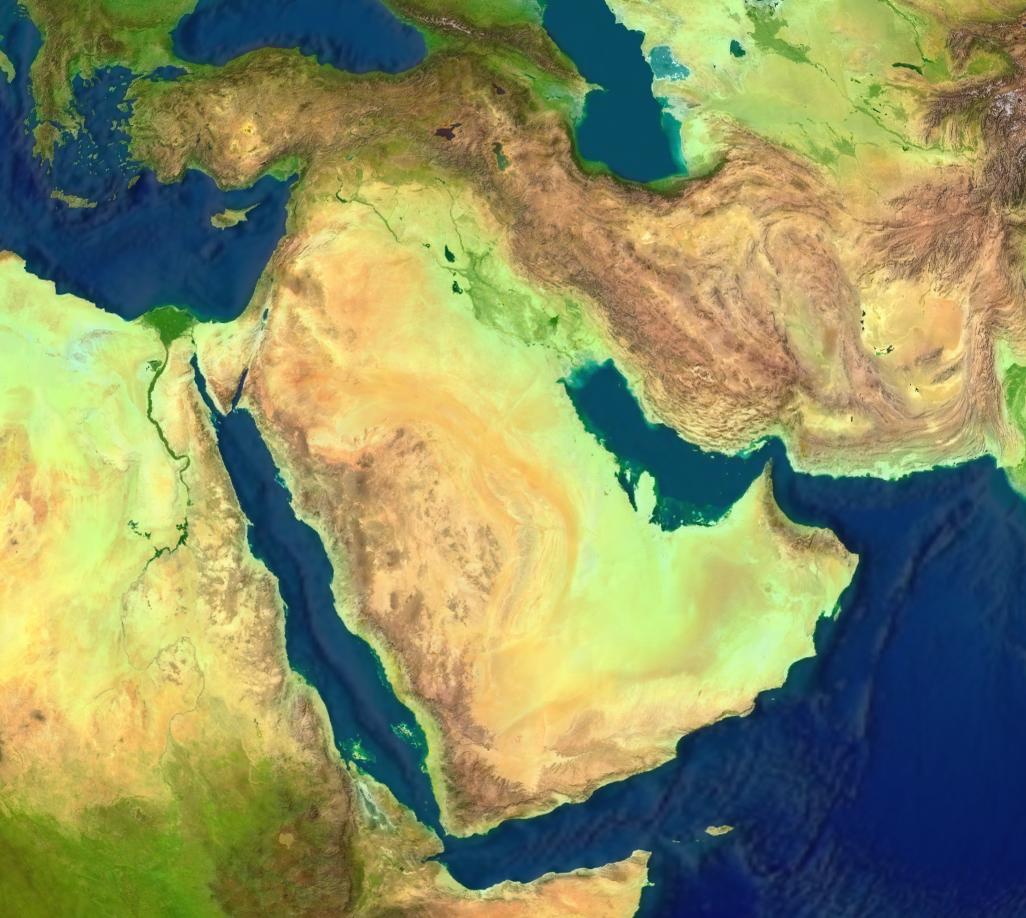
The hotspot where CWR are most concentrated is in the so-called 'Fertile Crescent', which is situated in the Middle East, arcing around the Arabian desert from Jordan, Palestine, Israel, Syria, Lebanon, Turkey and ending in Iraq and Iran.
Climate change, along with a steady rise in the human population is forecast to have a detrimental impact on crops that are grown for food. The wild relatives of crops, however, contain many useful traits such as drought tolerance, yield improvement, and resilience to pests and diseases. These wild species can be used by plant breeders to create stronger, more resilient crop varieties which will help to underpin future food security.
Now a comprehensive database of globally important CWR exists, thanks to this study. The inventory lists 173 crops and their 1667 priority wild relatives, along with their particular traits. For example, the crop wild relative of the wheat crop, Aegilops tauschii, is resistant to Hessian Fly which is pest of cereal crops; Saccharum arundinaceum is a relative of sugar cane and can survive very low temperatures, andPrunus ferganensis, the crop wild relative of peach, is tolerant to drought conditions. Globally, the highest concentration of CWR per unit area is found in Syria and Lebanon.
Research at Birmingham has shown that 12 per cent of CWRs are threatened with extinction and all are likely to be already suffering a loss of genetic diversity due to habitat loss and alteration, conflict, intensive agriculture, urbanisation, and mismanagement of the environment. However, until now, there has been no attempt to systematically conserve the diversity of this important global resource.
A new initiative led by the Food and Agriculture Organisation of the UN, with help from scientists at the University of Birmingham, will, for the first time, plan and implement effective conservation of these priority plant species in the countries where they are found. The Birmingham scientists are now working on a strategy to conserve CWRs by identifying and promoting the establishment of managed conservation sites in the wild, while taking samples and placing them in gene banks as a safety back up, where the genetic material can be kept for up to 300 years.
The team is currently negotiating with governments in the Fertile Crescent to highlight the plight of these species and to try to implement 'in situ' conservation in the hotspot areas.
Dr Nigel Maxted, lead investigator from the University of Birmingham's School of Biosciences, said: 'There has previously been no opportunity to systematically conserve and use CWR as there was a lack of clarity over their identities and distribution. By creating an inventory of globally important CWR we can discover which countries and regions are the richest in terms of priority CWR, and more efficiently plan and coordinate conservation efforts to ensure their survival.
'It is very important that we conserve these species in secure gene banks, but it is critical to conserve them in their natural habitat as they will continue to adapt to changes in the climate as well as threats from pests and diseases.'
'The global population is now 7 billion and by 2050 it will be 9 billion so it is now even more crucial that we conserve crop wild relatives as part of the wider need to address global food security issues.'
As well as the abundance of CWR in the Fertile Crescent, many CWR can be found in the UK including the wild relatives of sugarbeet, asparagus, raddish and wild garlic. The Birmingham team is now working with Natural England to identify an area where CWR can be conserved in their natural habitat in the UK.

Source:

http://www.sciencedaily.com/

Monday, September 29, 2014

'Most famous wheat gene' discovered, clears way for non-GMO breeding

Researchers have found 'the most famous wheat gene,' a reproductive traffic cop of sorts that can be used to transfer valuable genes from other plants to wheat. The discovery clears the way for breeders to develop wheat varieties with the disease- and pest-resistance traits of other grasses, using a legion of genetic tools that can reduce crop losses and pesticide use while foregoing the cost, regulatory hurdles and controversy of genetically modified organisms.
The discovery clears the way for breeders to develop wheat varieties with the disease- and pest-resistance traits of other grasses, using a legion of genetic tools that can reduce crop losses and pesticide use while foregoing the cost, regulatory hurdles and controversy of Genetically Modified Organisms, or GMOs.
"The real exciting part of this gene is that it has tremendous potential for application," said Kulvinder Gill, a WSU professor, who reports his findings in the journalProceedings of the National Academy of Sciences.
For some 35 million years, the wild ancestors of wheat routinely traded genes as they accidentally cross-bred with each other. But with the rise of agriculture and cultivated wheat 10,000 years ago, the plant's genetic structure changed. Instead of being diploid, with two sets of chromosomes like humans and most other living things, it became polyploid, with, in the case of bread wheat, seven sets of six related chromosomes.
Starting in 1958, just five years after the discovery of DNA's double-helix structure, researchers suspected that a specific gene controls the orderly pairing of wheat chromosomes during reproduction.
"If this gene was not present, there would be chaos in the nucleus," said Gill. "Six chromosomes would pair with each other, and sometimes five chromosomes would go to one cell and one to the other, resulting in a sterile plant. Because of this gene, wheat can be fertile. Without this gene, it would be more like sugar cane, where it is a mess in the nucleus and it can only be vegetatively propagated."
But the gene also prevents wheat from breeding with related ancestors that can contain a vast array of traits preferred by growers.
"This gene would not allow rye chromosomes to pair with wheat," said Gill. "We cannot get a single gene transfer into wheat as long as this gene is present."
Interest in the gene, called Ph1, has spawned scores of research papers, making it what Gill called, "the most famous wheat gene."
In 2006, British researchers writing in the journal Nature said they identified the gene.
"In this paper," said Gill, "we show that their gene is not the Ph1." Knowing their findings would be controversial, Gill and his colleagues spent a year repeating the experiments that led to their conclusion. They are now moving on.
"Now that we have the gene, we can actually use that gene sequence to temporarily silence the gene and make rye and other chromosomes pair with wheat and transfer genes by a natural method into wheat without calling it GMO," Gill said.
Their first effort involves transferring a gene from jointed goatgrass, a wild relative of wheat, to confer resistance to stripe rust. The fungus is considered the world's most economically damaging wheat pathogen, costing U.S. farmers alone some $500 million in lost productivity in 2012.
While facilitated by technology, the actual exchange of genetic material is similar to what has long taken place in nature, only faster. Incorporating the gene transfer into the overall breeding process, researchers can develop a new variety in five years, said Gill.
"If we let wheat evolve for another few millions years in the wild, maybe it will develop enough variation, but we don't have that kind of time," said Gill. "We need to solve this problem today."

Source:
http://www.sciencedaily.com/

Ramanjot Bhullar, Ragupathi Nagarajan, Harvinder Bennypaul, Gaganpreet K. Sidhu, Gaganjot Sidhu, Sachin Rustgi, Diter Von Wettstein, and Kulvinder S. Gill.Silencing of a metaphase I-specific gene results in a phenotype similar to that of the Pairing homeologous 1 (Ph1) gene mutations. PNAS, September 2014 DOI: 10.1073/pnas.1416241111

Thursday, September 25, 2014

Plant diversity in China vital for global food security

With climate change threatening global food supplies, new research claims the rich flora of China could be crucial to underpin food security in the future. A team has identified 871 wild plant species native to China that have the potential to adapt and maintain 28 globally important crops, including rice, wheat, soybean, sorghum, banana, apple, citrus fruits, grape, stone fruits and millet. 42% of these wild plant species, known as crop wild relatives occur nowhere else in the world.

With climate change threatening global food supplies, new research claims the rich flora of China could be crucial to underpin food security in the future.
A team from the University of Birmingham and partners in China have identified 871 wild plant species native to China that have the potential to adapt and maintain 28 globally important crops, including rice, wheat, soybean, sorghum, banana, apple, citrus fruits, grape, stone fruits and millet. 42% of these wild plant species, known as crop wild relatives (CWR) occur nowhere else in the world.
CWR are wild plant species closely related to crops which grow under a broad range of environmental conditions in their natural habitats and are therefore much more genetically variable. Their adaptive traits can be transferred to crops to improve tolerance to extreme environmental conditions and exposure to different pests and diseases, which helps sustain food production. Furthermore, they can be utilised to improve the nutritional and marketing qualities of crops.
Examples of China's CWR successfully used to improve crops include: Oryza rufipogon, a wild relative of rice, utilised to confer tolerance to drought and aluminium toxicity; Glycine soja, used to improve protein content in soybean; and Vitis amurensis, a wild relative of grape, which has been used to improve cold tolerance.
Worryingly, of these 871 CWR native to China, at least 17% are threatened with extinction in China and require urgent conservation action. This includes wild relatives of 16 crops that are globally threatened because they do not occur anywhere else in the world.
The flora of China comprises more than 20,000 native higher plant species, a proportion of which have value as gene donors for crop improvement. However, until now, the full range of these potentially valuable CWR species had not been identified.
The research carried out by academics from the University of Birmingham represents a significant contribution to global research in plant genetic resources for food and agriculture, particularly in the fight against the detrimental impacts of climate change on food security. The research in China is based upon methodologies developed and applied by the University's research team in Europe, but it is the first survey of its kind anywhere else in the world.
Now a comprehensive database of CWR for China exists and the priority species have been identified, the next step is to systematically conserve their diversity in situ and via gene banks to ensure their wealth of resilient characteristics are available to plant breeders.
Shelagh Kell, Research Fellow, School of Biosciences said "China has remarkable wild plant diversity. With more plant species than Europe and CWR of globally important food crops, its position as a provider of plant genetic resources for crop improvement is crucial to us all globally. Now that we have identified China's priority CWR and some of the hotspots in which they occur, stakeholders need to implement a strategy to secure their future.
"Conservation planning and plant breeding knowledge is very advanced but the politics of establishing a network for in situ protection of CWR and for accessing plant material for crop improvement is incredibly complex. However, urgent attention needs to be paid to China's CWR to ensure that they are adequately conserved, so that this diversity is available for use in crop improvement programmes before it is lost forever."

Saturday, July 26, 2014

"Quinoa" magazine on Flipboard

Quinoa
By Francisco Fuentes | Francisco Fuentes created a magazine on Flipboard. “Quinoa” is available with thousands of other magazines and all the news you care about. Download Flipboard for free and search for “Francisco Fuentes”.
Source: https://flipboard.com/section/quinoa-bOjVX9

Wednesday, June 25, 2014

BT crops: To plant or not to plant

Scientists, through genetic engineering, have taken the Bt gene responsible for the production of the insecticidal protein from the bacterium and incorporated it into the genome of plants. As such, the plants have a built-in mechanism of protection against targeted pests.
Aside from corn, Bt is also introduced in cotton, poplar, potato, rice, soybean, tomato, and more recently eggplant. “The protein produced by the plants does not get washed away, nor is it destroyed by sunlight,” said a briefing paper published by the Global Knowledge Center on Crop Biotechnology. “The plants are protected from the insects round the clock regardless of the situation.”
Since Bt crops are able to defend themselves against pests, the use of chemical insecticides is significantly reduced. A study conducted by the United States Department of Agriculture showed that 8.2 million pounds of pesticide active ingredients were eliminated by the farmers who planted Bt crops in 1998.
“Aside from being effective against insect pests, Bt crops have lower incidences of opportunistic microbial pathogens, such as the fungus Fusarium,” the briefing paper said. “This fungus produces mycotoxins that can be deadly to livestock and also cause cancer in humans.”
The briefing paper shares this information on how Bt operates: “When ingested by larva of the target insect, the Bt protein is activated in the gut’s alkaline condition and punctures the mid-gut leaving the insect unable to eat. The insect dies within a few days.”
It is for this reason why much research has been done to exploit the organism’s agronomic value. To date, there are more than 200 types of Bt proteins identified with varying degrees of toxicity to some insects.
The International Service for the Acquisition of Agri-Biotech
Applications (Isaaa) recently released a report which indicates more than 18 million farmers in 27 countries planted biotech crops in 2013, reflecting a five million, or three percent, increase in global biotech crop hectarage.
“Accumulated hectarage of biotech crops planted worldwide to-date stands at 1.6 billion hectares or 150 percent of the total landmass of China,” said Clive James, author of the report and ISAAA Founder and Chairman Emeritus.
In Asia, Bt corn is now planted not only in the Philippines but also in China, Indonesia, Japan, Malaysia, South Korea, and Taiwan. It is also grown in the United States, Canada, Switzerland, and in some parts of South America and Africa.
But there are some issues against Bt crops. Critics claim that Bt proteins could target predatory and other beneficial or harmless insects as well as the targeted pest. The University of California reported that the Bt proteins have been used as organic sprays for insect control in France since 1938 and the USA since 1958 with no ill effects on the environment reported.
“The specificity of Bt for its target insects is one of the characteristics that make it an ideal method of biological pest control,” the briefing paper explained. “The specificity rests on the fact that the toxicity of the Bt protein is receptor-mediated. This means that for an insect to be affected by the Bt protein, it must have specific receptor sites in its gut where the proteins can bind. Fortunately, humans and majority of beneficial insects do not have these receptors.”
A 1999 study, which appeared in Nature, showed that in a lab environment, pollen from Bt corn dusted onto milkweed could harm the monarch butterfly. Several groups later studied the phenomenon in both the field and the laboratory, resulting in a risk assessment that concluded that any risk posed by the corn to butterfly populations under real-world conditions was negligible, according to a study published in the Proceedings of Natural Academy Science.
A 2002 review of the scientific literature also concluded that “the commercial large-scale cultivation of current Bt–maize hybrids did not pose a significant risk to the monarch population” to quote a study entitled, “The case of the monarch butterfly: a verdict is returned,” which appeared in Trends Genet.
What about among human beings? The US Environment Protection Agency has reportedly administered toxicology assessments. Bt proteins have already been tested even at relatively higher dosages.
According to the Extension Toxicology Network (Extonet), a pesticide information project of several universities in the US, “no complaints were made after 18 humans ate one gram of commercial Bt preparation daily for five days, on alternate days… Humans also ate one gram per day for three consecutive days were not poisoned or infected.”
On tests conducted on dogs, guinea pigs, rats, fish, frogs, salamanders and birds, the Bt protein was found not to have any harmful effects. What was interesting about the study was that the no toxic effects were found on beneficial or predator insects, such as honeybees and lady beetles, Extonet reports.
The ISAAA claimed that Bt crops have benefitted food security, sustainability and the environment. “Between 1996 and 2012, biotech crops have made positive contributions through decreased production costs and increased productivity (estimated at 377 million tons) valued at US $117 billion,” it reported.
Its environmental benefits included: eliminating the need for 497 million kilograms of pesticides; reducing carbon dioxide emissions by 27 billion kilograms in 2012 alone (equivalent to removing 12 million cars from the road for one year); and conserving biodiversity by saving 123 million hectares of land from being placed in agricultural production during the period 1996 to 2012.
“Bt crops are an addition to our arsenal against plant pests,” the briefing paper concludes. “With an increasing population and decreasing arable land, it is necessary to exploit all options with as little compromise to produce more crops. When used side by side with proper agricultural practices, Bt insect resistance technology can bring many benefits to crops, farmers, and consumers alike.”

Source:

Saturday, June 14, 2014

Perennial corn crops? It could happen with new plant-breeding tool

Since the first plant genome sequence was obtained for the plant Arabidopsis in 2000, scientists have gene-sequenced everything from cannabis to castor bean. They have now unveiled a new tool that will help all plant scientists label genes far more quickly and accurately and is expected to give a big boost to traditional and nontraditional plant breeders.

University of Florida scientists were part of a research team that this week unveiled a new tool that will help all plant scientists label ("annotate" in researcher parlance) genes far more quickly and accurately and is expected to give a big boost to traditional and nontraditional plant breeders.
Christopher Henry, a computational biologist at the University of Chicago who had a leading role in creating the database, called PlantSEED, said it is an important step toward the engineering of improved crops, such as creating rice that grows more efficiently or is more drought resistant.

Or creating perennial corn.
"Imagine if you didn't have to plant seeds for crops -- if crops were just like your flowers and your maize just came up year after year," he said.
Andrew Hanson, a UF eminent scholar in horticultural sciences, said he believes PlantSEED -- the capstone of the team's three-year effort -- will prove even more of a boon to traditional breeders and should help them create better cultivars, faster.
"It's really the future. It'll be a new tool in the hands of the next generation of plant breeders, just as similar tools for bacteria are now widely used in microbial metabolic engineering," he said.
While scientists have been documenting and annotating genome sequences for plants at an amazing clip since breaking through with Arabidopsis, the work has not been without challenges.
In documenting genome sequences, scientists must sort through millions of bits of genetic code to identify what function each gene is responsible for (such as telling a plant how tall to grow or how to transport an amino acid throughout the plant). They base those identifications on evidence from previous studies.
That can be an imperfect process, Hanson said, because with 20,000 to 30,000 genes in a typical plant, scientists can't possibly conduct experiments to find out what each and every gene is responsible for. And they don't.

That is where the team's PlantSEED system comes in.
The open-access system, described in a paper published online by Proceedings of the National Academy of Sciences, integrates data from plant scientists around the world into a common platform, which should result in better, more quickly-updated plant models for everyone using them.
PlantSEED will help plant scientists begin to make better use of genome information by helping them create consistently accurate models for all plant genomes contained in the database.
Hanson, a faculty member with UF's Institute of Food and Agricultural Sciences, likens the new tool to models aeronautical engineers use when testing new equipment. They don't build a brand new jet every time they want to test a new material, but instead, test it by plugging information into computer models.
Because of tools like PlantSEED, plant scientists will eventually be able to do the same, he said.
"You can't really make as much use of the genome information as we should be able to until you can do that kind of modeling for plants, as well," he said. "And that's pretty much what this project is about."

Source:
http://www.sciencedaily.com/

S. M. D. Seaver, S. Gerdes, O. Frelin, C. Lerma-Ortiz, L. M. T. Bradbury, R. Zallot, G. Hasnain, T. D. Niehaus, B. El Yacoubi, S. Pasternak, R. Olson, G. Pusch, R. Overbeek, R. Stevens, V. de Crecy-Lagard, D. Ware, A. D. Hanson, C. S. Henry.High-throughput comparison, functional annotation, and metabolic modeling of plant genomes using the PlantSEED resource. Proceedings of the National Academy of Sciences, 2014; DOI: 10.1073/pnas.1401329111

Monday, June 09, 2014

Vol 42, No 1 (2014): Notulae Botanicae Horti Agrobotanici Cluj-Napoca


Notulae Botanicae Horti Agrobotanici Cluj-Napoca

OPEN JOURNAL SYSTEMS
Vol 42, No 1 (2014)

Introduction pages PDF

Review Articles
Pharmacological Benefits of Herbal Formulations in the Management of Psoriasis vulgaris PDF
Andreea Nicoleta BOCA, Alexandru TATARU, Anca Dana BUZOIANU, Carlo PINCELLI, Carmen SOCACIU 1-8

Research Articles
Comparative HPLC-DAD-ESI(+)MS Fingerprint and Quantification of Phenolic and Flavonoid Composition of Aqueous Leaf Extracts of Cornus mas and Crataegus monogyna, in Relation to Their Cardiotonic Potential PDF
Marius BADALICA-PETRESCU, Simona DRAGAN, Floricuţa RANGA, Florinela FETEA, Carmen SOCACIU 9-18

Pumpkin Fruit Flour as a Source for Food Enrichment in Dietary Fiber PDF
Judita ČERNIAUSKIENĖ, Jurgita KULAITIENĖ, Honorata DANILČENKO, Elvyra JARIENĖ, Edita Juknevičienė, Edita JUKNEVIČIENĖ 19-23

Phenolic Profile of the Kernel of Selected Persian Walnut (Juglans regia L.) Cultivars PDF
Géza BUJDOSÓ, György VÉGVÁRI, Veronika HAJNAL, Gitta FICZEK, Magdolna TÓTH 24-29

Sensory Quality of ‘Cherry’ Tomatoes in Relation to 1-MCP Treatment and Storage Duration PDF
Marek GAJEWSKI, Katarzyna MAZUR, Jadwiga RADZANOWSKA, Katarzyna KOWALCZYK, Monika MARCINKOWSKA, Klaudyna RYL, Karolina KALOTA 30-35

Comparative Analysis of Mineral Elements and Essential Amino Acids Compositions in Juglans sigillata and J. regia Walnuts Kernels PDF
Meizhi ZHAI, Zhenyuan WANG, Dan WANG, Jing XU, Guanzhao SHI 36-42

Seasonal Variations in Total Antioxidant Capacity and Total Phenolics Content of Leaves ofPhyllostachys Taxa Using Different Extraction Methods PDF
András NEMÉNYI, Éva STEFANOVITSNÉ-BÁNYAI, Szonja Szimóna BURJÁN, Zoltán PÉK, Attila HEGEDŰS, Csaba GYURICZA, Lajos HELYES 43-50

Morphological and Molecular Characterization of Turkish Landraces of Cucumis melo L. PDF
Mehtap YILDIZ, Nursel AKGUL, Suat SENSOY 51-58

Genetic Diversity and Relationships in Local Varieties of Eggplant from Different Cultivar Groups as Assessed by Genomic SSR Markers PDF
Santiago VILANOVA, Maria HURTADO, Adriana CARDONA, Mariola PLAZAS, Francisco J. HERRAIZ, Pietro GRAMAZIO, Isabel ANDÚJAR, Jaime PROHENS 59-65

Genetic Similarity Assessment among Selected Naked Oat Cultivars and Breeding Lines Using ISSR Markers PDF
Edyta PACZOS-GRZEDA, Piotr Tomasz BEDNAREK, Aneta KOROLUK, Zygmunt NITA, Zofia BANASZAK, Andrzej BICHONSKI, Marek CHMIEL, Agnieszka GRADZIELEWSKA, Katarzyna NOWACZYK, Aleksandra SZOLKOWSKA, Krystyna WERWINSKA, Patrycja WIECZOREK 66-72

Exogenous Proline and Betaine-induced Upregulation of Glutathione Transferase and Glyoxalase I in Lentil (Lens culinaris) under Drought Stress PDF
Md. Rezwan MOLLA, M. Rawshan ALI, Mirza HASANUZZAMAN, Mahamud Hossain AL-MAMUN, Asgar AHMED, M.A.N NAZIM-UD-DOWLA, Md. Motiar ROHMAN 73-80

Development of SCAR Marker Related to Summer Stress Tolerance in Tall Fescue (Festuca arundinacea) PDF
Xiaojun YUAN, Zhenjing BAO, Yali HE, Qun CHEN, Gang WANG 81-87

Production of Flavonoids and Terpene Lactones from Optimized Ginkgo biloba Tissue Culture PDF PDF
Shuiyuan CHENG, Weiwei ZHANG, Nannan SUN, Feng XU, Linling LI, Yongling LIAO, Hua Cheng 88-93

Regulation of Root Length and Lateral Root Number in Trifoliate Orange Applied by Peroxide Hydrogen and Arbuscular Mycorrhizal Fungi PDF
Chun-Yan LIU, Yong-Ming HUANG, Ying-Ning ZOU, Qiang-Sheng WU 94-98

Phenotypic and Molecular Screening of Apple Genotypes to Woolly Apple Aphid Resistance PDF
Saeid ABU-ROMMAN, Mazen ATEYYAT 99-103

Effect of BA and GA3 on the Morphological Features of Stomata in the Leaf Epidermis of theZantedeschia albomaculata cv. ‘Albomaculata’ PDF
Beata JANOWSKA, Natalia MANSFELD, Roman ANDRZEJAK 104-108

In Vitro and in Planta Activity of Some Essential Oils against Venturia inaequalis (Cooke) G. Winter PDF
Géza NAGY, Tamás HOCHBAUM, Szilvia SÁROSI, Márta LADÁNYI 109-114

Elimination of Grapevine fleck virus by in vitro Chemotherapy PDF
Ionela Cătălina GUŢĂ, Elena-Cocuţa BUCIUMEANU, Emilia VIŞOIU 115-118

Photosynthesis-Involvement in Modulation of Ascorbate and Glutathione in Euterpe oleraceaPlants Exposed to Drought PDF
Maria Antonia Machado BARBOSA, Allan Klynger da Silva LOBATO, Thaís Soares PEREIRA, Gélia Dinah Monteiro VIANA, José Ricardo Santos BARBOSA, Kelly Nayara Nascimento COELHO, Leila Sobral SAMPAIO, Benedito Gomes dos SANTOS FILHO, Joaquim Albenísio Gomes SILVEIRA 119-127

Determination of Cyclotrichium niveum Essential Oil and Its Components at Different Altitudes PDF
Memet INAN 128-131

Effects of Arbuscular Mycorrhiza Fungi on Growth Characteristics of Dactylis glomerata L. under Drought Stress Conditions PDF
Apostolos P. KYRIAZOPOULOS, Michail ORFANOUDAKIS, Eleni M. ABRAHAM, Zoi M. M. PARISSI, Nikoleta SERAFIDOU 132-137

Effect of Zinc and Glomus intraradices on Control of Pythium deliense, Plant Growth Parameters and Nutrient Concentrations of Cucumber PDF
Zeliha KÜÇÜKYUMUK, Hülya ÖZGÖNEN, İbrahim ERDAL, Figen ERASLAN 138-142

The Simultaneous Effect of Water Supply and Genotype on Yield Quantity, Antioxidants Content and Composition of Processing Tomatoes PDF
Lajos HELYES, Andrea LUGASI, Hussein G. DAOOD, Zoltán PÉK 143-149

Effect of Preharvest Calcium Treatments on Sweet Cherry Fruit Quality PDF
Deniz EROGUL 150-153

Effects of Various Mixed Salt-Alkaline Stress Conditions on Seed Germination and Early Seedling Growth of Leymus chinensis from Songnen Grassland of China PDF
Jixiang LIN, Zhuolin LI, Yingnan WANG, Chunsheng MU 154-159

Physical Parameters and Chemical Composition of Fourteen Blackcurrant Cultivars (Ribes nigrum L.) PDF
Ireneusz Dariusz OCHMIAN, Agnieszka DOBROWOLSKA, Piotr CHEŁPIŃSKI 160-167

Effect of Low Frequency Magnetic Field (LFMF) on the Germination of Seeds and Selected Useful Characters of Onion (Allium cepa L.) PDF
Roman HOŁUBOWICZ, Leszek KUBISZ, Marlena GAUZA, Yilin TONG, Dorota HOJAN-JEZIERSKA 168-172

Comparative Studies of the Phytoextraction Capacity of Five Aquatic Plants in Heavy Metal Contaminated Water PDF
Erzsébet BUTA, Anamária TÖRÖK, Bilassé ZONGO, Maria CANTOR, Mihai BUTA, Cornelia MAJDIK 173-179

Growth and Reproductive Success under Saline Conditions of Three Plantago Species with Different Levels of Stress Tolerance PDF
Mohamad AL HASSAN, Andrea PACURAR, Alexandra GASPAR, Oscar VICENTE, Monica BOSCAIU 180-186

Evaluation of Drought Tolerance Indices for Selection of Confectionery Sunflower (Helianthus anuus L.) Landraces under Various Environmental Conditions PDF
Esmaeil GHOLINEZHAD, Reza DARVISHZADEH, Iraj BERNOUSI 187-201

The Effect of Zinc on Yield, Yield Components and Micronutrient Concentrations in the Seeds of Safflower Genotypes (Carthamus tinctorius L.) PDF
Zehra AYTAC, Nurdilek GULMEZOGLU, Zeynep SIREL, Inci TOLAY, Ayfer ALKAN TORUN 202-208

Dormancy-Breaking Requirements and Germination for Seeds of Ostrya carpinifolia Scop. PDF
Elias PIPINIS, Elias MILIOS, Olga MAVROKORDOPOULOU, Panagiotis LOZOS, Pavlos SMIRIS 209-213

Evaluation of Drought Tolerance in Safflower Genotypes Based on Drought Tolerance indices PDF
Marouf KHALILI, Alireza POUR-ABOUGHADAREH, Mohammad Reza NAGHAVI, Esmail MOHAMMAD-AMINI 214-218

Differential Response of Bean (Phaseolus vulgaris L.) Roots and Leaves to Salinity in Soil and Hydroponic Culture PDF
Duygu BAYRAM, Burcu SECKIN DINLER, Eda TASCI 219-226

Investigation of Correlation between Traits and Path Analysis of Confectionary Sunflower Genotypes PDF
Mehmet SINCIK, Abdurrahim Tanju GOKSOY 227-231

Influence of Ecological Conditions on Seeds Traits and Essential Oil Contents in Anise (Pimpinella anisum L.) PDF
Milica G ACIMOVIC, Jasna KORAC, Goran JACIMOVIC, Snezana OLJACA, Lana DJUKANOVIC, Vesna VUGA-JANJATOV 232-238

Alien Species of Lepidium in the Flora of Romania: Invasion History and Habitat Preference PDF
Culiţă SÎRBU, Adrian OPREA, Cristian Valeriu PATRICHE, Costel SAMUIL, Vasile VÎNTU 239-247

Combined Use of Green Manure and Farmyard Manure Allows Better Nutrition of Organic Lettuce PDF
Sevgi CALISKAN, Halit YETISIR, Sema KARANLIK 248-254

Multicriteria Analysis of the Effects of Field Burning Crop Residues PDF
Vasilica STAN, Gina FÎNTÎNERU, Mircea MIHALACHE 255-262

The Modelling Study for Potassium Fertilizer Requirements in Hazelnut (Corylus avellana L.) PDF
Nedim ÖZENÇ 263-269

Parasitoids and Parasitoids and Predators of Ips typographus (L.) in Unmanaged and Managed Spruce Forests in Natural Park Apuseni, Romaniapredators of Ips typographus (L.) in unmanaged and managed spruce forests in Natural Park Apuseni, Romania PDF
Ciprian George FORA, Constantin M. BANU, Ion CHISĂLIŢĂ, Mihaela M. MOATĂR, Ion OLTEAN 270-274

Xylem Phenology of Fagus sylvatica in Rarău Mountains (Eastern Carpathians, Romania) PDF
Anca SEMENIUC, Ionel POPA, Adrian I. TIMOFTE, Dan Marian GUREAN 275-279

Public Perception of Forestry Practices in Malaysia PDF
Jegatheswaran RATNASINGAM, Cristina VACALIE, Adriana F. SESTRAS, Florin IORAS 280-285

Potential of Second Crops of Oil Radish and White Mustard as Fall Grazing Pasture for German Mutton Merino Sheep PDF
Péter PÓTI, Ferenc PAJOR, Ákos BODNÁR, Károly PENKSZA, János TŐZSÉR, Csaba GYURICZA 286-288

Source: